

It was cold, dark, and rainy as the jet, almost an hour delayed, began its taxi toward the runway at JFK.
I looked through the tiny raindrop-covered window and thought about where I’d been and where I was going.
That morning, in one small corner of New York, I had stood among a group of young people robed in red as a bishop traced the sign of the cross with sacred chrism on their foreheads and spoke the timeless words: “Be sealed with the gift of the Holy Spirit.”
Confirmation.
The third sacrament of initiation into the Catholic faith.
How fitting.
On the eve of Pentecost, in one small corner of the world, Christ was still breathing life into His Church. And while the skies over New York seemed dark and foreboding, full of clouds, rain, and fog, the sky above them was anything but.
As the jet climbed over the city, it pierced the veil of weather and rose into a deep Marian blue just as the sun began its descent. Watching the sun set from 30,000 feet above the clouds is one of the most breathtaking sights in the world: a molten sphere resting against a cottony horizon, its upward rays carving the heavens into a luminous landscape of vapor and light.
By the next morning, Pentecost Sunday, I was in St. Augustine, Florida, standing beneath a very different sky.
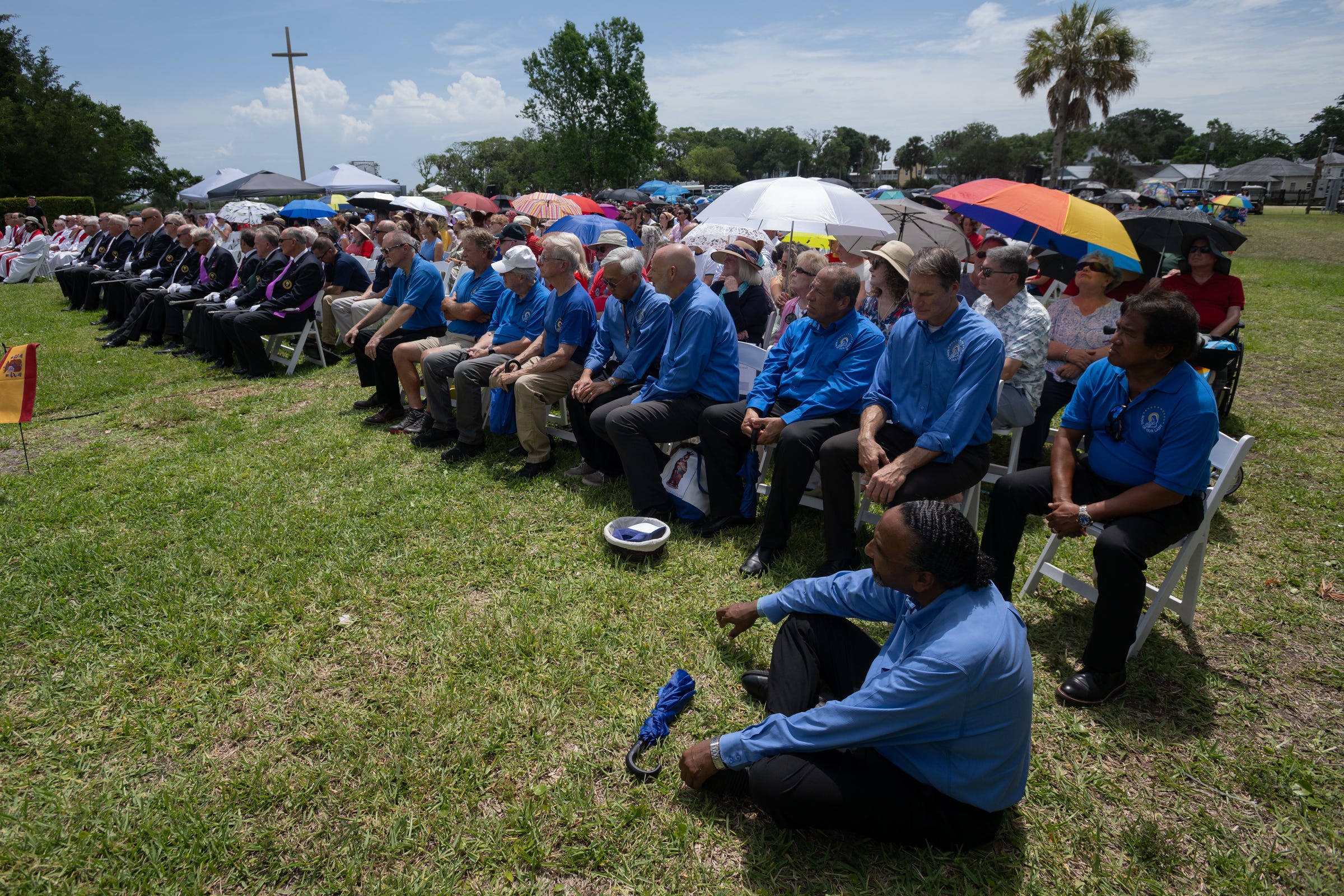
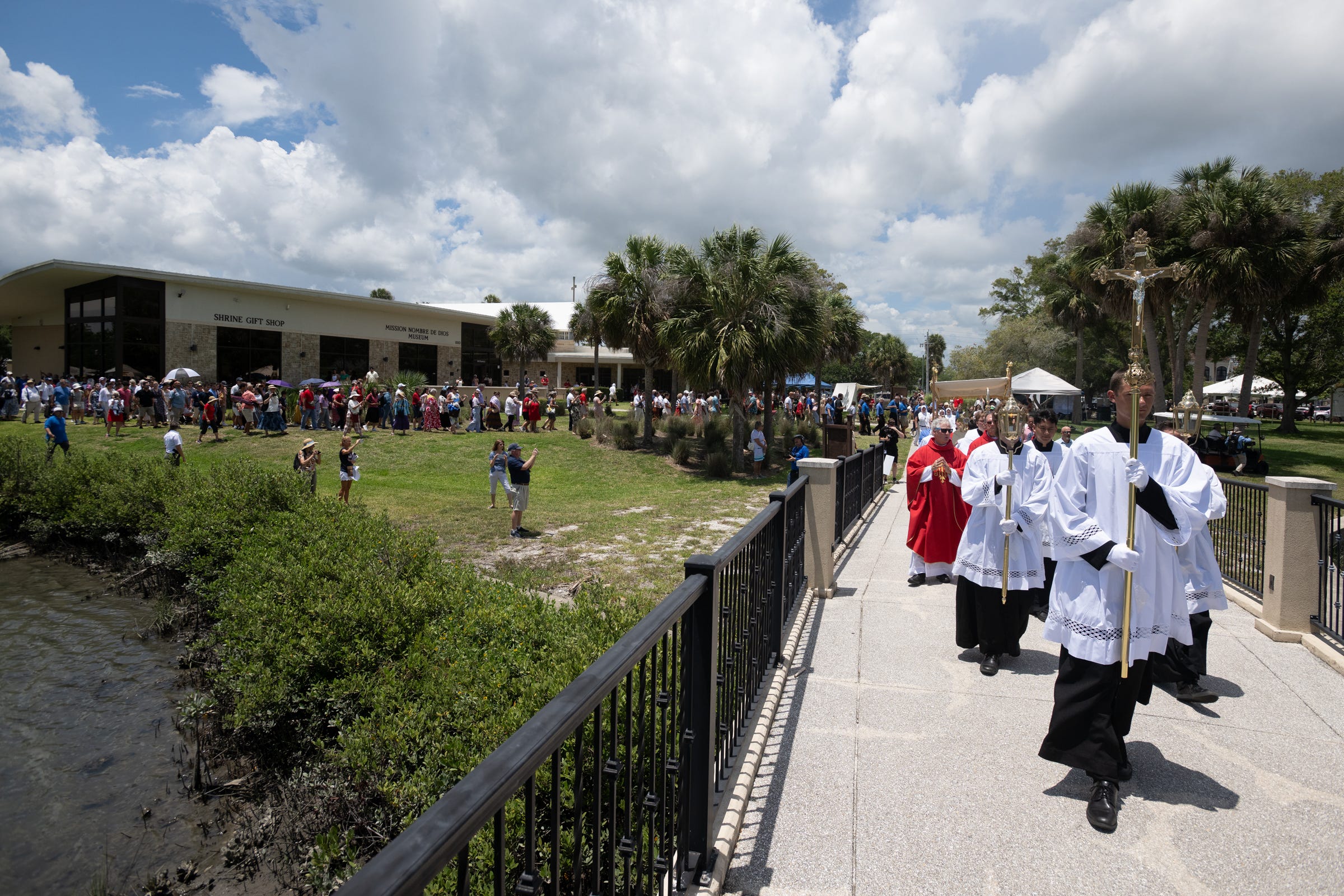
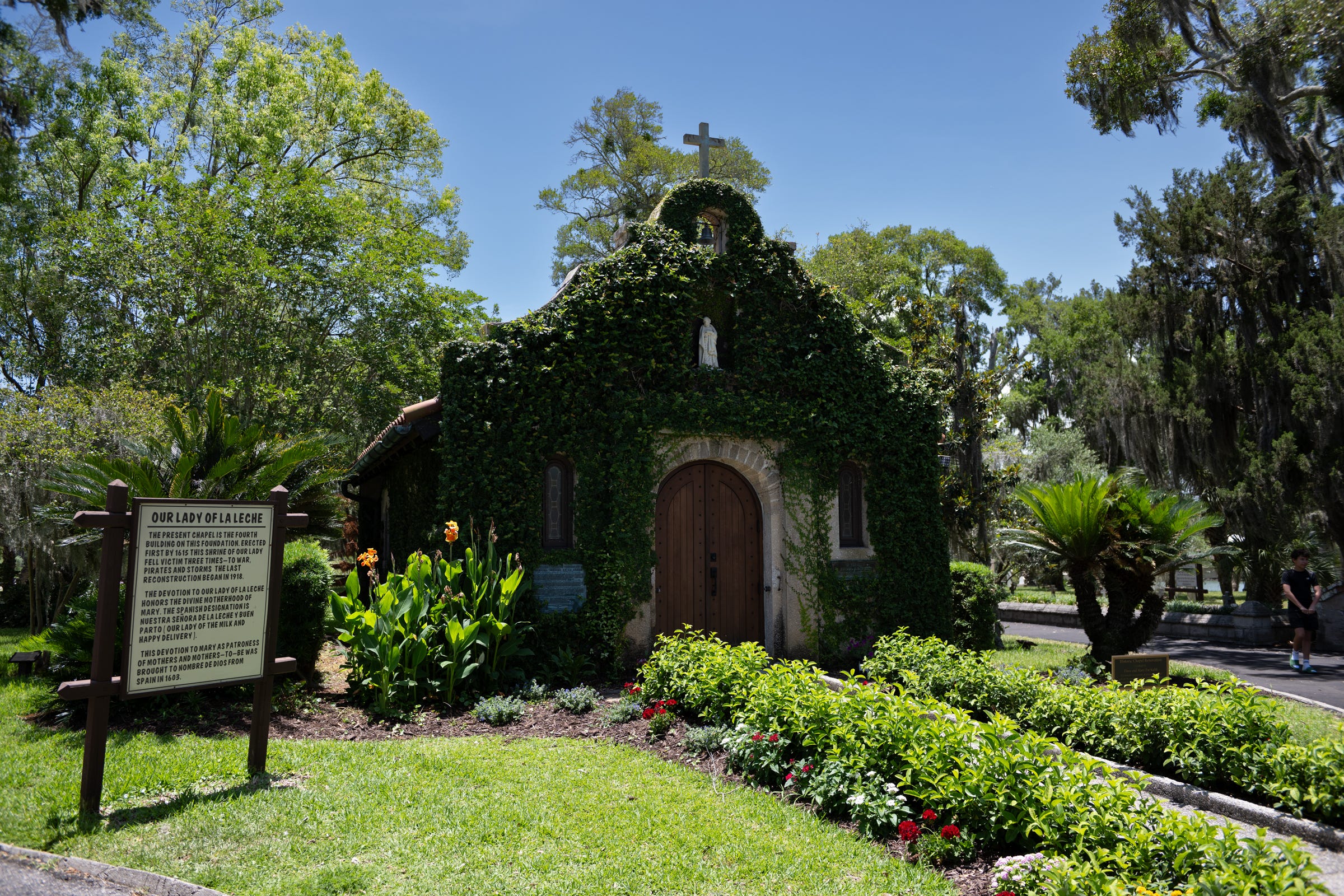
There was no rain. No fog. No cold. Only the sweltering Florida sun, a field altar, and more than a thousand Catholics gathered at the National Shrine of Our Lady of La Leche at Mission Nombre de Dios for the launch of the 2026 National Eucharistic Pilgrimage.
The umbrellas came first.
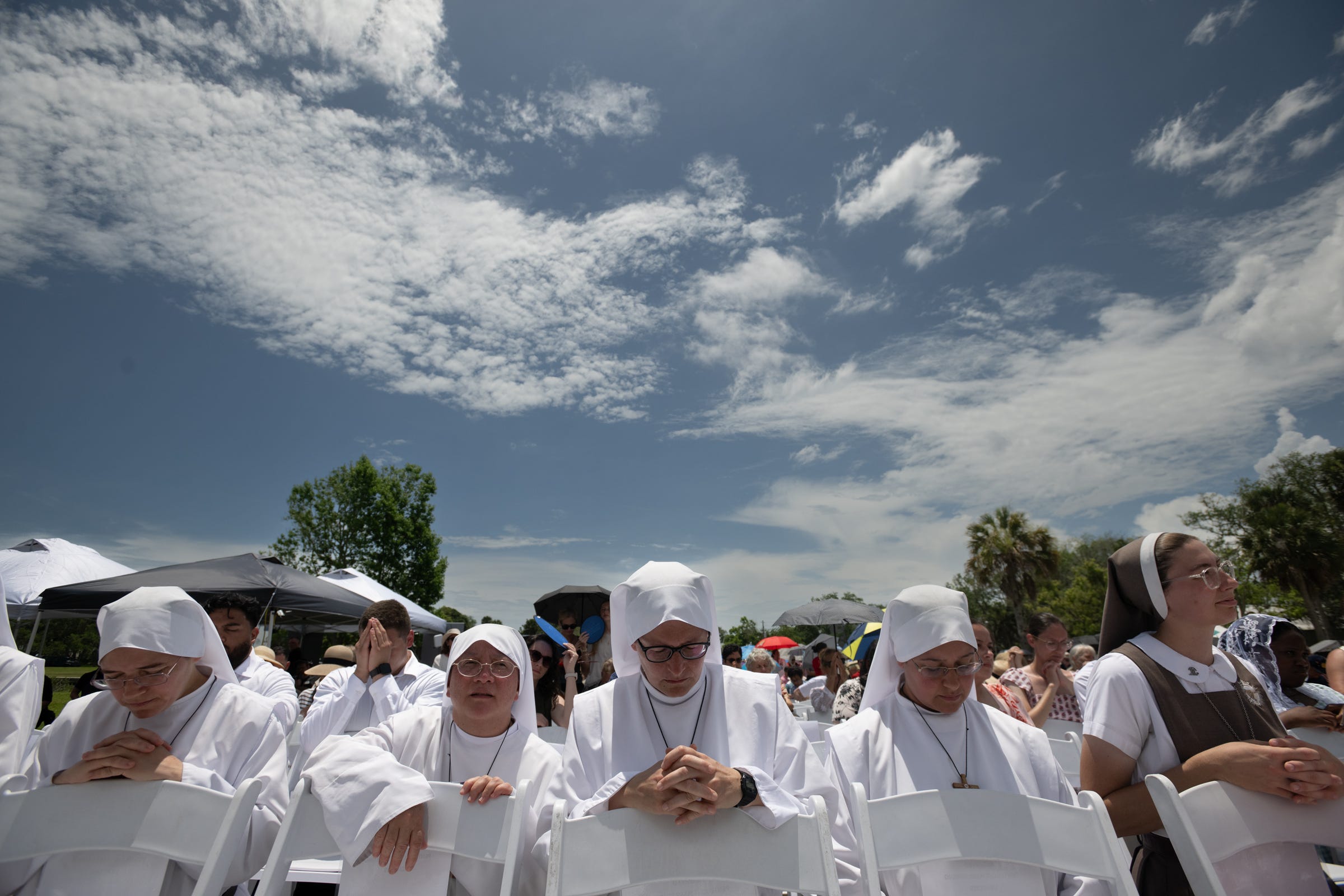
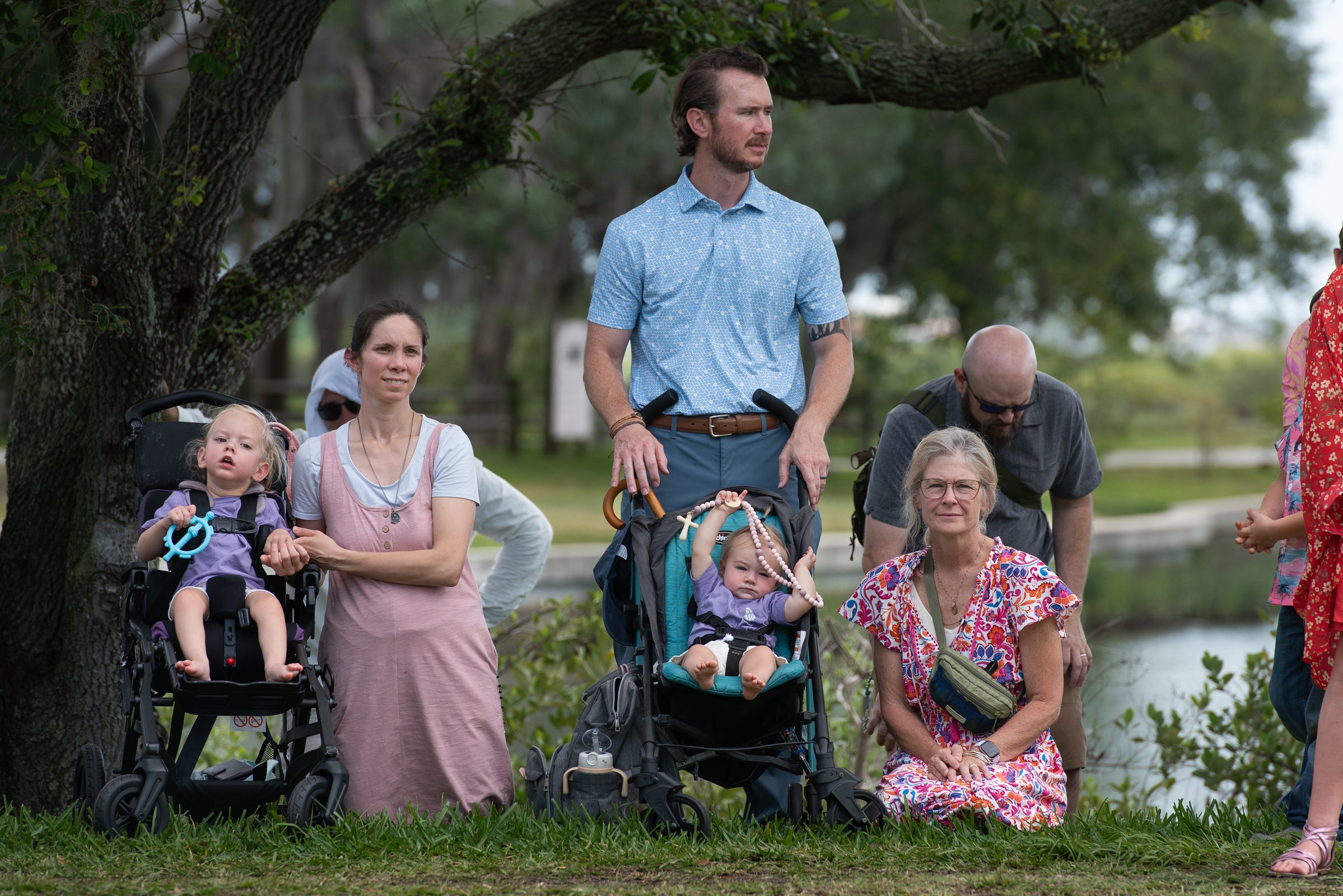
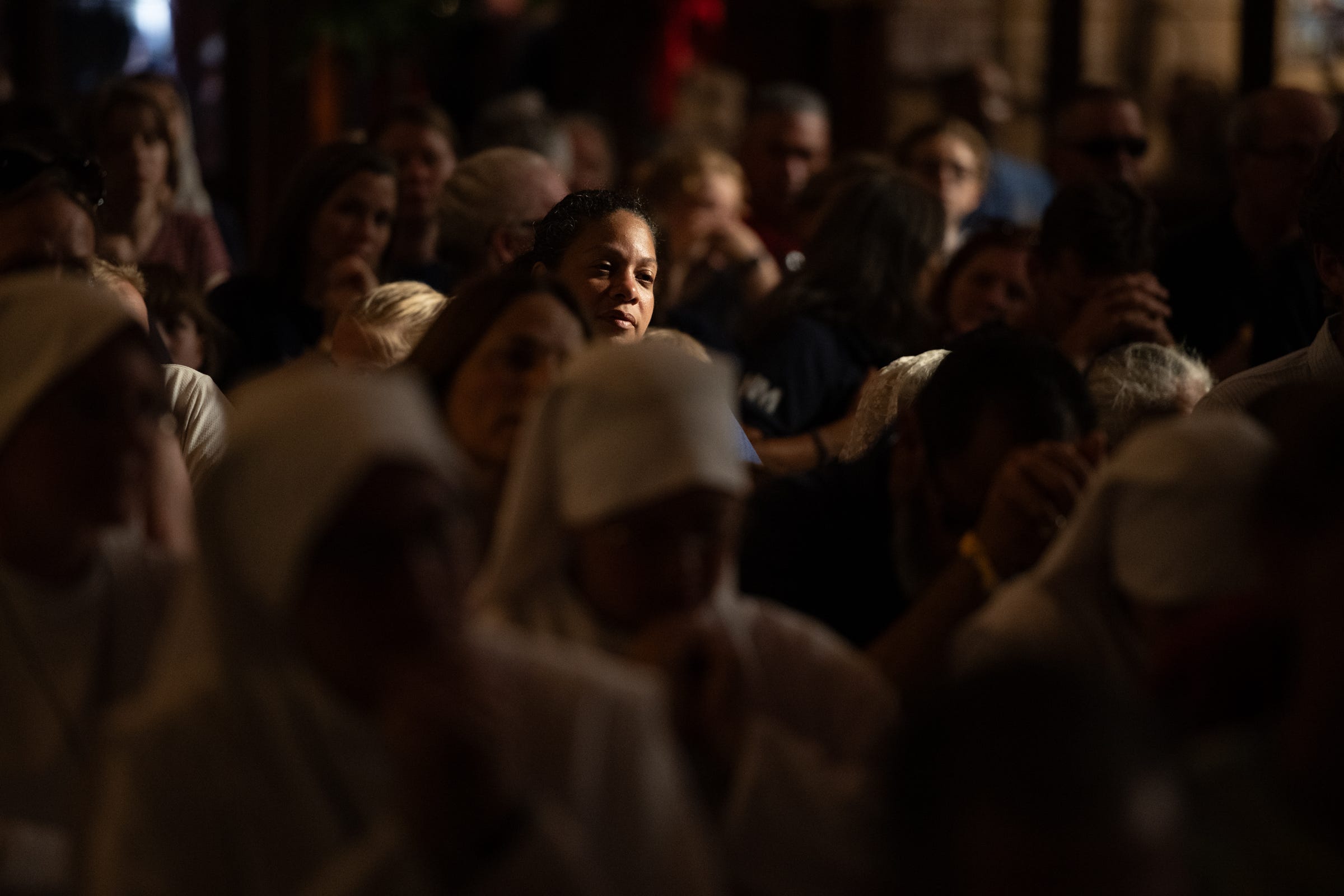
They stretched across the shrine grounds like a sea of small canopies, held by families, religious sisters, elderly pilgrims, children, clergy, and young adults who had come to celebrate the start of a six-week journey with Jesus Christ in the Blessed Sacrament.
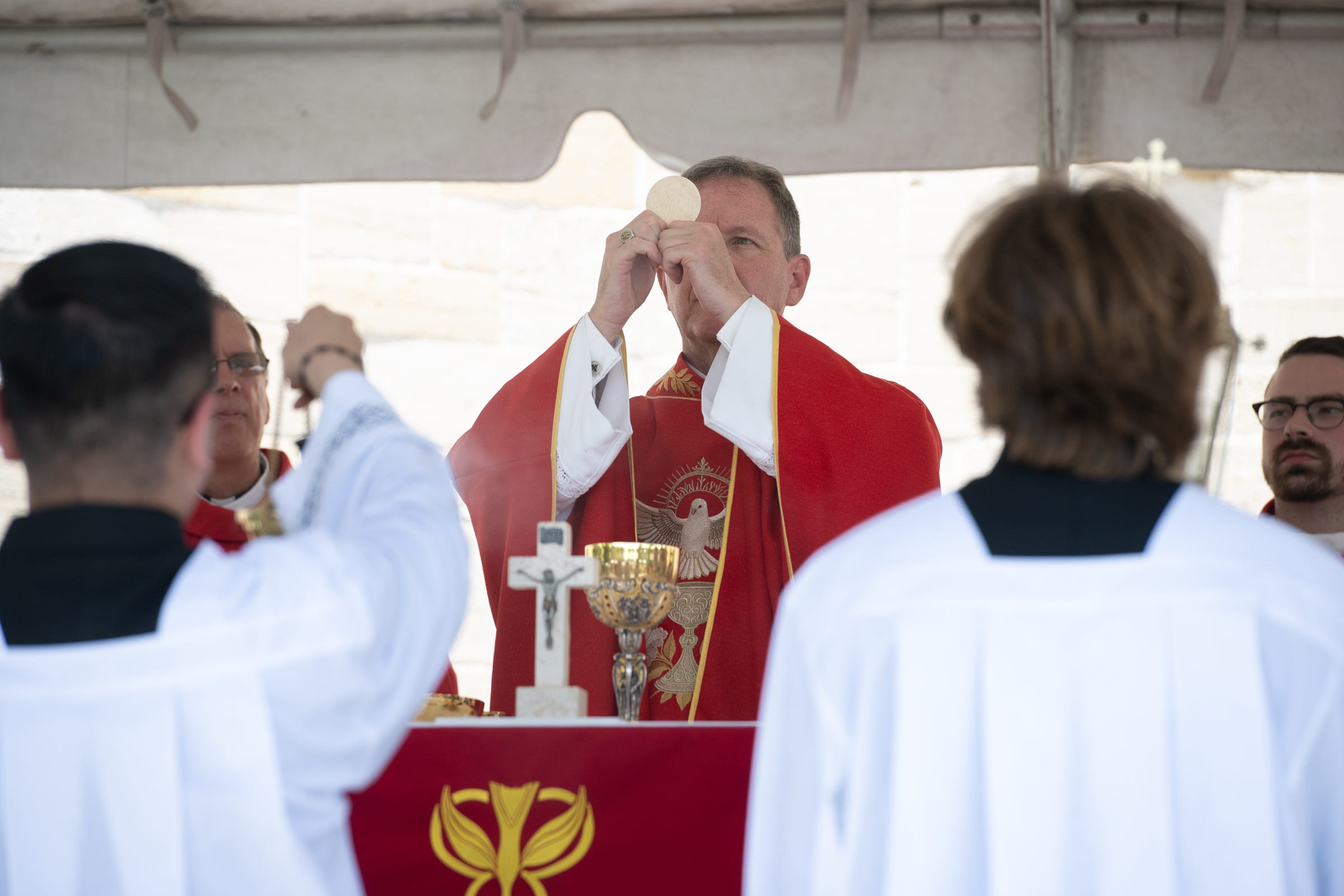
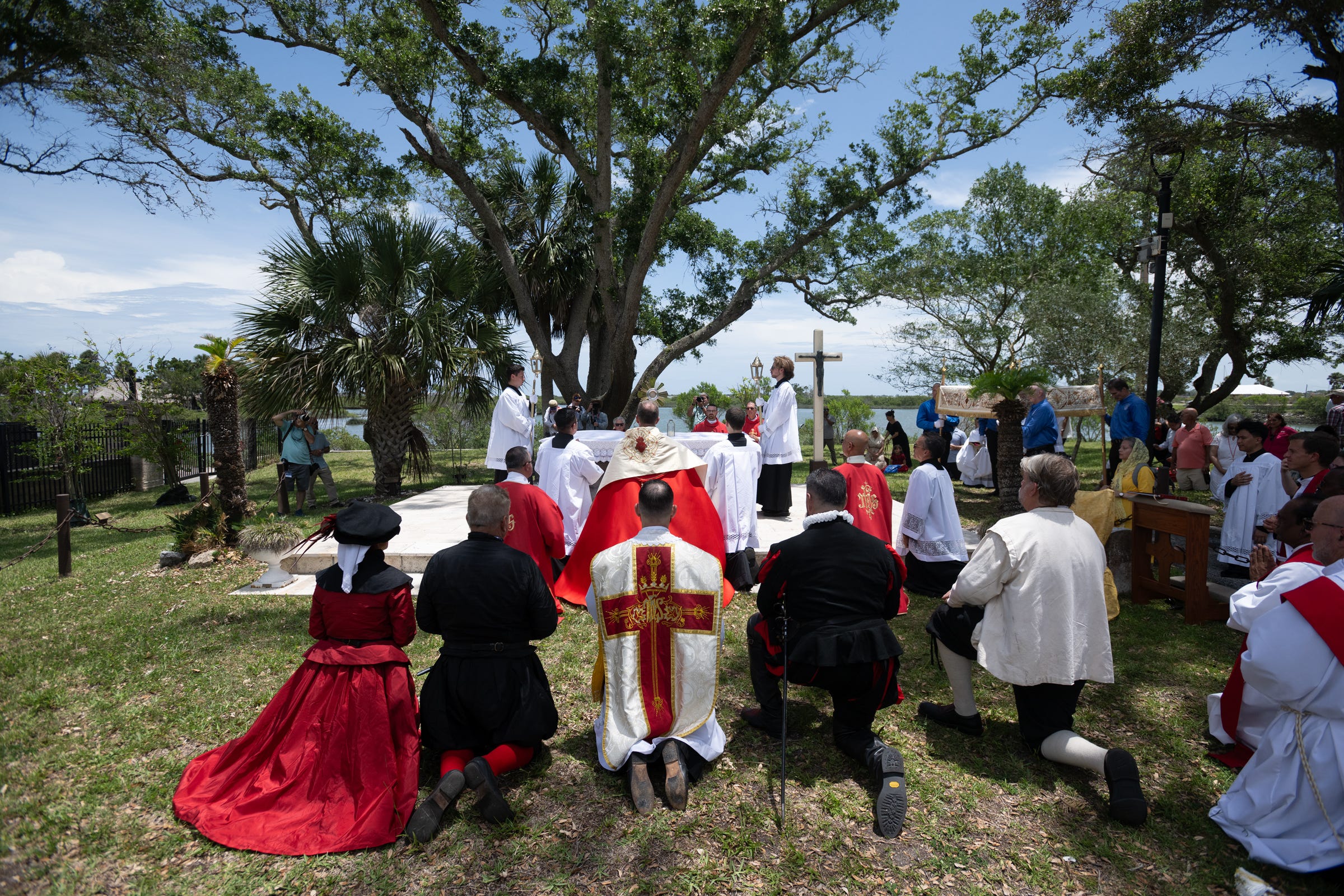
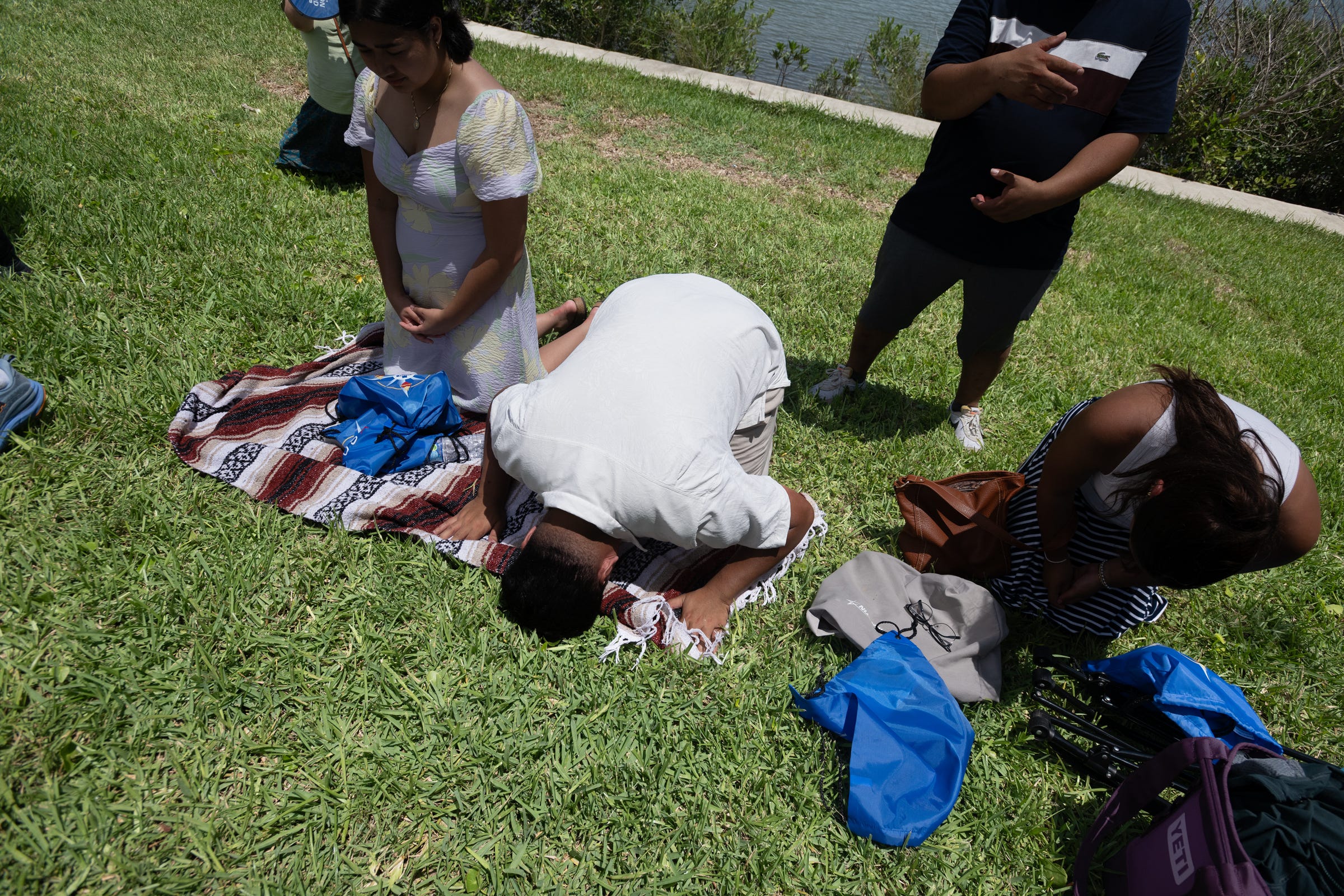
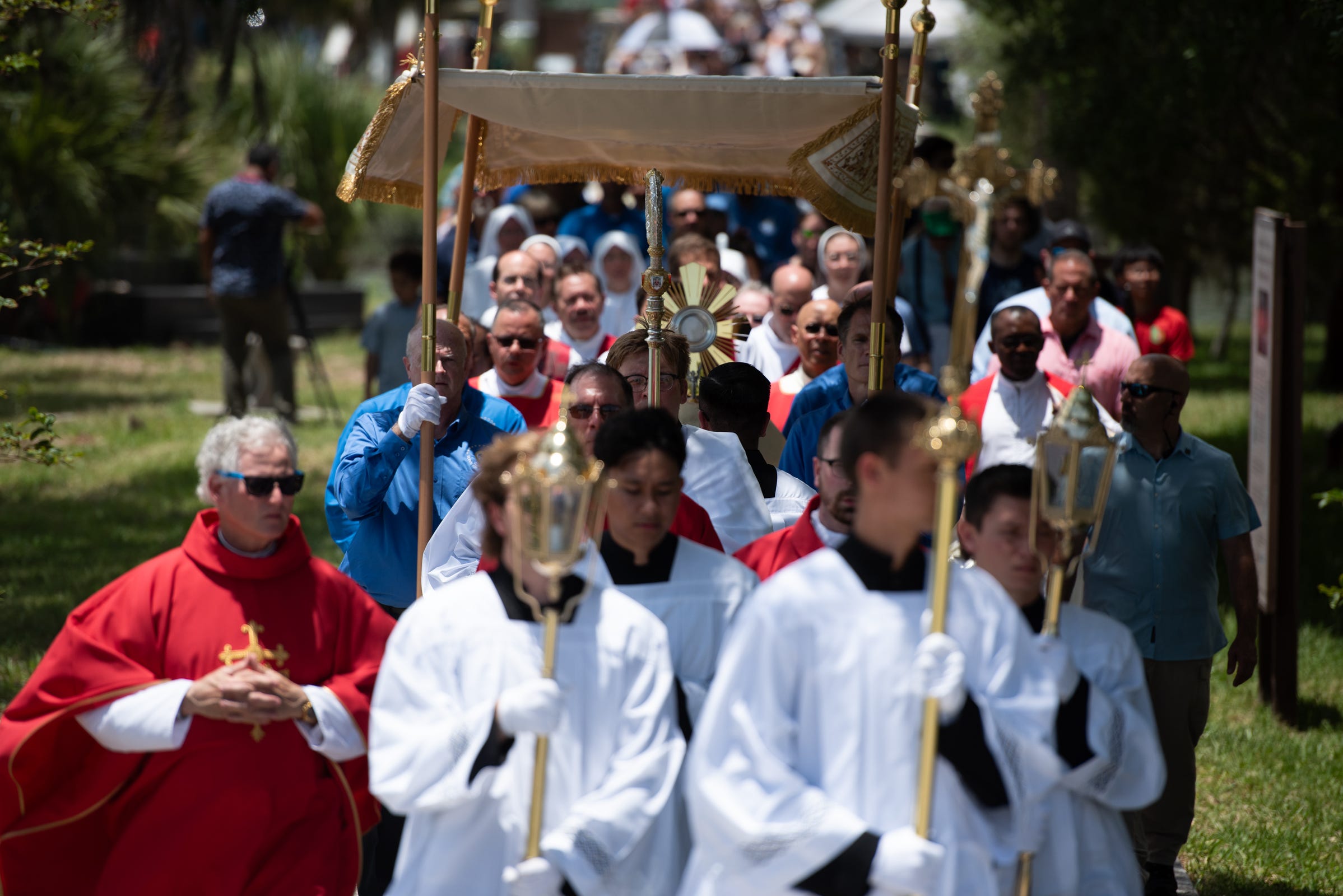
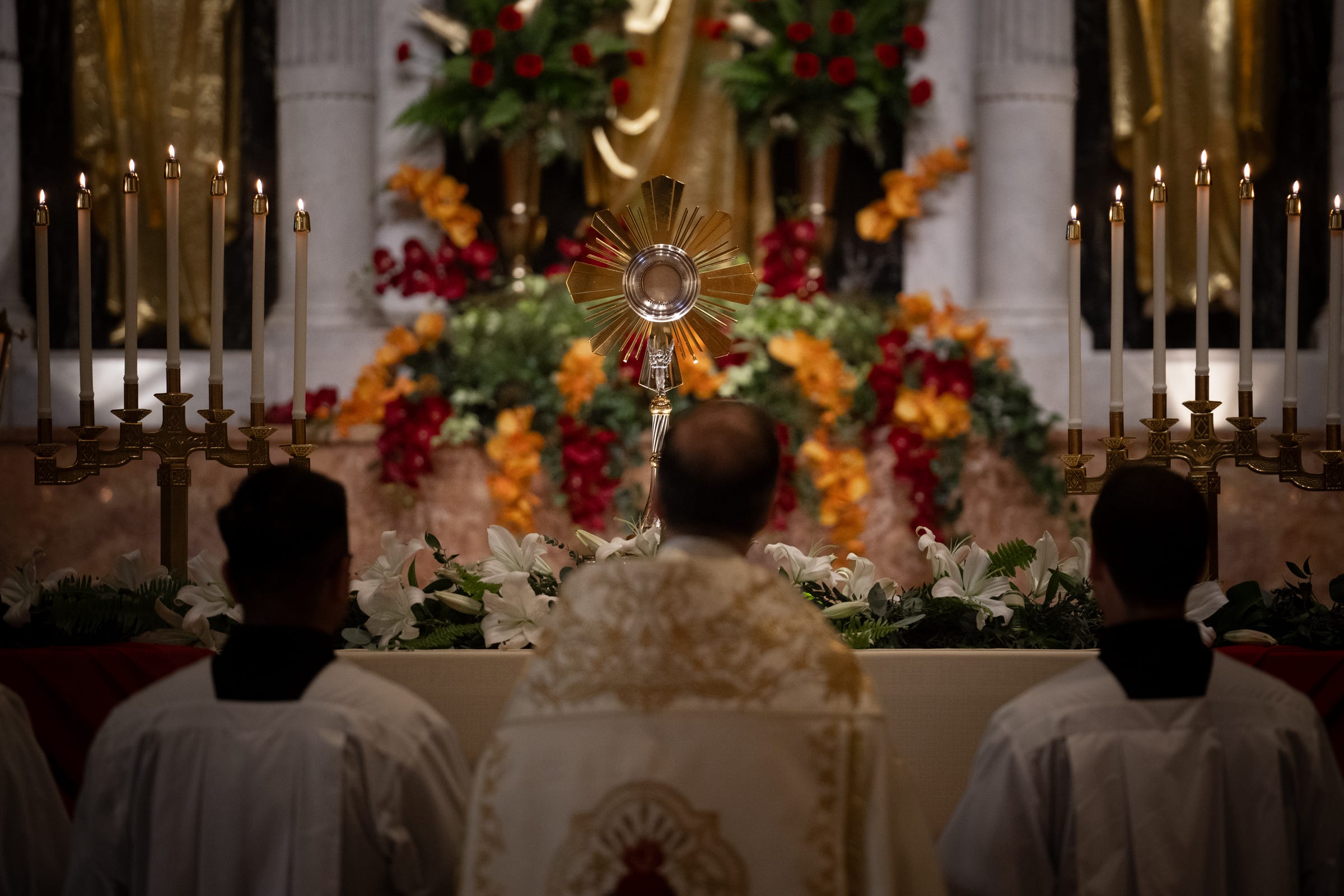
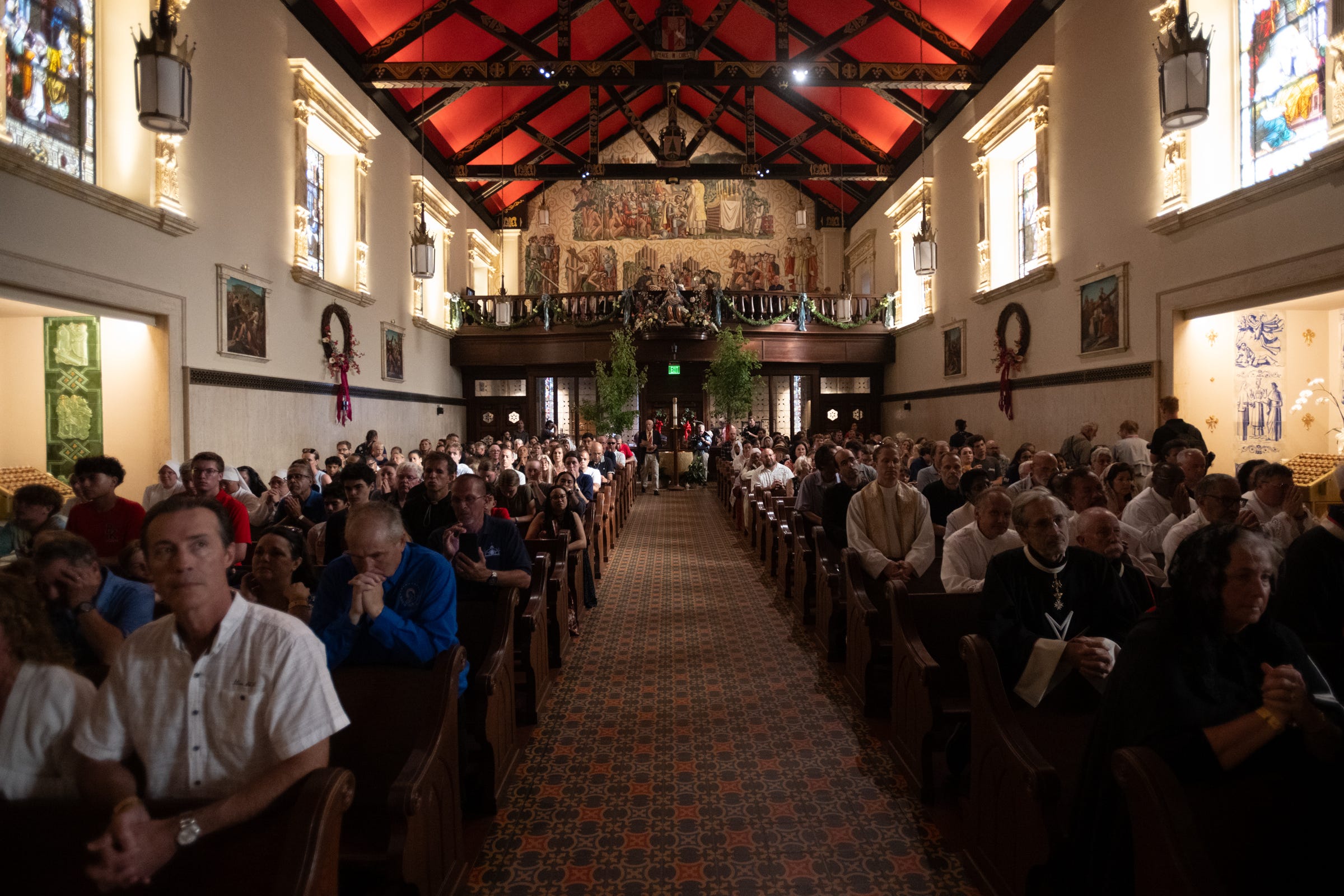
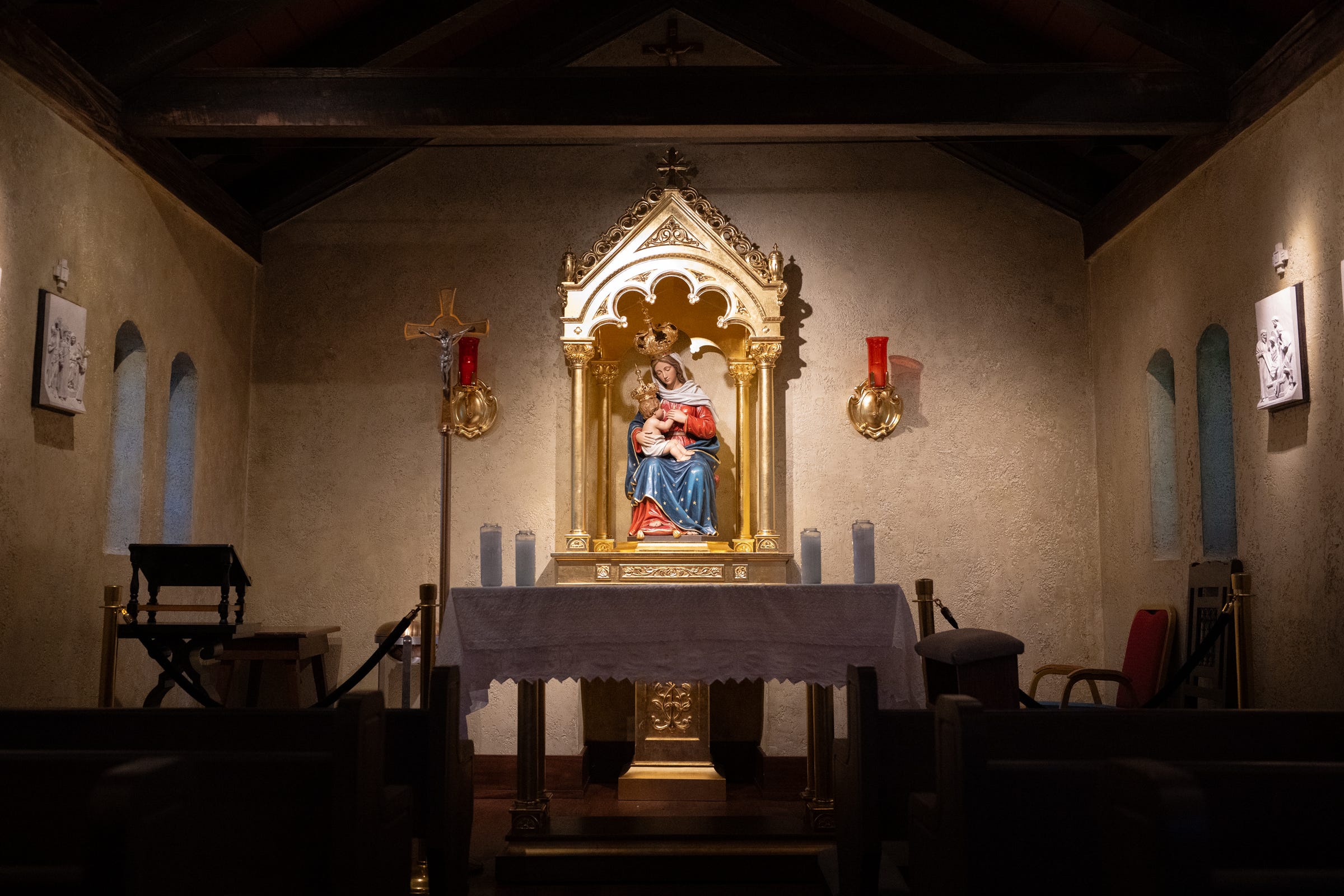
The Mass was the center, as it must be. Then came the procession. The Blessed Sacrament was carried across the shrine grounds to the Rustic Altar, then to the Historic Chapel, where adoration continued throughout the day. In the blazing heat, people followed. They sang, prayed, knelt, walked, endured, and adored.
And Christ was among them.
It would have been enough to say that the pilgrimage began in St. Augustine. But that wouldn’t be enough.
Because this was not merely a location. It was a beginning returning to a beginning.
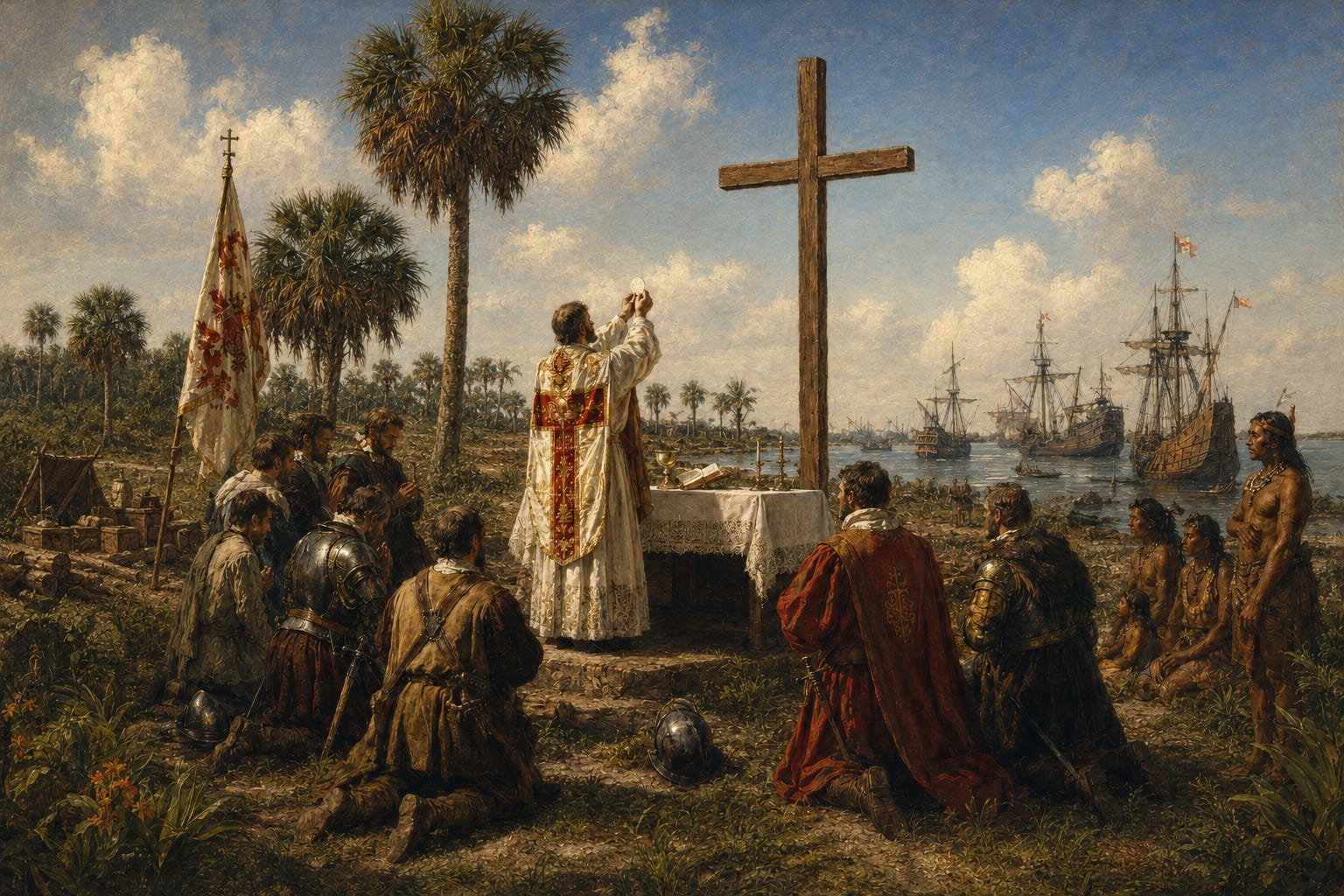
St. Augustine is the oldest continuously occupied European-established city in what is now the continental United States, founded in 1565 when Pedro Menéndez de Avilés landed on Florida’s coast and as soon as the Spanish landing party came ashore, they celebrated a Mass of Thanksgiving, after which Menéndez shared a meal with the native Seloy people who occupied the site.
Before there was a United States, before there was a Declaration, before there were colonies stitched into a republic, there was an altar.
There was the Cross.
There was the Mass.
Mission Nombre de Dios and the National Shrine of Our Lady of La Leche now stand near that sacred memory. The shrine describes its grounds as the place where the 1565 Mass of thanksgiving occurred, and the site is home to what is widely recognized as America’s oldest Marian shrine.
The pilgrimage did not begin in a random city under a sunny sky. It began where Catholic life in this land first took root in a lasting way. It began where missionaries came ashore carrying not merely culture or ambition or empire, but the Jesus Christ in the Blessed Sacrament. It began where the first Catholic prayers of a new settlement rose over an unknown shore.
That’s the story the landscape tells if one slows down long enough to listen.
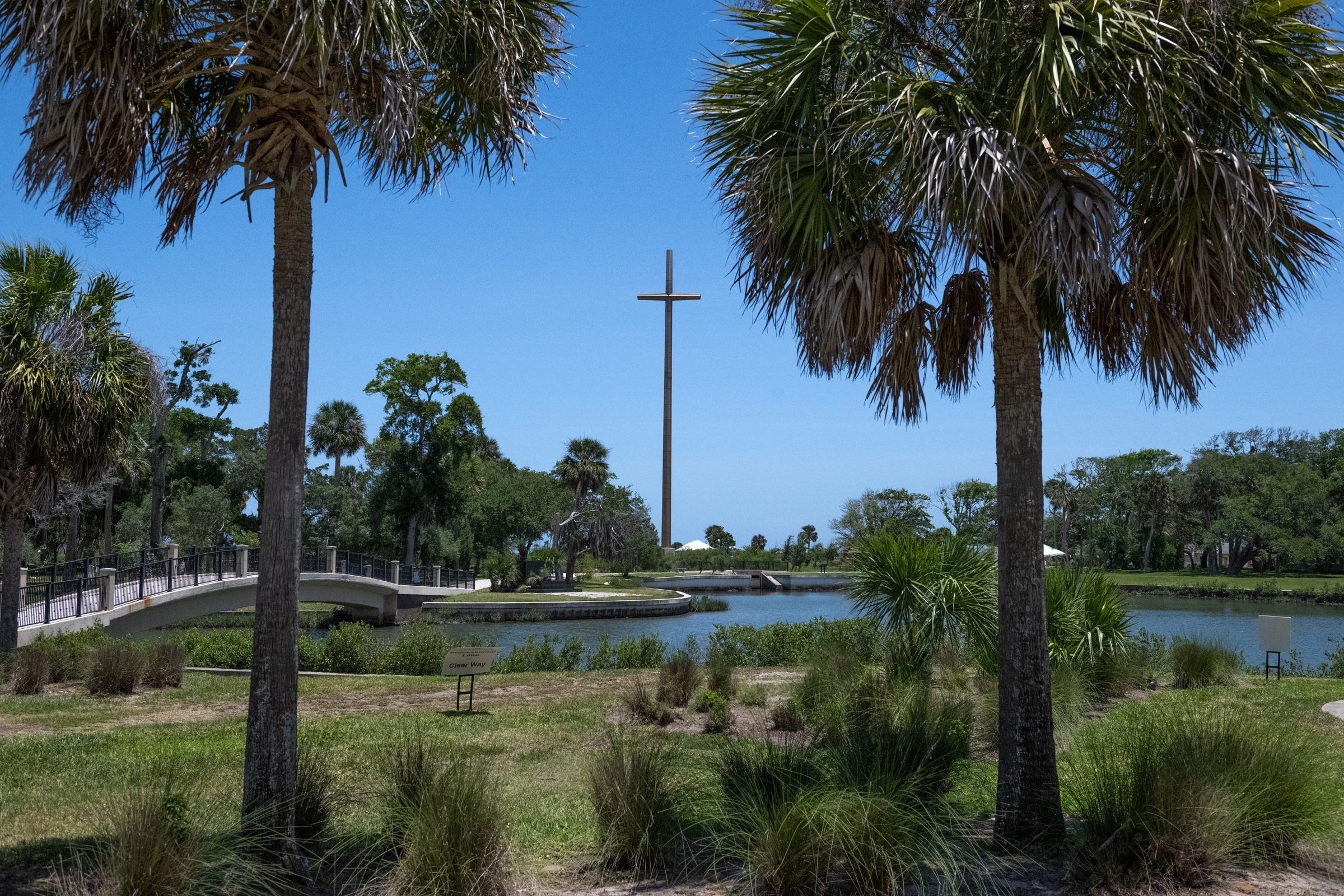
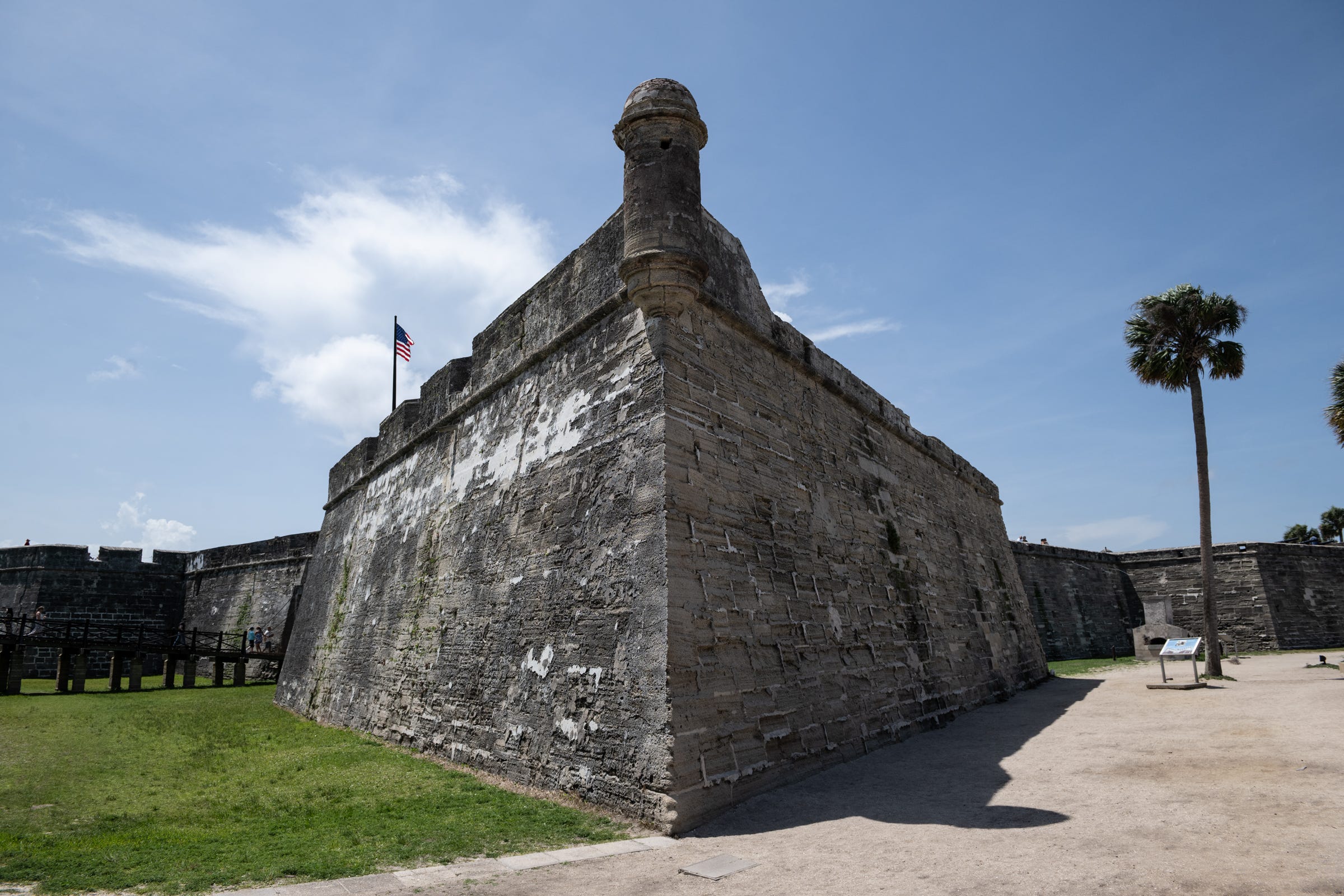
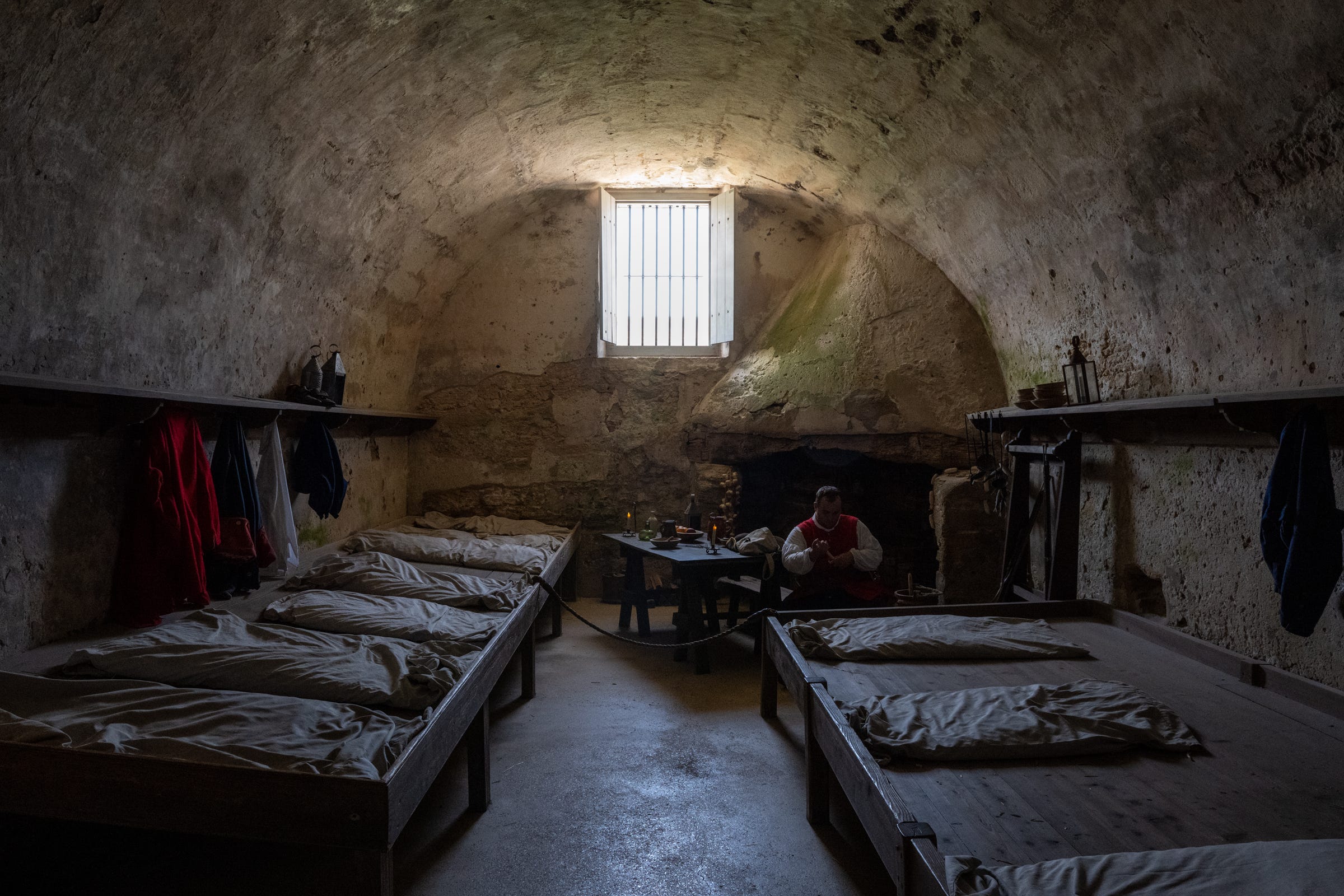
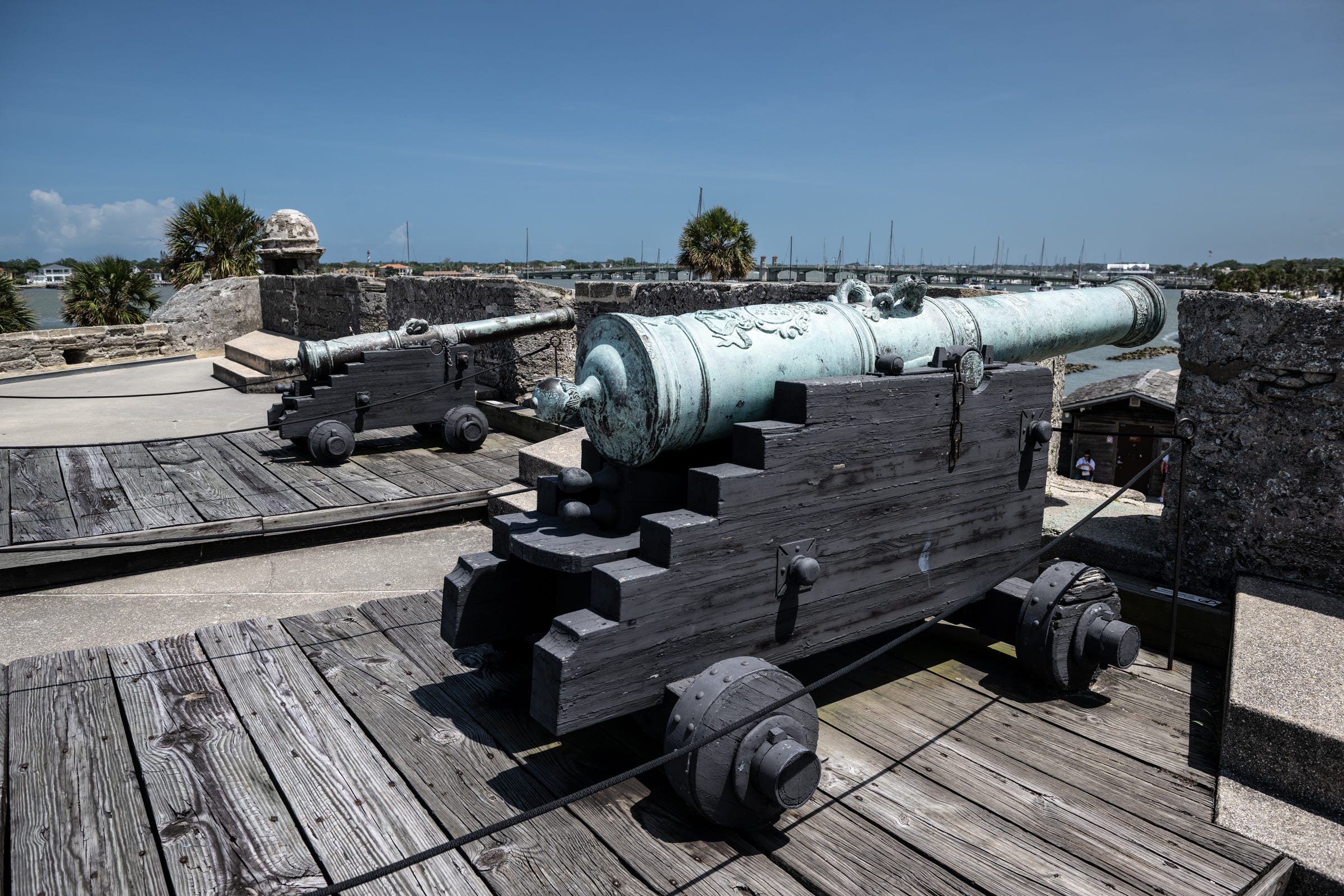
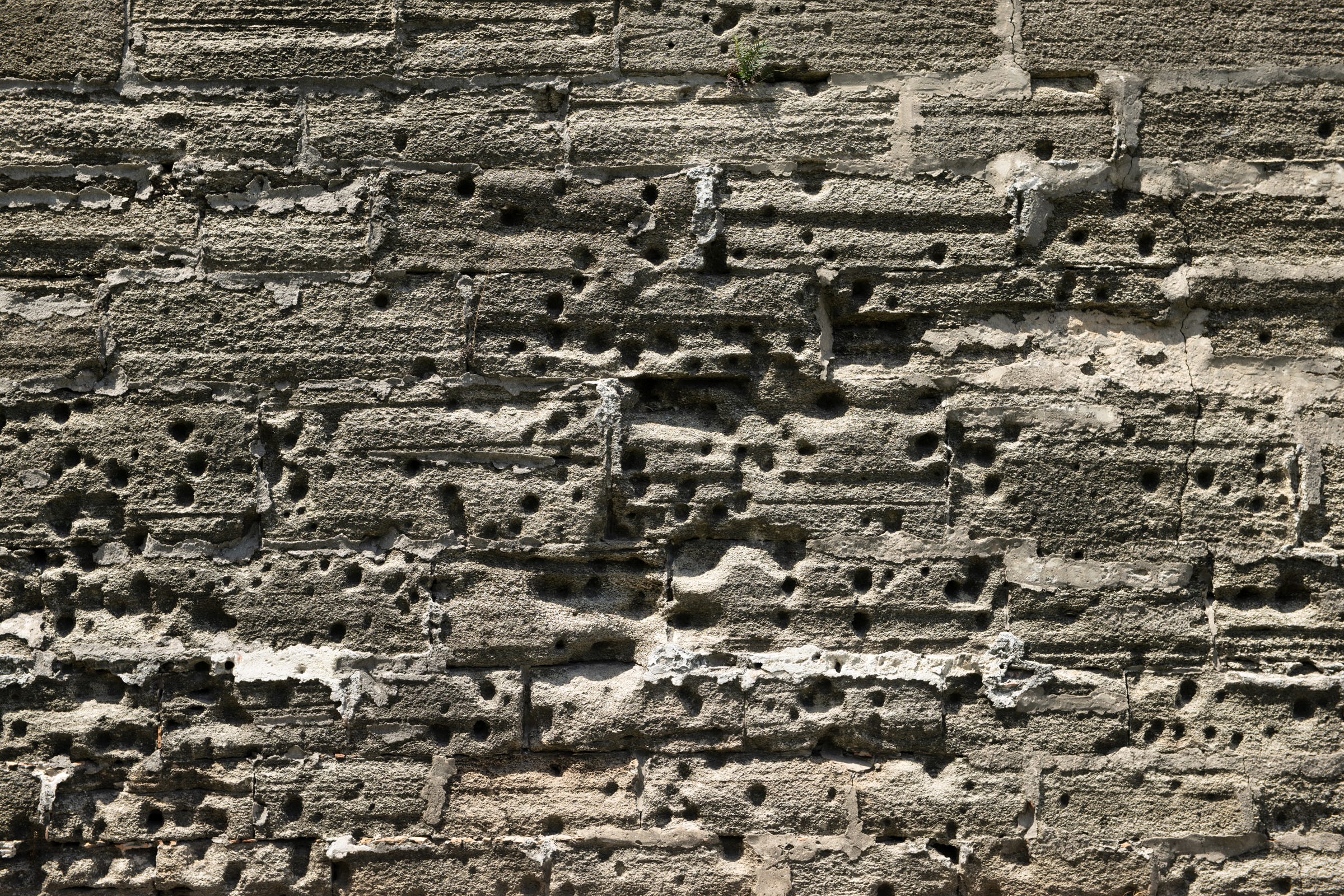
There’s the field altar. The little chapel. The Great Cross. The bay. The salt air. The old streets. The coquina stone of the Castillo de San Marcos, built by the Spanish to defend Florida and the Atlantic trade route, now preserved as the oldest masonry fortification in the continental United States.
All of it speaks of arrival, danger, endurance, longing, and mission.
In his Pentecost homily at the opening Mass, Bishop Erik Pohlmeier of St. Augustine drew the line between that first missionary impulse and the present moment.
“We should be compelled to speak the message of the Gospel,” he said, “to take up our part in the grand work of the Church.”
Reflecting on the Catholic missionaries who arrived on Florida’s shores in the 16th century, he said that “from that beginning, they centered their life around the Eucharist.”
That sentence is the key to the whole thing.
From that beginning, they centered their life around the Eucharist.
And now, 461 years later, Catholics have returned to that same heart.
The 2026 National Eucharistic Pilgrimage, whose theme is “One Nation Under God,” will travel the St. Frances Xavier Cabrini Route from St. Augustine to Philadelphia, carrying the Blessed Sacrament along the East Coast during the nation’s 250th anniversary year.
And that’s the thing.
Because America was missionary territory once.
It was missionary territory when Spanish priests landed in Florida. It was missionary territory when Father Andrew White, the Jesuit called the “Apostle of Maryland,” arrived with the Ark and the Dove and celebrated a Mass of thanksgiving at St. Clement’s Island in 1634.
It was missionary territory when George Calvert imagined Maryland as a haven for persecuted Catholics and, however imperfectly, a place where religious toleration might take root.
It was missionary territory when St. Isaac Jogues and the North American Martyrs entered the forests and waterways of New France, serving in remote missions in eastern Canada and New York amid disease, hunger, danger, and isolation.
It was missionary territory when St. Junípero Serra walked the long roads of the West and founded the first nine of California’s 21 missions, carrying the Gospel along what would become El Camino Real.
And it remains missionary territory now, today.
Perhaps that’s the part we forget.
We speak of revival as though it were a program or an event. But at the heart of the Eucharistic Revival, and at the heart of the National Eucharistic Pilgrimage, is something older and more dangerous and more beautiful: holy adventure.
The kind of adventure that sends people out.
The kind that makes them leave the upper room after Pentecost.
The kind that carries missionaries across oceans, rivers, forests, mountains, and cities.
The kind that moves ordinary families to stand under a brutal sun with umbrellas in their hands and prayers on their lips because Jesus is passing by.
The question is not, “Is there a revival in the Church today?”
The question is, “How could there not be?”
Because just as in the days of old, when Jesus walked the streets of Galilee and Jerusalem with His followers in tow, His Divine Presence touched the hearts of those who encountered Him.
The Creator of the very roads upon which He walked. The Creator of the sea, the clouds, the sun, the city, the child, the pilgrim, the sinner, the saint.
And now He goes again.
Through St. Augustine. Through mission grounds and cathedral streets. Through old cities and new suburbs. Through places that remember Him and places that have forgotten Him. Through the highways and byways of a nation approaching its 250th year, still restless, still wounded, still promising more than it has yet become.
Perhaps this is how the soul of a nation is healed: not first by policy or politics, but by encounter.
A priest raises the Blessed Sacrament in the Monstrance.
The people kneel.
The bells ring.
The sun beats down.
The pilgrims rise and follow.
Christ is carried into the world again, not as an idea, not as a memory, not as a symbol, but as Himself.
And that’s all that matters.
It’s all that ever mattered.
Thanks for reading! This is a truly independent, reader-supported periodical. Your support is crucial. If you are able, please consider a paid subscription or making a ‘Patron of the Arts’ donation of any amount. By doing so, you are not just supporting this effort; you’re a vital part of this mission.
You have my heartfelt thanks for your generosity and support, and please keep me in your prayers, and know of mine for each of you. God Bless, Jeff
Your stories always move me either way your beautiful expression of your observations 🙏🏻♥️
Thank you, Jeffrey. Praying for you. Another beautifully written story. Helen