

A note before you begin: I’ve also created an immersive words-and-photographs feature edition of this story, featuring an expanded gallery and a presentation designed to let the images and text unfold together. If you’d like to experience it, enter The Answering Grace here.
The sound was almost nothing.
A whisper of fabric against the marble floor.
Then stillness.
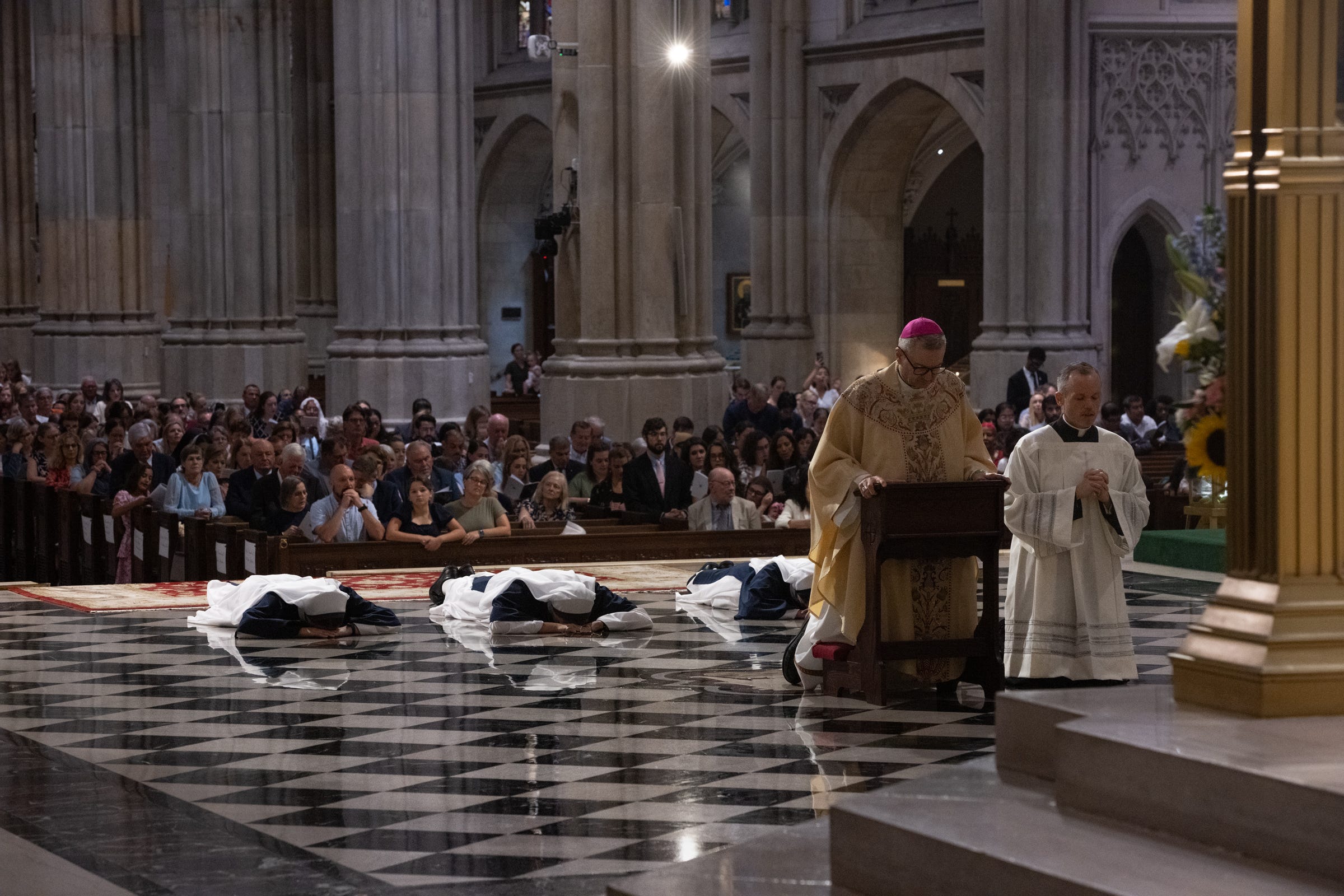
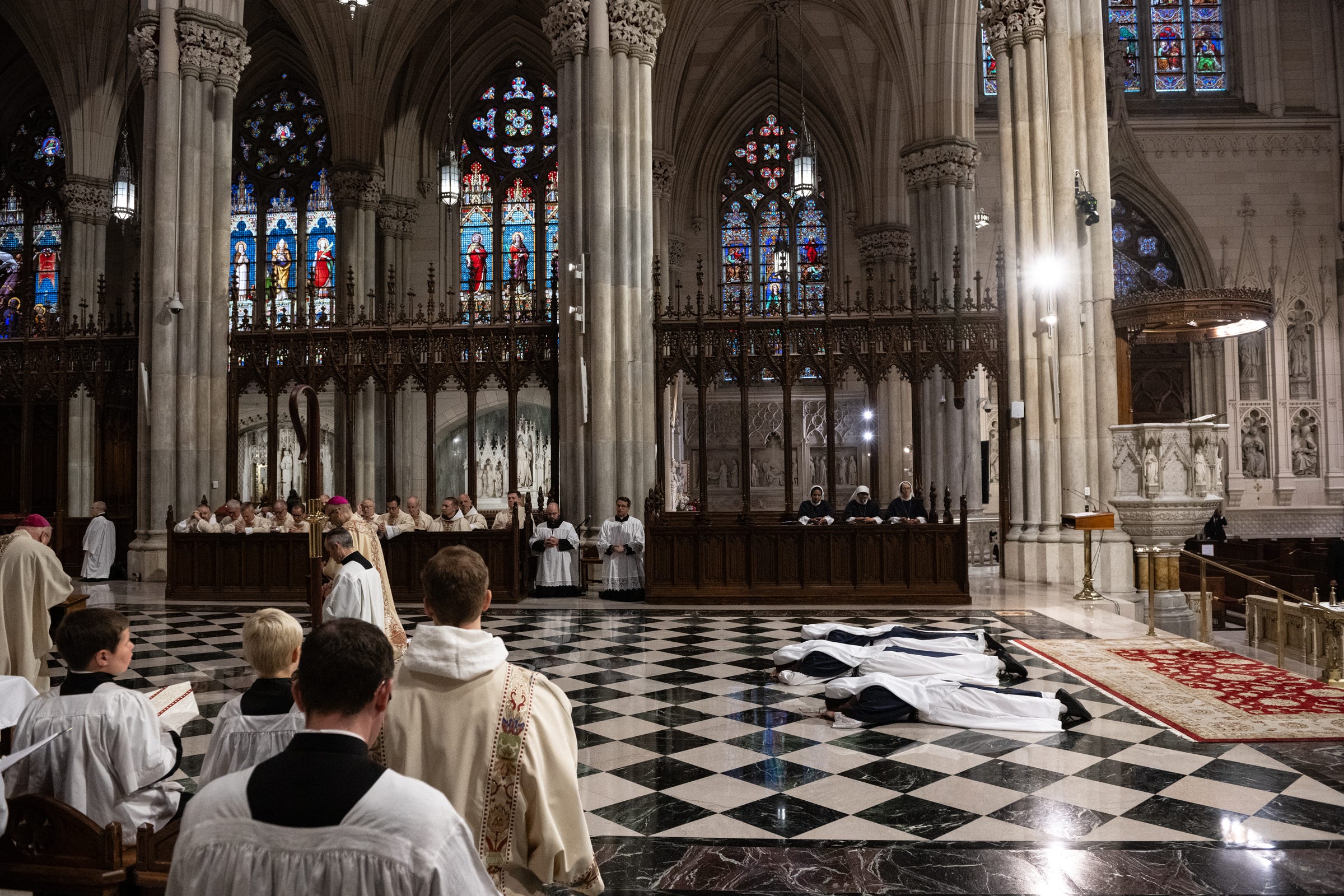
At the foot of the sanctuary in St. Patrick’s Cathedral, three women lay facedown before God.
Above them, the cathedral climbed toward Heaven in arches of stone and colored glass. Around them, the Church began to call upon the saints by name.
Mary, Mother of God.
Saint Joseph.
Saint Peter.
Saint Paul.
One name after another moved through the vast cathedral as the Litany of the Saints rose above Sister Eden Marie, Sister Elena Marie, and Sister Maria Annunciata, their bodies motionless against the floor.
Outside, Fifth Avenue continued doing what Fifth Avenue does.
Traffic ebbed and flowed. Horns sounded. Pedestrians threaded through one another beneath scaffolding and glass. Somewhere above Midtown, a crane continued the slow work of changing the skyline.
It was a Thursday, after all.
But inside the cathedral, these women were promising forever.
Perpetual is a startling word.
It doesn’t promise that every day will be easy, or that every question will disappear. It doesn’t claim that the women making it can see the road ahead.
It says only that every part of that road will belong to Him.
Minutes before the prostration, each Sister had been called by name.
The answer took only a moment.
But it carried every smaller yes which had brought her there: the first quiet stirring of a vocation; the questions; the discernment; the leaving; the waiting; the years of formation; the ordinary mornings when the extraordinary call of God became the work of getting out of bed and saying yes again.
Final profession is not one heroic yes that erases all the others.
It is a thousand hidden yeses gathered into one.
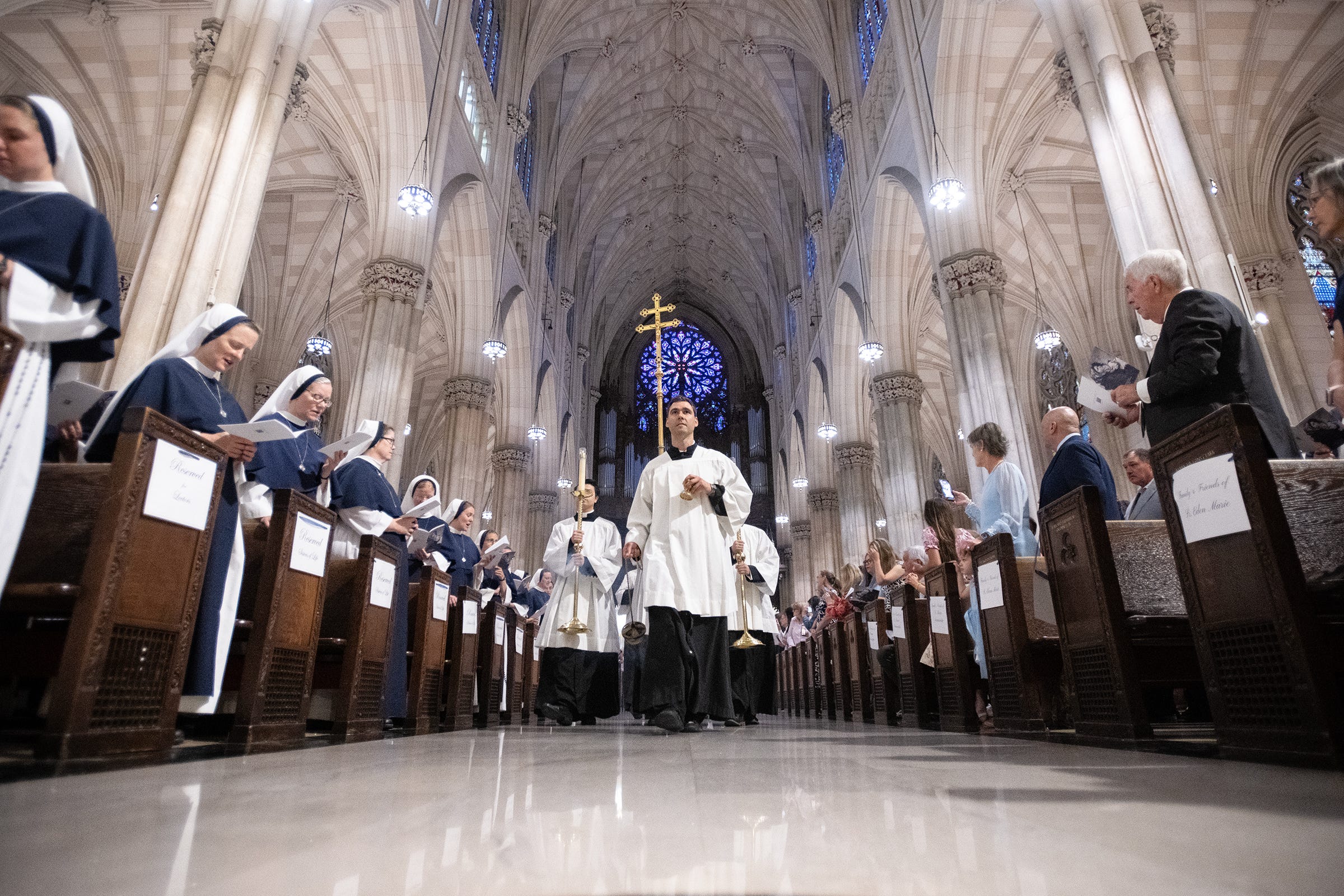
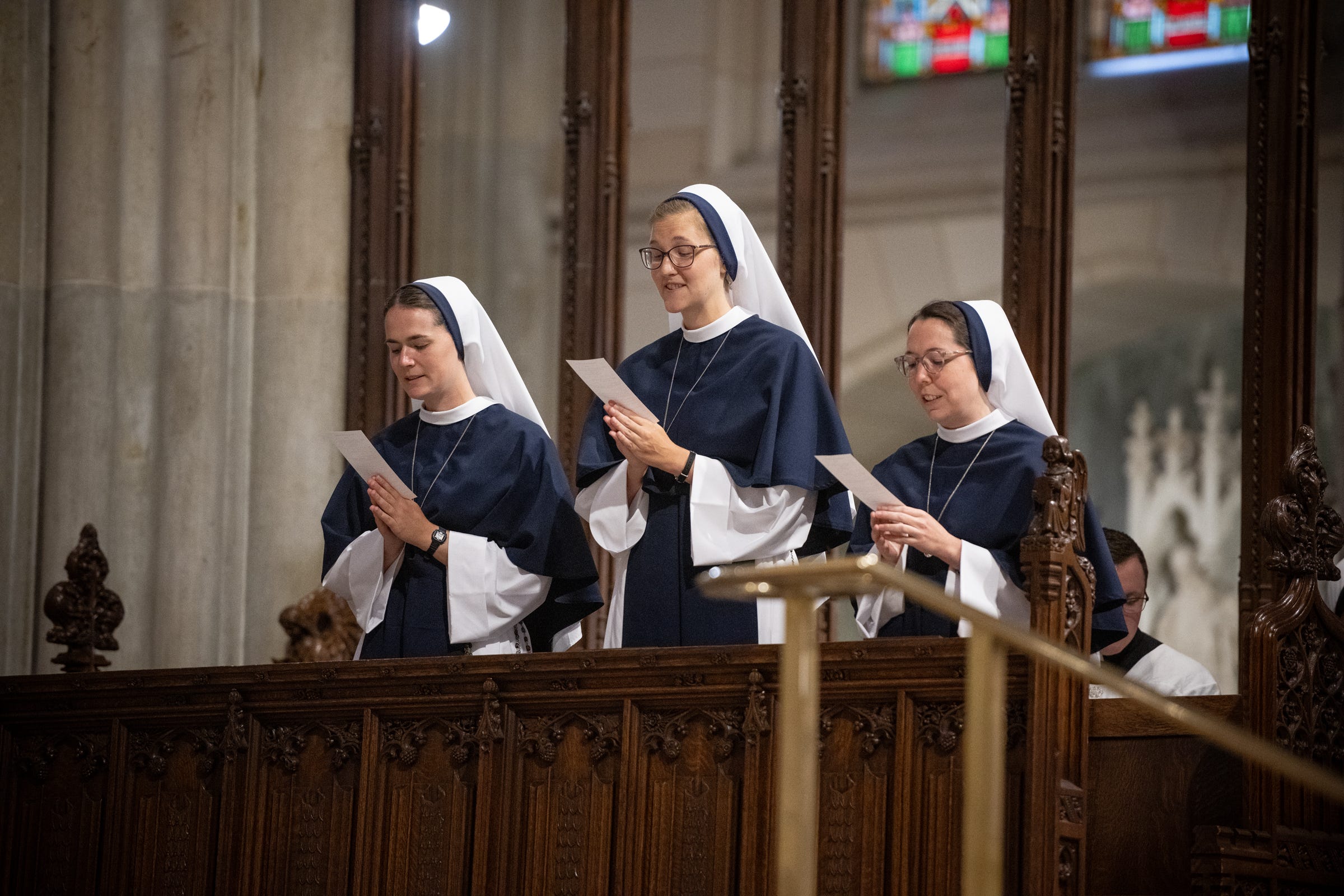
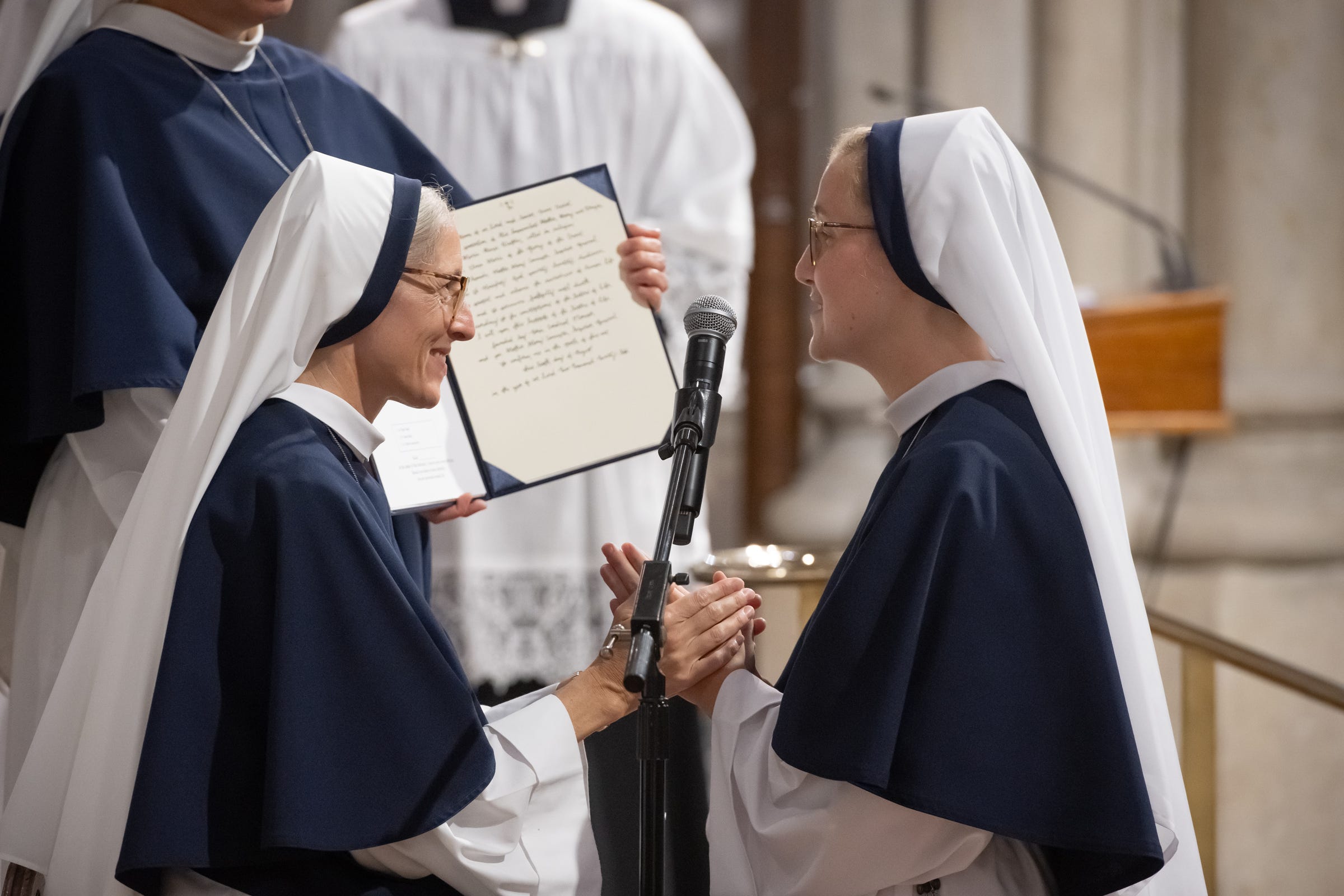
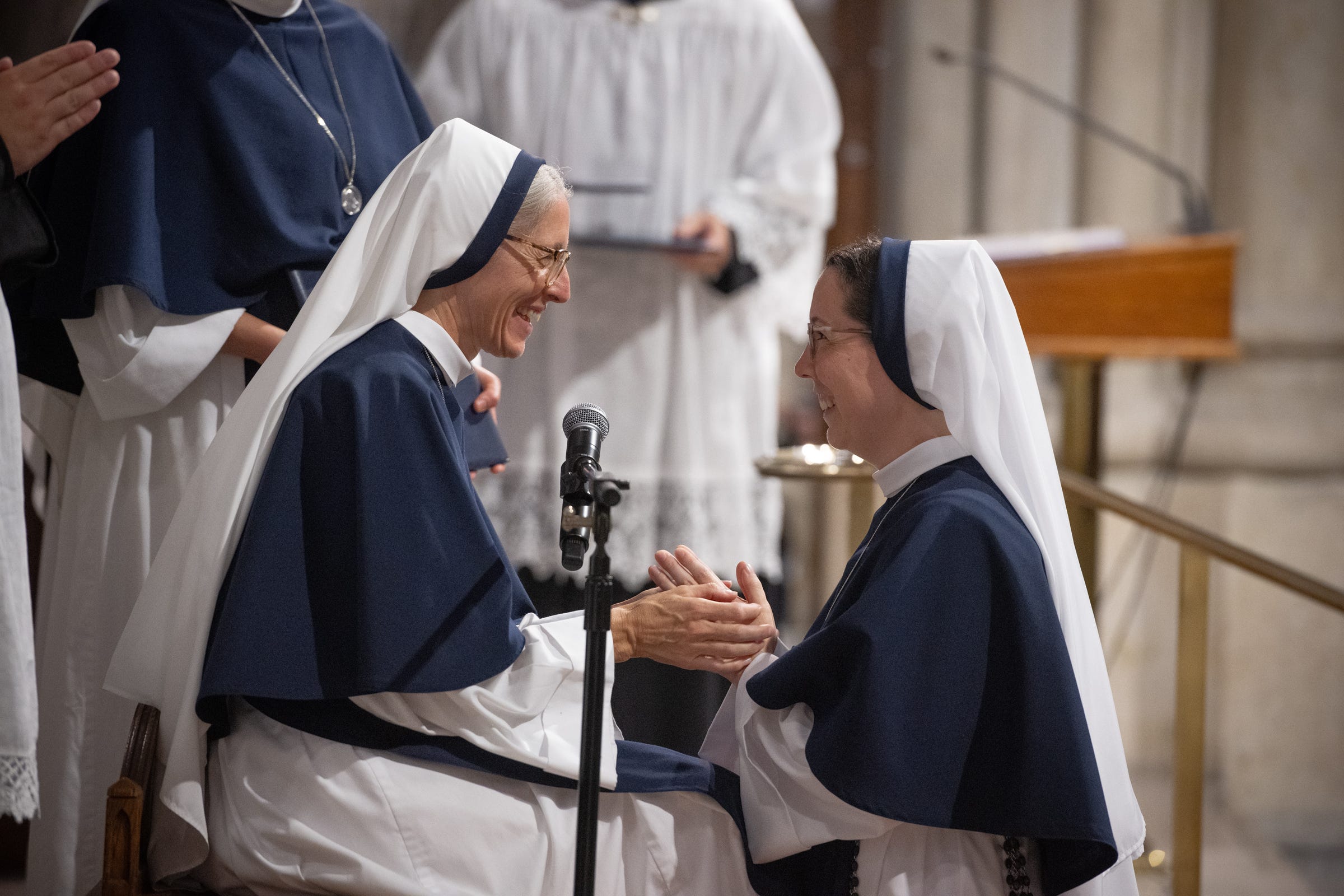
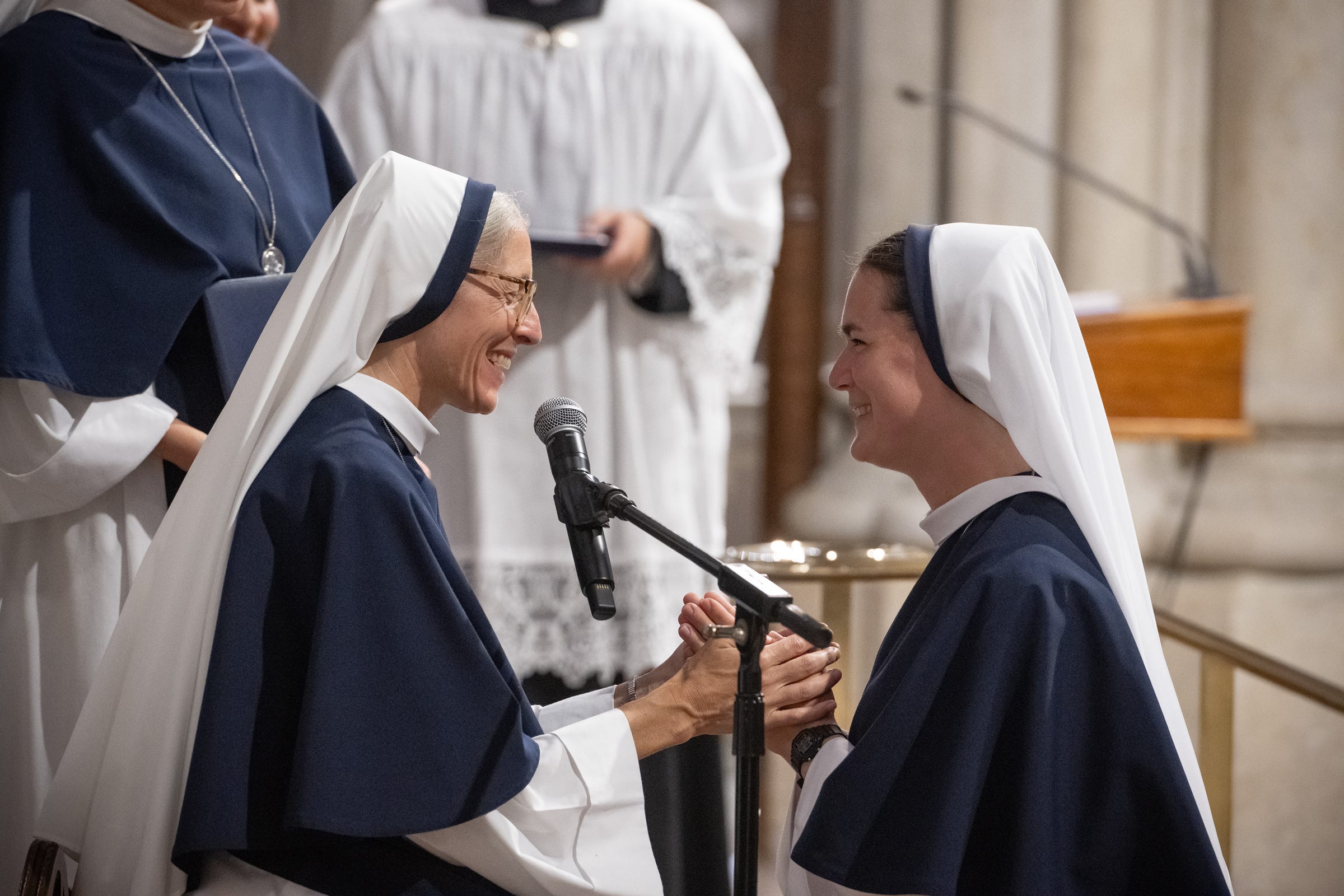
After rising from the floor, the Sisters knelt before Mother Mary Concepta and professed poverty, chastity and obedience. Then came the vow particular to their community: to protect and enhance the sacredness of every human life.
They received rings as signs of their perpetual union with Christ.
And at the altar, their offering was drawn into His.
It would be easy to see only the beauty of the ceremony, the habits, the music, the sweep of the cathedral, the embraces and tears that followed.
But the vows point far beyond the sanctuary.
They were born from a wound.
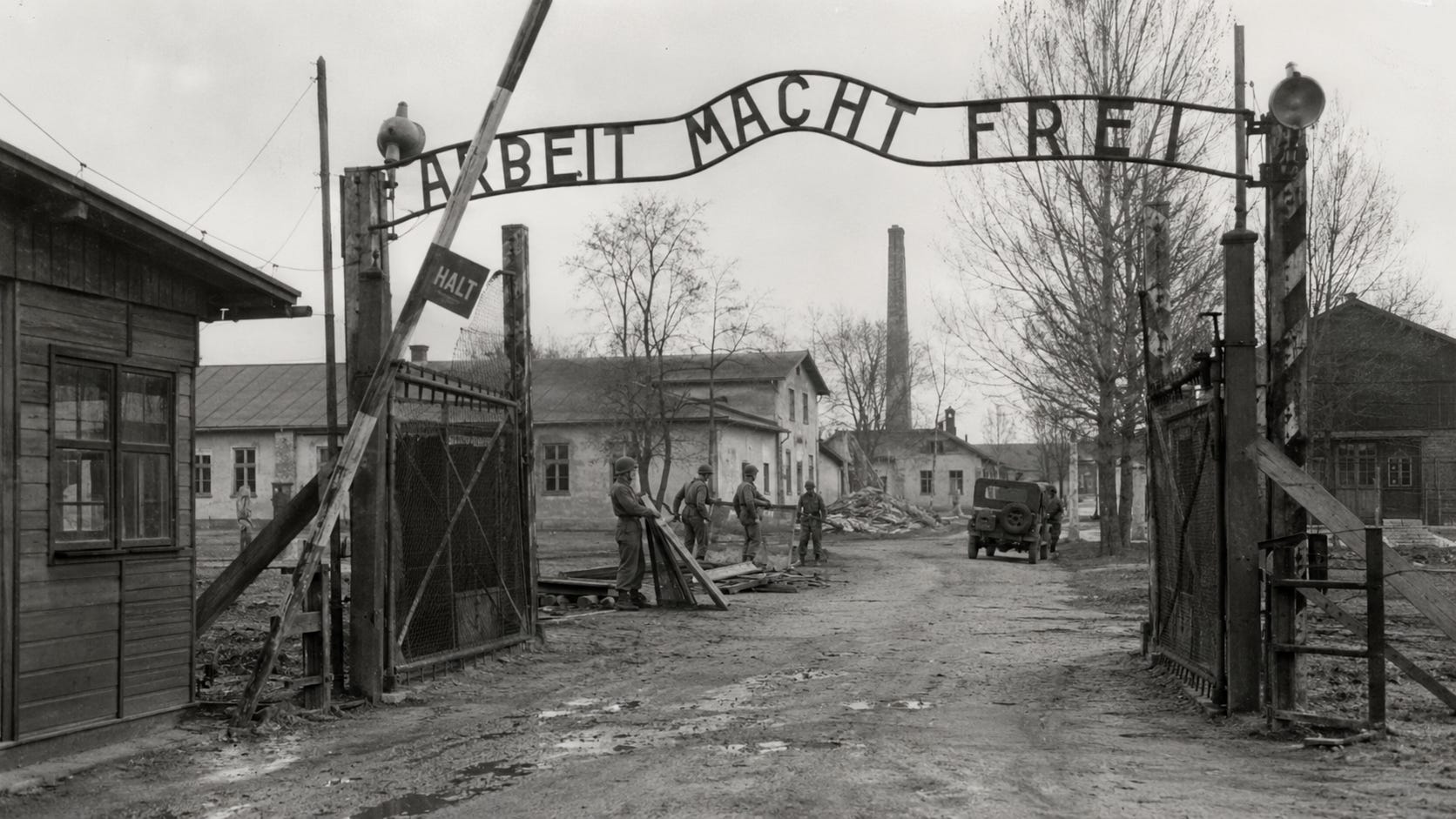
The story reaches back to 1975, when a priest named John O’Connor went to pray at the Nazi concentration camp at Dachau before assuming an enormous new responsibility as Chief of Navy Chaplains.
There he encountered a place where human beings had been stripped of everything except the suffering inflicted upon them.
Inside the crematorium, he placed his hand into one of the ovens.
O’Connor later said the experience changed him radically. Confronted by the horror of what had been done there, he left with a conviction that would remain with him for the rest of his life: every human life is sacred, and he would do whatever he could to defend it.
Years later, as Archbishop of New York, Cardinal O’Connor preached, advocated and worked tirelessly for life. Over time, he became convinced that the crisis confronting human dignity was not purely political.
It was spiritual.
And a spiritual wound required a spiritual response.
In 1989, he published an article in Catholic New York beneath an improbable headline:
“Help Wanted: Sisters of Life.”
Hundreds of women wrote to him.
On June 1, 1991, eight entered the new community.
Thirty-five years is a long time by ordinary standards. But by Catholic math, the Sisters of Life are still in their infancy. Yet the founding community of eight has grown to more than one hundred Sisters, with communities from New York to Toronto and Rome; in 2004, the Church formally established them as a religious institute of diocesan right.
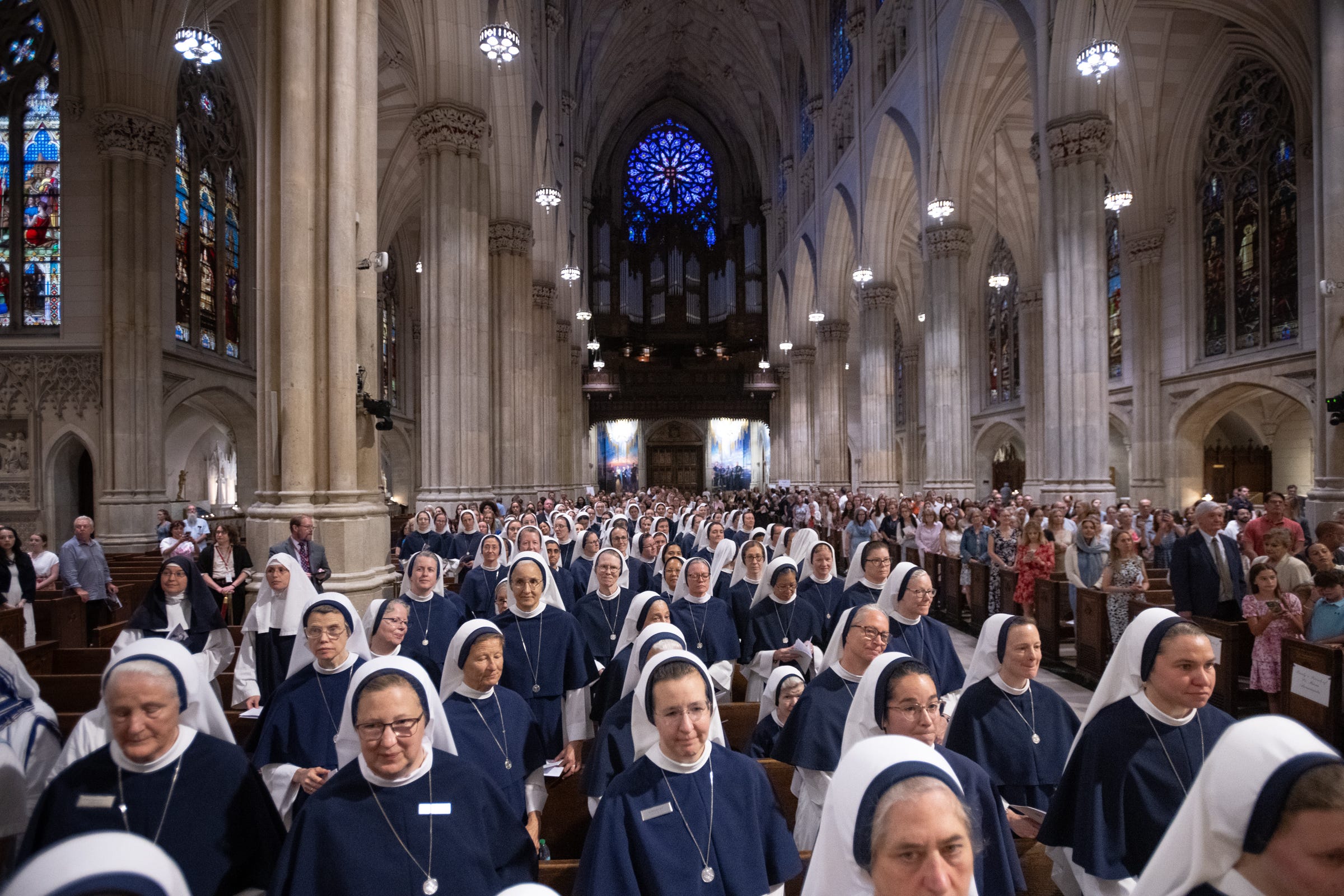
But those facts describe growth.
They do not yet explain the Grace.
God’s Love does not change. But that does not mean His Love is motionless.
It enters history. It meets particular people in particular wounds at particular moments, providing the Grace needed for that hour.
In that light, the Sisters of Life appear as one such answering Grace.
They were not founded merely to oppose something.
They were founded to offer themselves to Someone, and, in doing so, to make His Love visible to anyone who has forgotten that his or her life is sacred.
The phrase “culture of death” can sound enormous and impersonal.
Its wounds are not.
They are borne by the pregnant woman who is frightened and believes she has nowhere to turn; by the person carrying sorrow after an abortion beneath years of silence; by the elderly or dying person who wonders whether dependence has left him a burden.
They are the wounds of fear, pressure, isolation and the haunting suggestion that some lives matter less than others.
The Sisters answer with something radically simple.
Presence.
Their lives begin in prayer, but they do not remain behind convent walls. They accompany women through unexpected pregnancies. They help locate medical care, housing and practical support. They walk beside women and men seeking healing after abortion. They lead retreats, work with college students, evangelize, pray with families and offer end-of-life outreach.
But their mission cannot be grasped through a directory of programs. It’s lived one person at a time.
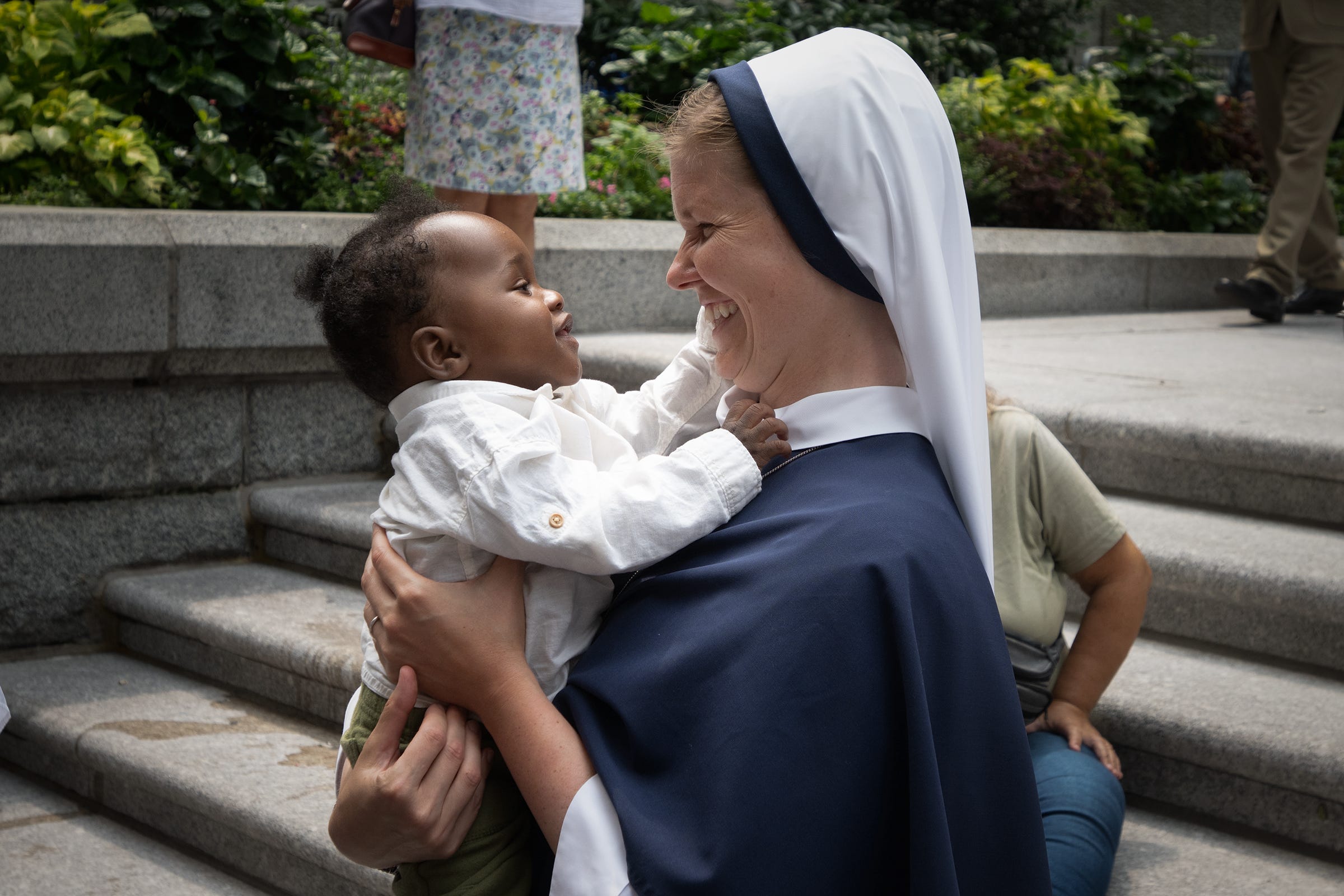
I’ve spent countless hours with the Sisters of Life over the past decade.
Long enough to know that a camera naturally favors decisive moments, while real charity usually begins after the moment everyone notices.
A woman’s decision to continue a pregnancy may happen in an instant.
Living that decision takes years.
There are appointments to keep. Apartments to find. Jobs to hold. Children to care for. Relationships to untangle. There are fears that do not vanish simply because the loving decision to choose life was made.
The Sisters do not disappear when the crisis appears to be over.
They stay.
And that staying may be one of the most important things their vows become in the world.
A promise spoken before an altar becomes a telephone answered.
A ride to an appointment.
A place to sleep. Help with paperwork. A meal shared.
A friendship that remains after everyone else has stopped watching.
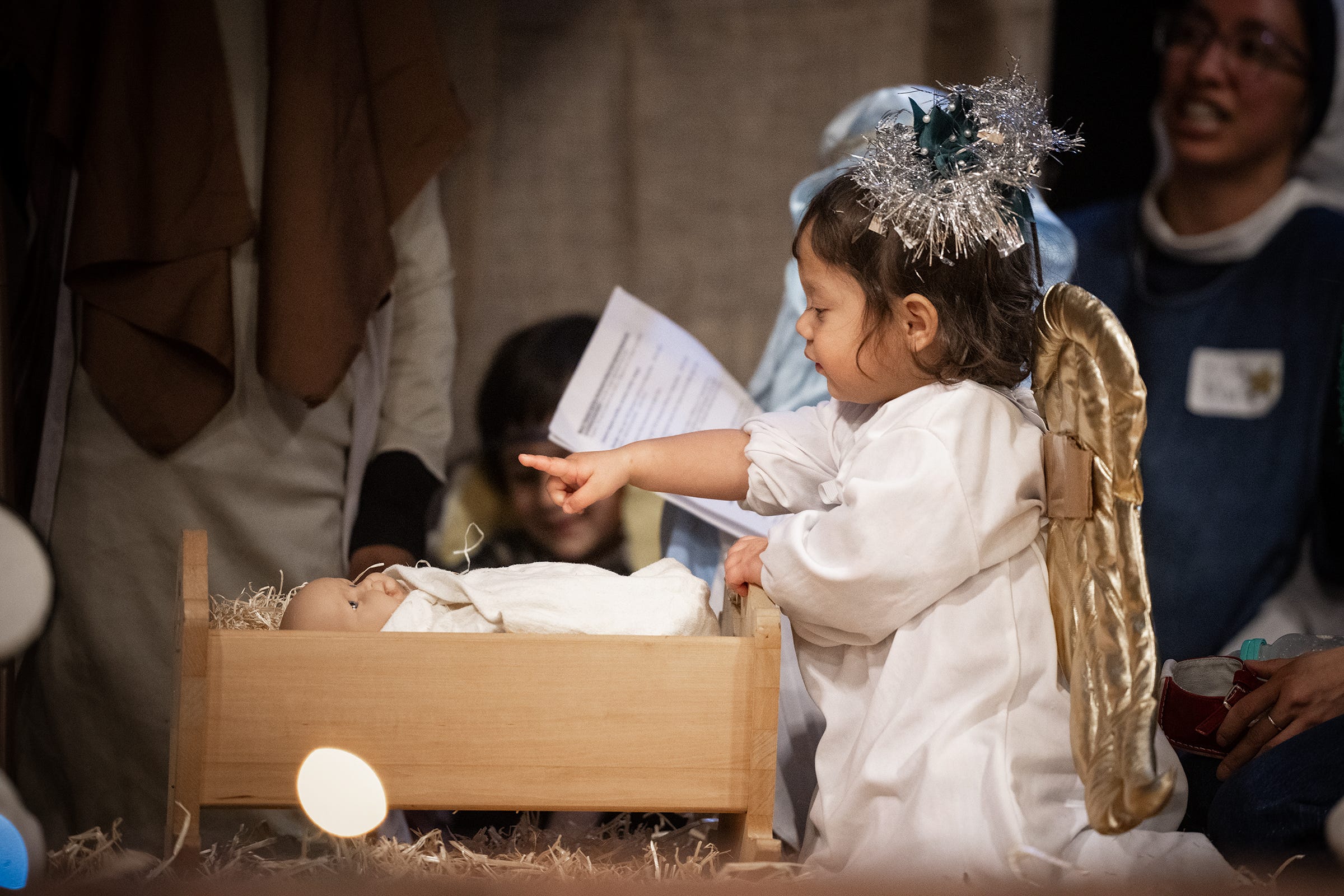
I saw something of that Grace in an old parish gymnasium on East 66th Street.
It was last December, and the Sisters were holding their annual Nativity celebration for mothers and children they had accompanied.
The brightly lit gym went dark.
Then a little drummer boy appeared, moving through the crowd and striking his drum with the wholehearted enthusiasm of a child who had no interest in dramatic restraint.
A tiny angel reached into the manger and tried to take Baby Jesus.
Another child repeatedly made a break for freedom while her grandmother gave chase. Near the stage, a novice served as a gentle but remarkably effective goalkeeper, keeping children from launching themselves into the audience.
It was not polished.
It was alive.
Untidy. Comic. Vulnerable. Exhausting.
And holy.
The families gathered with the Sisters were not case studies, and the children were not statistics or evidence waiting to be deployed.
They were children.
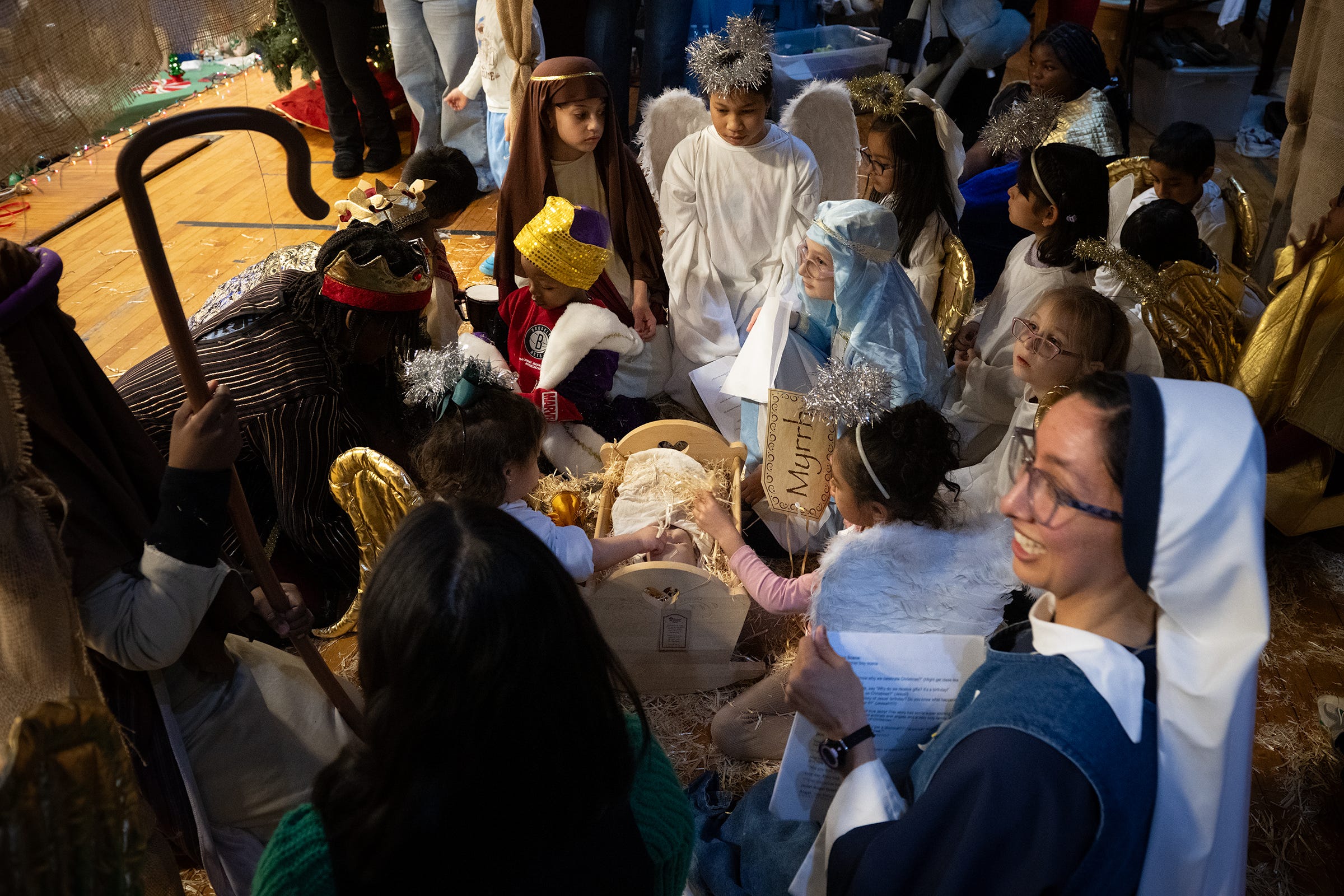
They laughed. They cried. They escaped their costumes. They pulled every adult around them into the beautiful disorder of loving another human being.
That is what the Sisters protect.
Not an idea of life.
Life itself.
They were not there as exhibits in someone else’s vocation story.
They were there as friends.
As part of the community of love which had grown from promises like the ones being spoken before them.
A perpetual vow may appear far removed from the fears of a pregnant woman sitting alone with a decision.
It is not.
The Sister’s yes does not make the mother’s decision for her. Her availability can help create a space in which fear is no longer the only voice the mother can hear.
Her surrender becomes availability.
Her availability becomes accompaniment.
Her fidelity carries a promise: You will not have to walk alone.
That’s what a vow becomes.
Not an achievement offered to God by someone strong enough to impress Him.
An answer to Love already received.
Long before these women offered their lives, Christ had offered His.
Long before they called themselves His, He had called each of them by name.
Their profession was not the beginning of His Love.
It was their answer.
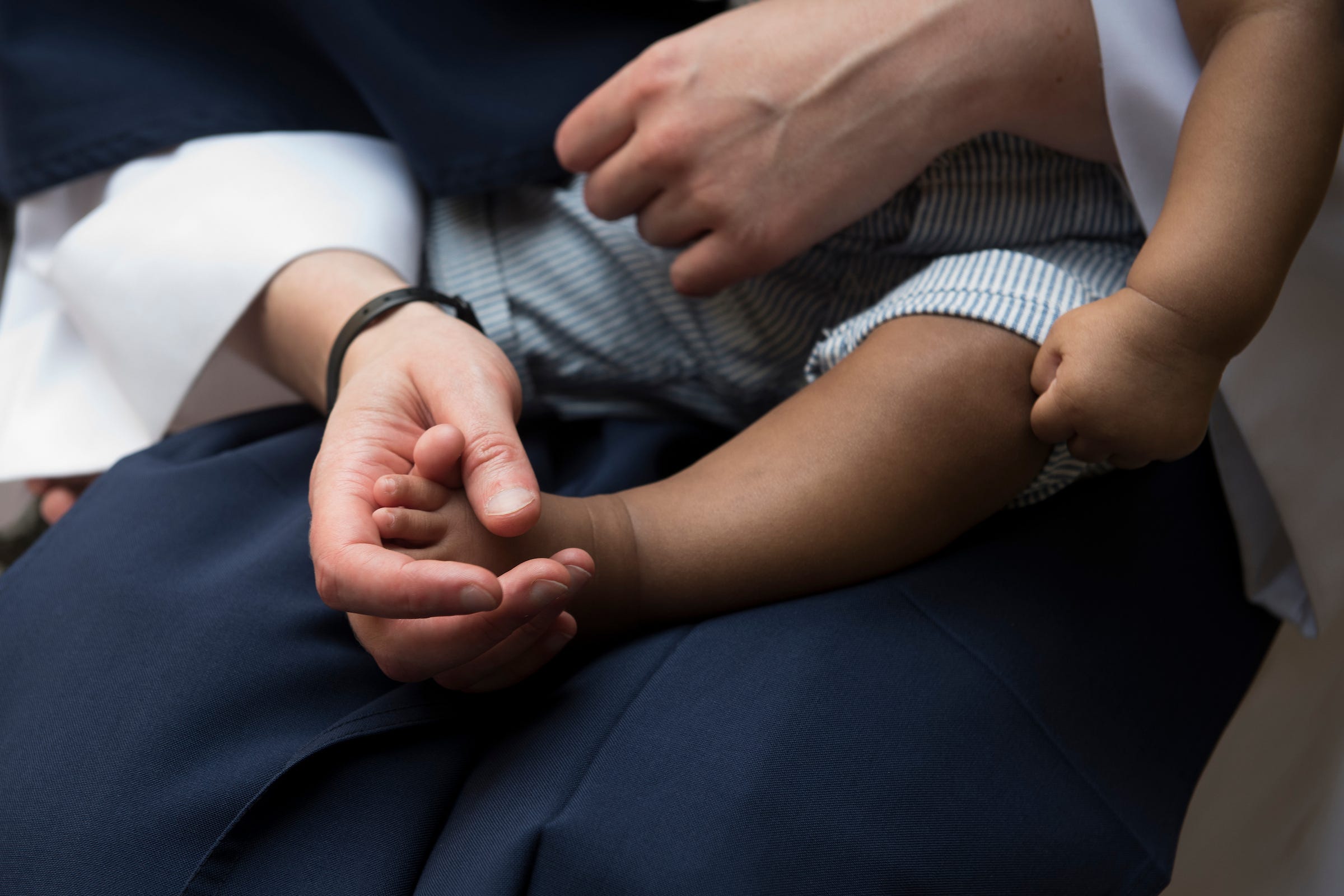
The vows spoken inside St. Patrick’s would not remain there. They would travel into homes and hospitals, convents and retreat houses, college campuses and city streets. Into the hidden places where someone wonders whether her life, or the life entrusted to her, is worthy of love.
Not because the Sisters have solved the sorrows of the age.
Not because every story ends neatly.
But because God has not abandoned this changing world to itself.
Sometimes that Love looks like a woman lying facedown upon a cathedral floor.
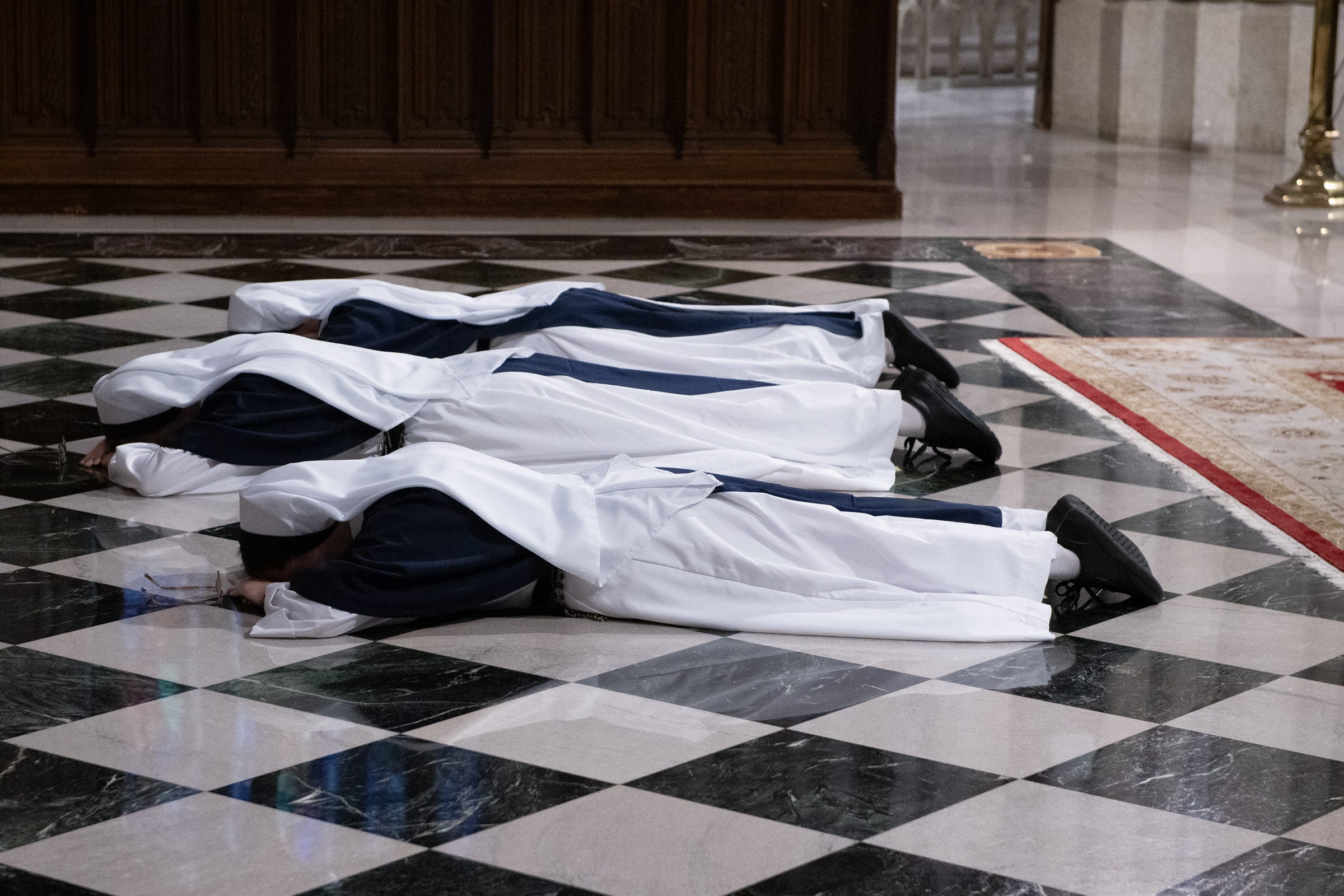
Then rising.
Then spending the rest of her life standing beside someone else.
Every yes is an answer to Love already offered.
Two millennia before the words spoken at St. Patrick’s, a young woman in Nazareth received an invitation. She could not see everything it would ask of her.
She knew only the One who was asking.
And she answered.
The Sisters’ yes echoes hers. In their fidelity, other women may discover that they, too, can answer God freely, without having to answer fear alone.
Their Yes.
A mother’s Yes.
And behind them both…
Mary’s Yes.
And a note before you leave :-) I’ve also created an immersive words-and-photographs feature edition of this story, featuring an expanded gallery and a presentation designed to let the images and text unfold together. If you’d like to experience it, enter The Answering Grace here.
Thanks for reading! This is a truly independent, reader-supported periodical. Your support is crucial. If you are able, please consider a paid subscription or making a ‘Patron of the Arts’ donation of any amount. By doing so, you are not just supporting this effort; you’re a vital part of this mission.
You have my heartfelt thanks for your generosity and support, and please keep me in your prayers, and know of mine for each of you. God Bless, Jeff
Bee\autiful!