

The two boys had already figured out how to become neighbors.
They saw the basketball hoop at the edge of our driveway, walked across the street, and asked if they could use it.
“Of course!”
Their father and I were taking longer.
He and his family had moved into the house across the street about seven months earlier, but we’d never officially met. They didn’t speak much English, and whenever I went outside, they seemed to disappear inside.
Maybe they were shy.
Maybe I was.
Once, I got a wave.
That was about the extent of our diplomatic relations.
Then, one hot afternoon, I saw their father standing in the middle of his lawn.
He was soaked through with sweat, holding a weed whacker and attempting to cut what appeared to be seven months’ worth of grass one stubborn blade at a time.
I empathized.
But more than that, I saw an opportunity.
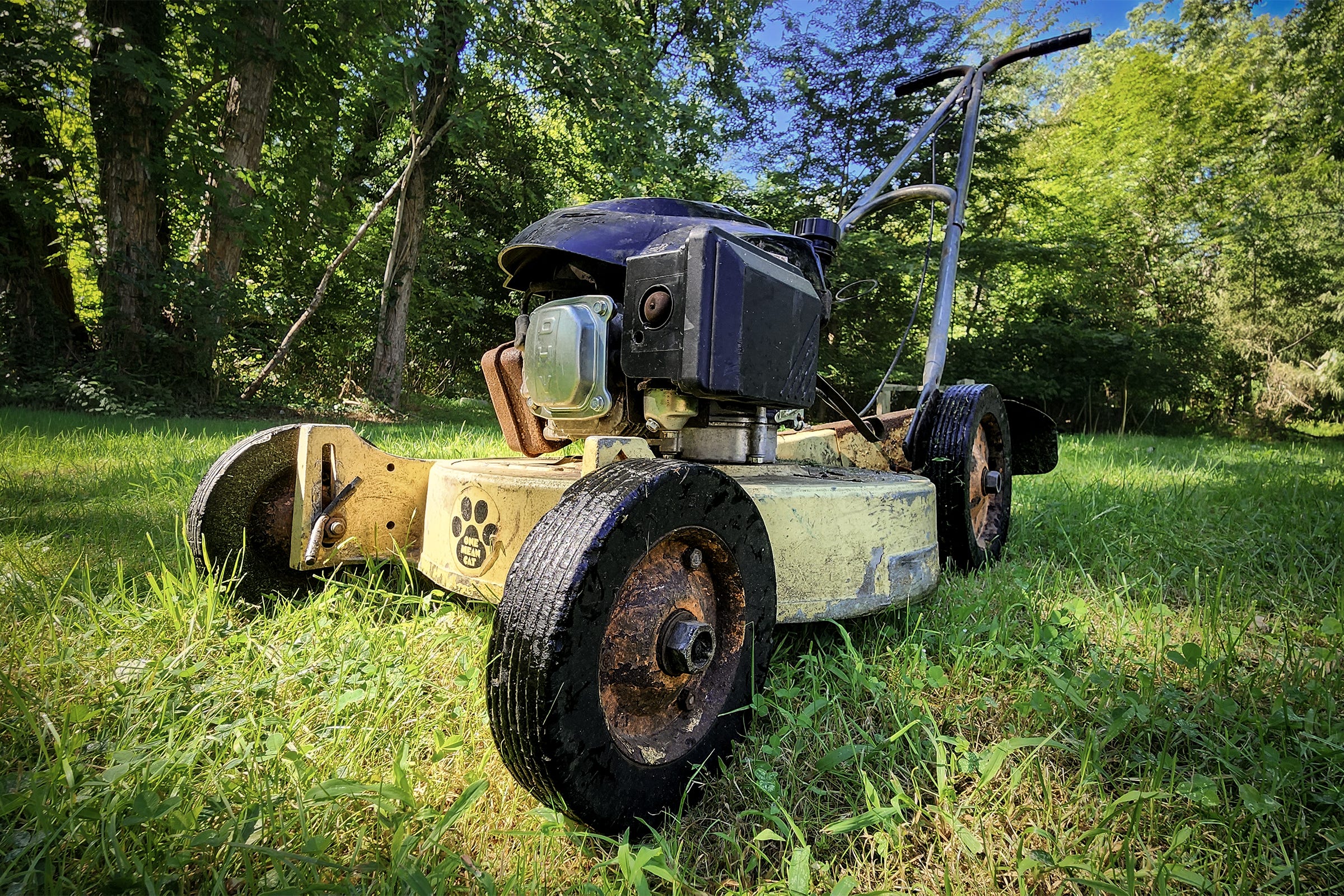
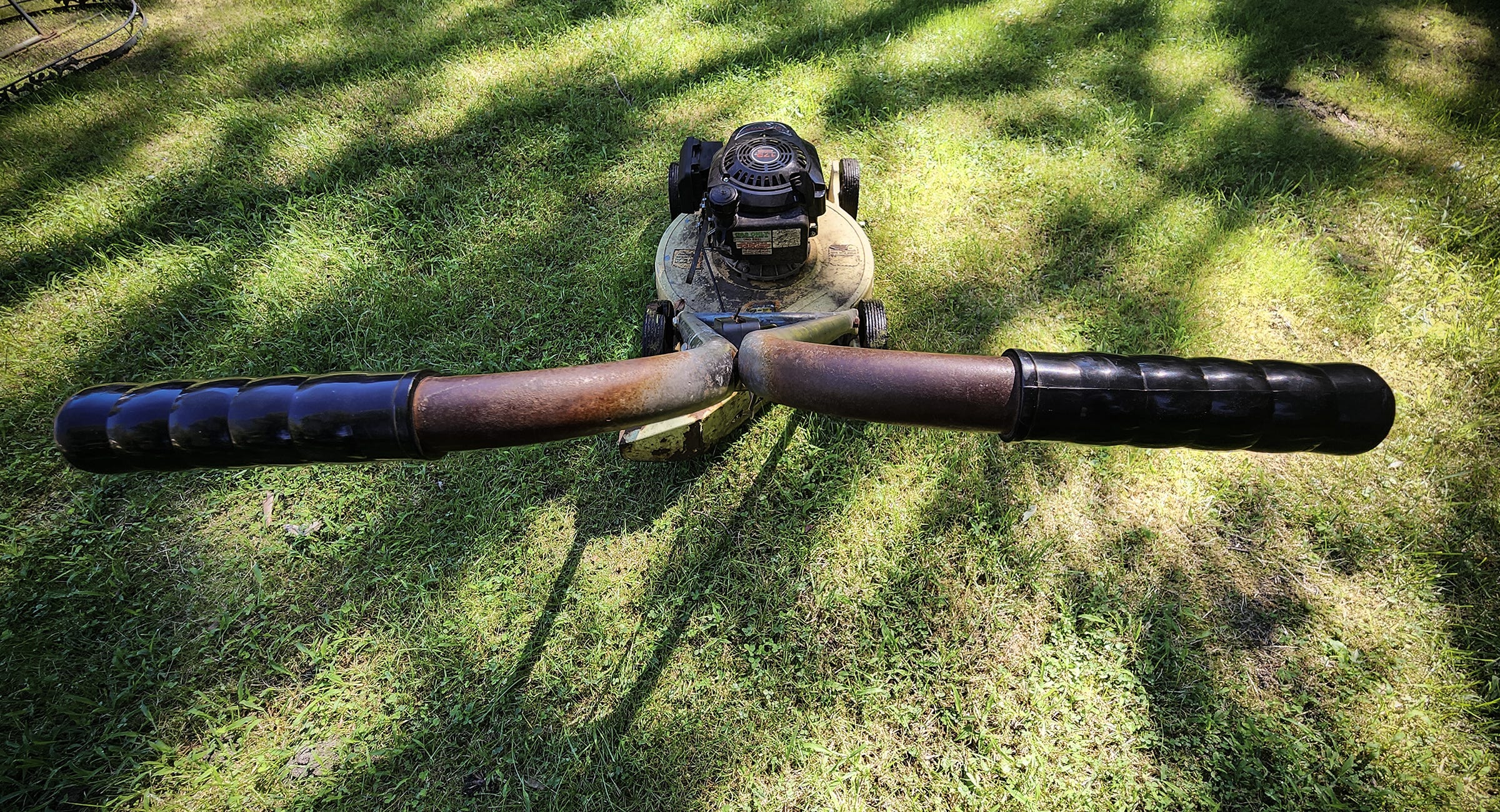
I walked into the garage and rolled out the Diplomat, a 46-year-old lawnmower with a storied past.
To explain how an old orange lawn mower, nicknamed ‘The Diplomat’, became an instrument of international relations, I have to go back to when I was fourteen and employed at St. John’s Parish in Piermont…
The official job may have been cutting grass.
But in practice, I was a lawn-mower starter.
The mower was an older pull-start, early seventies, Sears and Roebuck machine that had apparently been designed to test the limits of teenage perseverance. Every week I was expected to cut about two acres. I spent more time yanking the starter cord, adjusting the choke, begging, threatening, and bargaining with that machine than I did actually mowing.
So… lawn-mower starter.
Around that same time, for reasons I still don’t understand, my father arrived home with a brand-spanking-new commercial Bobcat lawn mower.
It was magnificent.
The deck was heavy cast aluminum. The paint was a brilliant orange. The handle, or pusher thinger, to use the proper mechanical term, stretched out behind it. And sitting proudly atop the deck was a Briggs & Stratton 3.5HP engine that, to my fourteen-year-old eyes, might as well have powered an aircraft carrier.
I nearly keeled over with delight.
My father saw the glazed-over look on my face.
He read my mind.
And then the words I never expected to hear left his lips.
“Under absolutely no circumstances are you to touch this lawn mower.”
I think I blacked out.
Only I know I didn’t, because I remember every detail. Nearly half a century later, I may remember it even better than I did when it happened.
To say I was disappointed would be like saying the Atlantic Ocean is slightly damp.
Perhaps my father was preparing me for life, teaching me that the world’s full of disappointments. It was a rather excessive way to deliver the lesson.
But boy, did it land.
The years passed.
Then one day, when I was in my mid-thirties, I pulled into my father’s driveway for a visit and saw something sitting at the curb.
The Bobcat.
No longer gleaming. No longer bright orange. But unquestionably the same machine.
I jumped out of the car, aghast, and ran toward it. And with the tenderness of an EMT loading a wounded patient into an ambulance, I lifted the old behemoth into the back of my car and brought it home.
Hours later, under the bright lights of my garage, the surgery began.
The prognosis was grim. The once-powerful Briggs & Stratton engine was dead. The carburetor practically flaked apart in my hand. The seals were gone. The cylinder walls looked like the inside of an abandoned brownstone.
But the thing that made the Bobcat a Bobcat, the deck, the frame, the wheels, the handle, and all the other accoutrements I couldn’t possibly name, were still there.
Faded? Yes.
A little rusty? Certainly.
Dead? Absolutely not.
So I drove to the place where every man carrying the remains of an antique lawn mower eventually goes: Harbor Freight.
There, sitting on a shelf, was a shiny new 5 HP Predator engine. It was considerably larger and more powerful than necessary, which meant it was exactly right.
A little drilling followed. Perhaps more than a little.
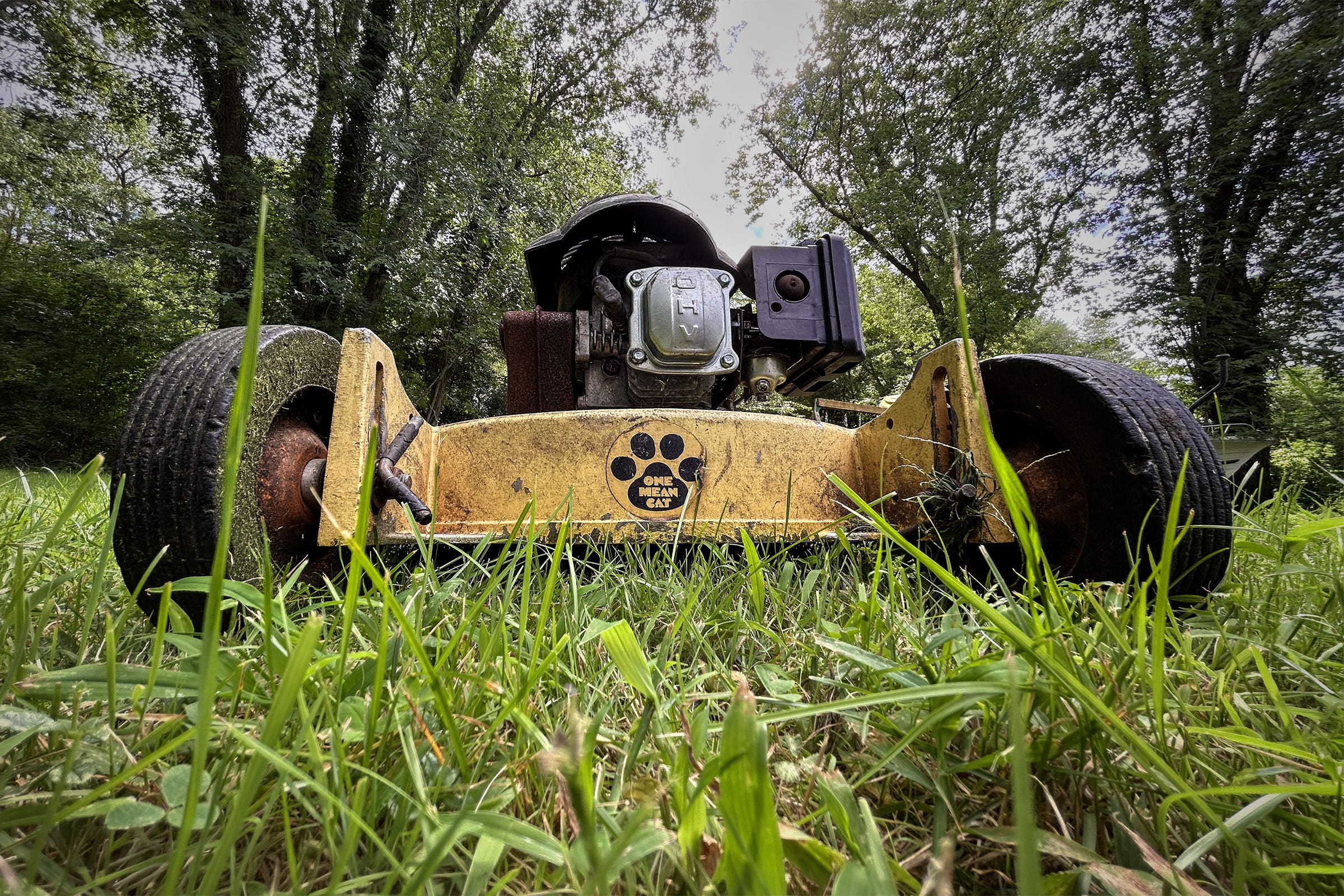
Soon the oversized Predator rested proudly atop the good ‘ol American deck like a bodybuilder wearing a vintage tuxedo.
I filled the tank with Premium and added a splash of two-stroke oil (my own special concoction…yes, it’s a four-stroke, I know, I know…), topped up the crankcase with Mobile One, pushed the primer twice, wrapped my hand around the starter cord, and pulled.
It roared to life.
First pull, mind you.
The machine has never been subtle. Over time, its grass-shredding aggression rattled loose the bolts holding on the muffler, which were lost in the yard. This gave it a near-Harley-Davidson scream capable of terrifying every squirrel, chipmunk, rabbit, and random skunk within a country mile. It takes about three minutes to get used to the machine-gun roar. Probably because by then you’ve lost your hearing.
But what a mower.
The Bobcat doesn’t distinguish between grass, weeds, branches, roots, water bottles, small rocks, or anything else unfortunate enough to wander below its 1000 RPM steel blade. It severs all with equal agility, grace, permanence, and force. And behind it, lawns emerge perfectly even and beautifully manicured.
Pushing it is part yard work and part penance…
And I love it.
But over the years, the old Bobcat developed another quality… one not immediately apparent to the eye, and certainly not to the ear.
It became useful…
Not simply to me, but to other people.
Whenever a neighbor’s mower broke, or somebody moved in without one, or a yard became too much for the sad little grass whip they were trying to use, the Bobcat went into service. It crossed driveways. It traveled down sidewalks. It started conversations. It helped turn people I barely knew into people I knew by name.
Sometimes it came back with a full tank.
Occasionally, something baked came with it.
More than once, a borrowed lawn mower led to an hour-long conversation that had very little to do with lawns.
Which brings us back across the street.
I’ll call my new neighbor Ramon.
He was still standing in the middle of the overgrown yard when I rolled the Bobcat toward him. There was no longer any graceful way for either of us to retreat.
He looked at me.
I looked at him.
Then I pointed toward the mower.
“Lawn mower,” I said, as though I had just translated the Rosetta Stone.
I opened the fuel valve, pumped the primer twice, and pulled the cord.
The Bobcat thundered to life.
First pull, mind you.
I let it roar for a moment, shut it down, and motioned toward the yard.
Ramon’s face changed.
The tired, uncertain expression gave way to a smile.
He extended his hand and introduced himself.
I did the same.
Seven months after becoming neighbors, we finally exchanged names.
The boys had managed to cross the street with a basketball.
We adults apparently required a screaming, four-decade-old piece of industrial equipment.
Ramon graciously accepted the mower.
And soon the old Bobcat was doing what it had done for years, chewing through whatever stood in front of it and leaving something better behind.
At first glance the exchange was simple.
He needed a lawn mower.
I had one.
But that isn’t the whole truth.
I thought I was giving him something.
And I was.
But almost immediately the gift came back.
It returned as a smile.
A handshake.
A name.
An opening where, for seven months, there had been only distance.
He received a mower.
I received a neighbor.
There is a deep and slightly mysterious arithmetic to generosity.
We imagine that when we give something away, we must end up with less; less time, less money, less food, less fuel in the tank. And sometimes we do.
But Grace has a strange way of multiplying what’s given in love. The gift often returns carrying things we never could have bought for ourselves: trust, friendship, gratitude, belonging. Sometimes even apple pie.
Each of us has an old Bobcat somewhere.
For one person it may be the ability to bake. For another, a set of jumper cables, a pickup truck, a spare room, a listening ear, or an hour that could be given to someone who has run out of strength.
The gift itself isn’t really the point.
The crossing is.
Love of neighbor doesn’t always begin with a grand gesture.
Sometimes it begins with whatever is already sitting in the garage.
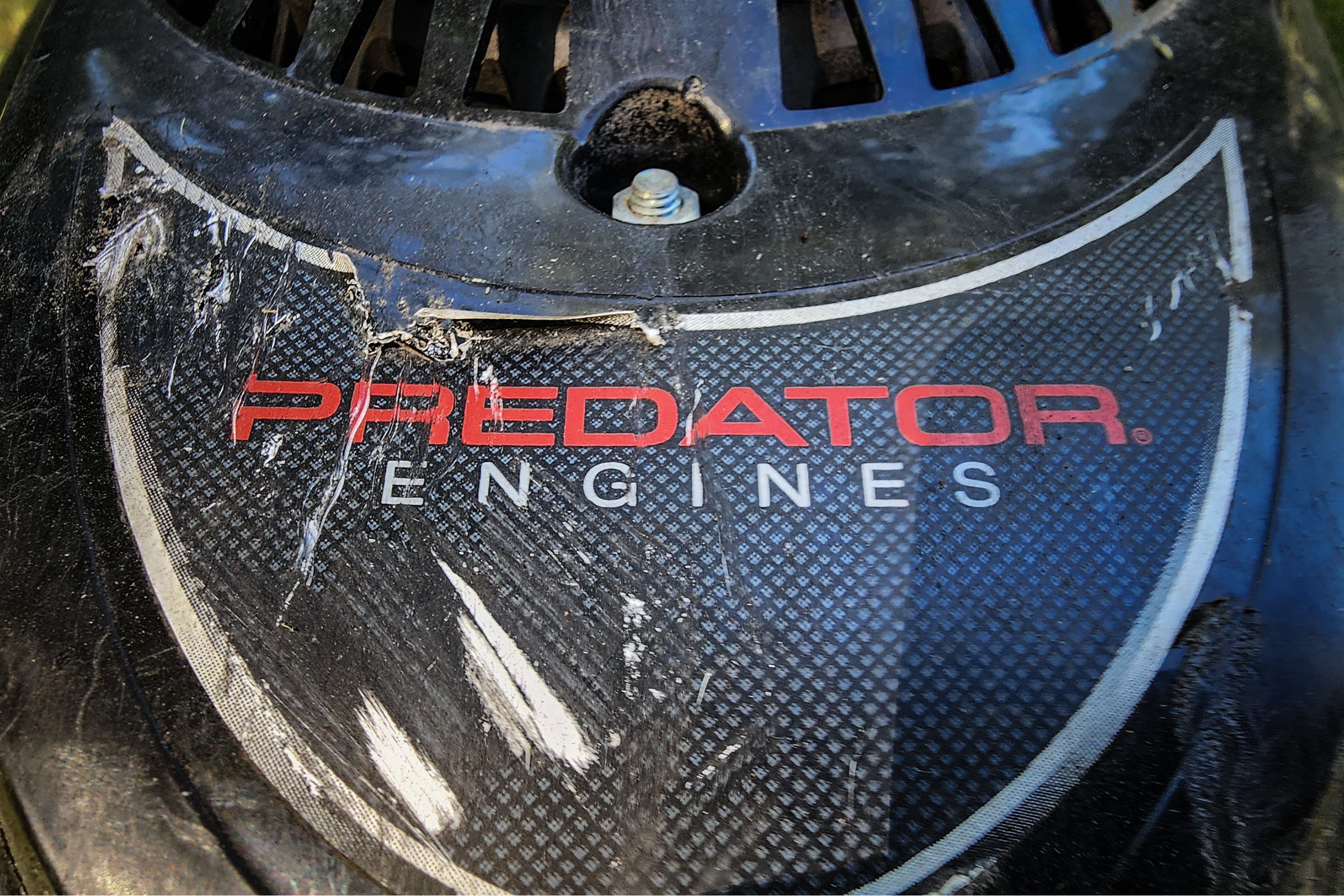
When I first saw the word ‘Predator’ stamped across the front of that replacement engine, I laughed.
But over the years the name has proven strangely fitting.
The old Bobcat is a predator of grass, weeds, branches, roots, abandoned water bottles, and the occasional small creature foolish enough to linger nearby.
But its finest prey has always been distance.
It devours the few yards between one house and the next.
It cuts through hesitation.
It tears down the invisible fences that can stand between people long after the property lines have been drawn.
And every time I roll it across the street, I somehow come home carrying more than I took with me.
The old Bobcat isn’t for sale.
Wouldn’t fetch much if it were.
But its true value is beyond measure.
And whatever your Bobcat is, it’s certainly that valuable too.
Thanks for reading! This is a truly independent, reader-supported periodical. Your support is crucial. If you are able, please consider a paid subscription or making a ‘Patron of the Arts’ donation of any amount. By doing so, you are not just supporting this effort; you’re a vital part of this mission.
You have my heartfelt thanks for your generosity and support, and please keep me in your prayers, and know of mine for each of you. God Bless, Jeff
Man, what’s going on? A story about an old lawnmower floods me with joy. Thanks Jeffrey!
Genius!!