

“You sure this is you?” she asked, slowly raising her eyes from my driver’s license. To be fair, I’d renewed my license by mail for as long as I can remember, and the photo may well have been twenty years old. Still, no one needs to be reminded that they’re getting old. I have my lower back for that.
The next delightful thing she said was that since the hotel had just been renovated, there were no amenities. AKA: no microwaves. To be clear, I book hotels based on microwaves, parking and the view. In that order.
Out went the frozen dinner I’d planned to make. I know, first-world problems.
So, with a resigned smile and a shrug, she handed me two Twix bars as consolation.
I smiled.
Life is good.
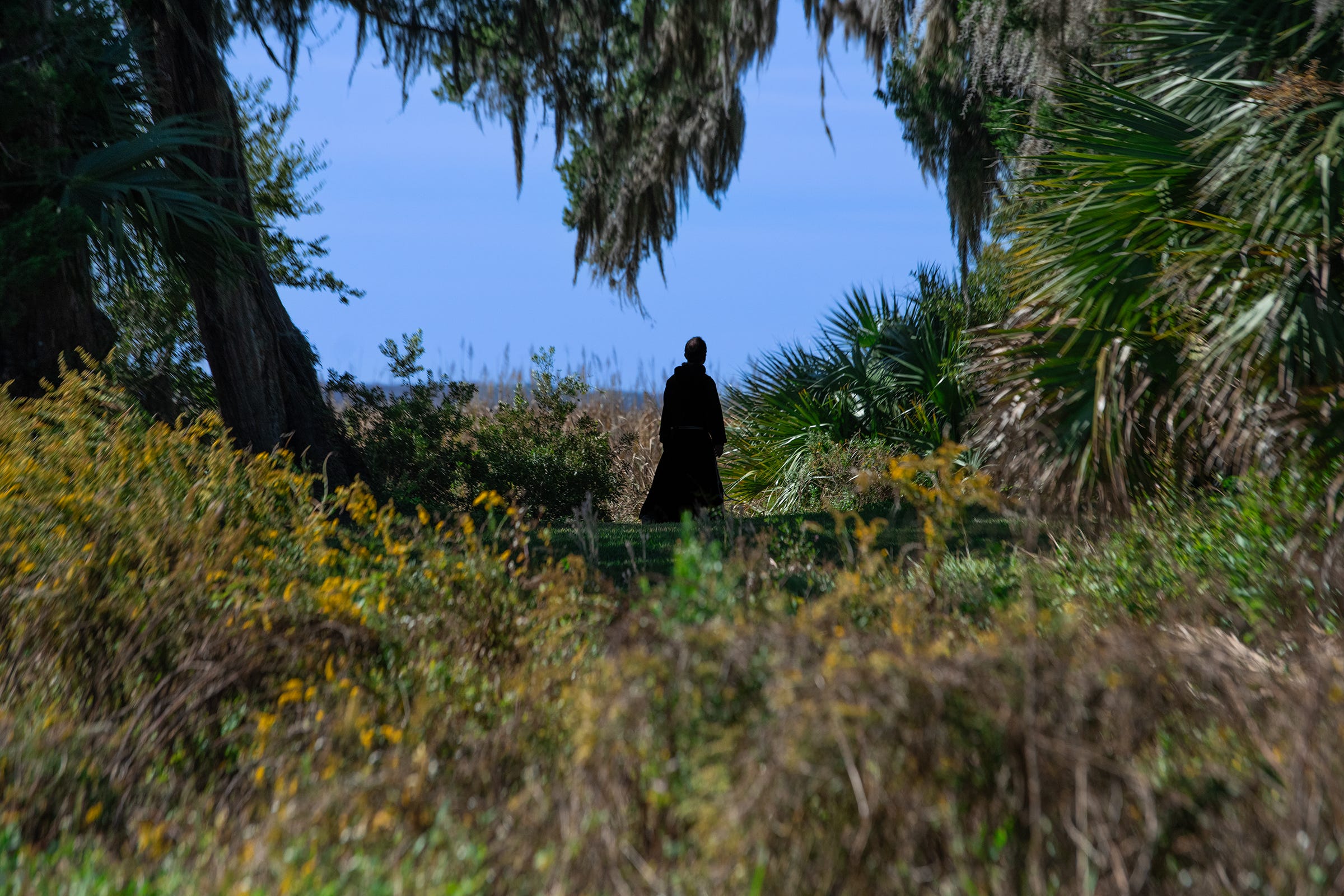
I’d just returned from some reconnaissance in the small “city” of Darien. The second oldest in Georgia, the welcome sign announced. Impressive, I suppose. It’s also home to Fort King George, built by the English in 1721. But what brought me there went back much further: five Franciscan friars martyred along this stretch of Georgia’s coast in 1597.
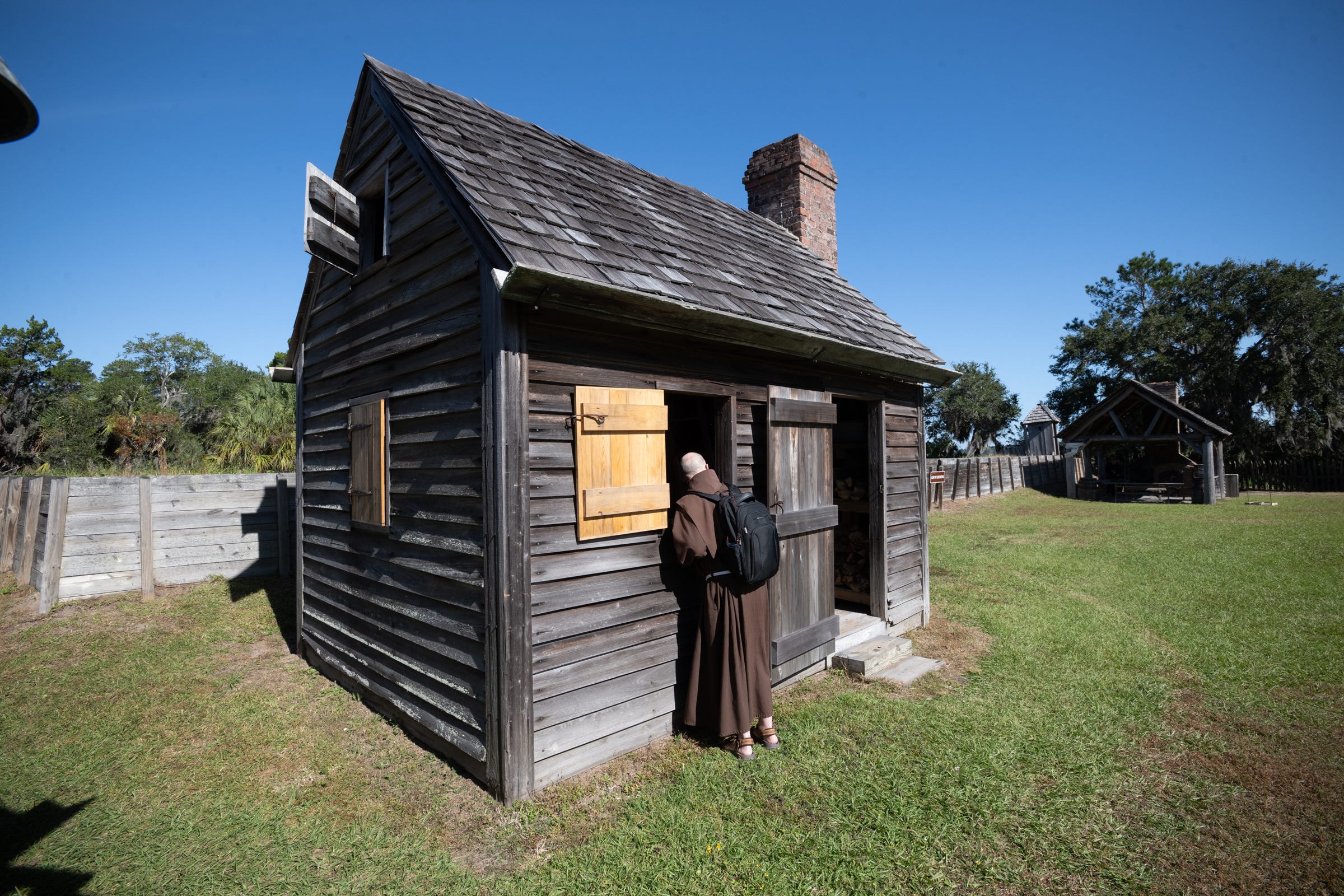
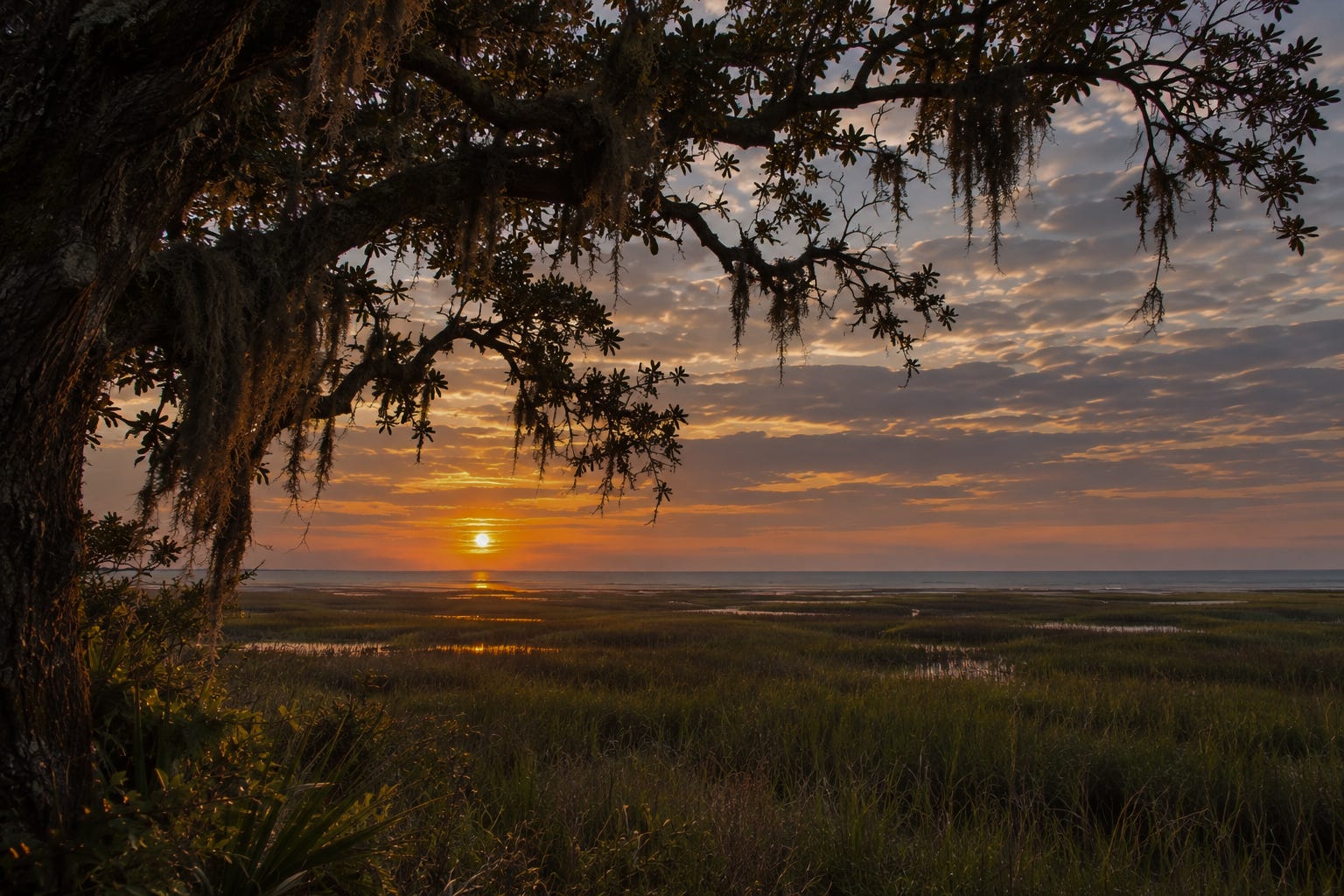
I’d been this way before. Back in May, I’d followed the Blessed Sacrament north from St. Augustine, photographing the third National Eucharistic Pilgrimage as the nation approached its 250th anniversary. It brought me here to this very fort, on the edge of a salt marsh that seemed to go on forever.
The air was thick with heat and salt. And I remember thinking how freely we’d traveled. Public streets. Open church doors. Catholic communities waiting to welcome Him.
[NEP Photo]
But someone had carried the faith here before us.
And in this part of Georgia, five of those men had names.
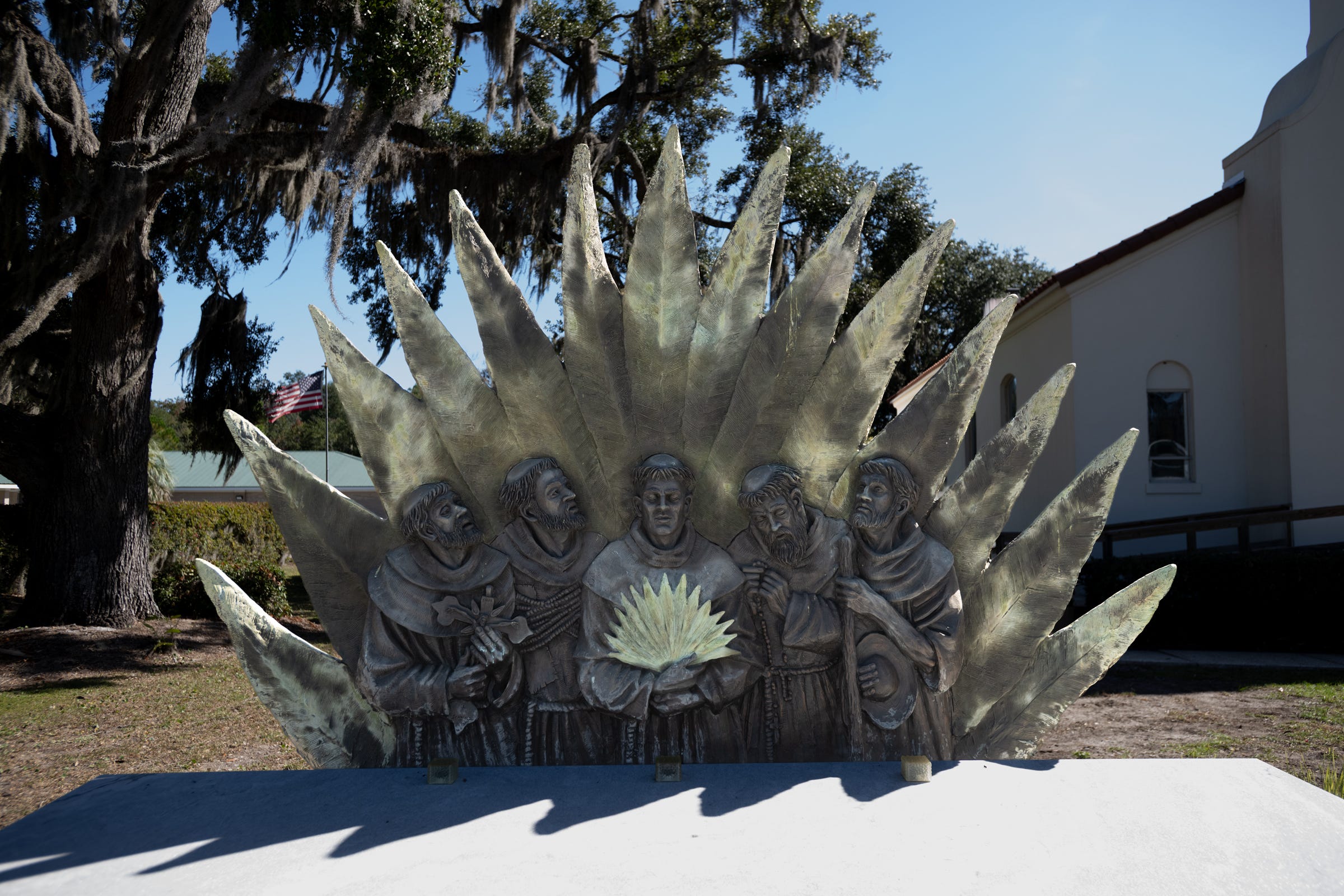
Pedro de Corpa. Blas Rodríguez de Cuacos. Miguel de Añon. Antonio de Badajoz. Francisco de Veráscola.
Four priests and a lay brother, Spanish Franciscans who left everything familiar to live among the Guale, a people whose villages and history stretched back generations before any ship arrived. The friars learned the language, taught, and baptized. Many Guale embraced the Gospel and became their fellow Catholics. And when violence came, some tried to protect them.
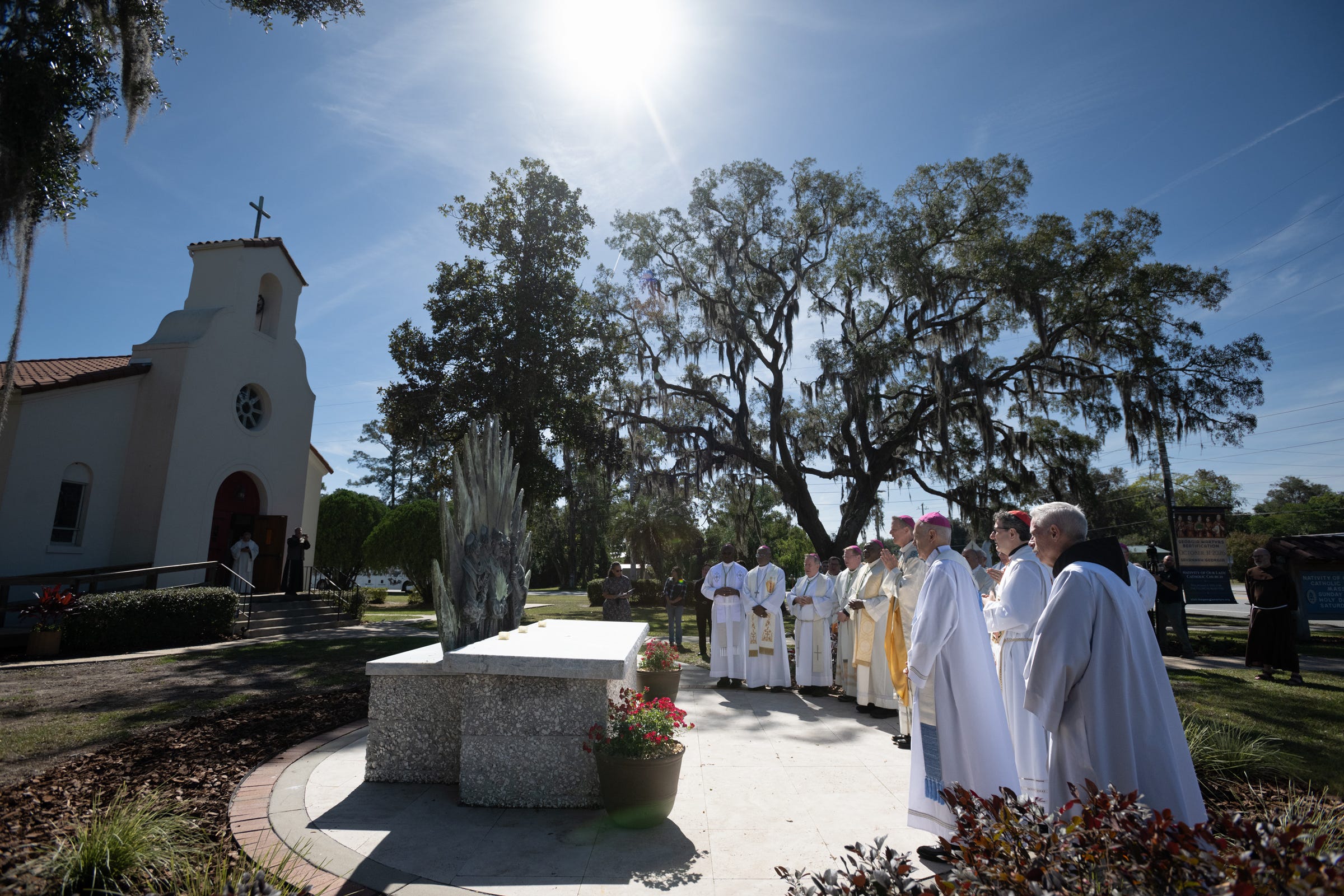
It came in September 1597. Juanillo, a baptized Guale leader, rejected Father Pedro’s insistence that Christian marriage required fidelity to one wife. He gathered an armed band, and Father Pedro was the first to die. The killing spread from mission to mission. On what is now St. Catherine’s Island, Father Miguel and Brother Antonio were urged to flee and stayed. Father Francisco, returning from St. Augustine with supplies, was killed as well.
At Tupiqui, Father Blas was permitted to celebrate one last Mass.
Knowing what awaited him, he offered the Holy Sacrifice. Before his own life was taken, Christ became present on the altar.
The story could end there…
But standing beside that marsh more than four centuries later, with the Eucharistic pilgrimage passing through the same region, I found myself thinking about everything they couldn’t have seen.
The people who would come after them. The prayers that would be offered. The children who would be baptized and grow old in the faith. The generations of priests, religious, and laypeople who would continue to carry the Gospel into another century.
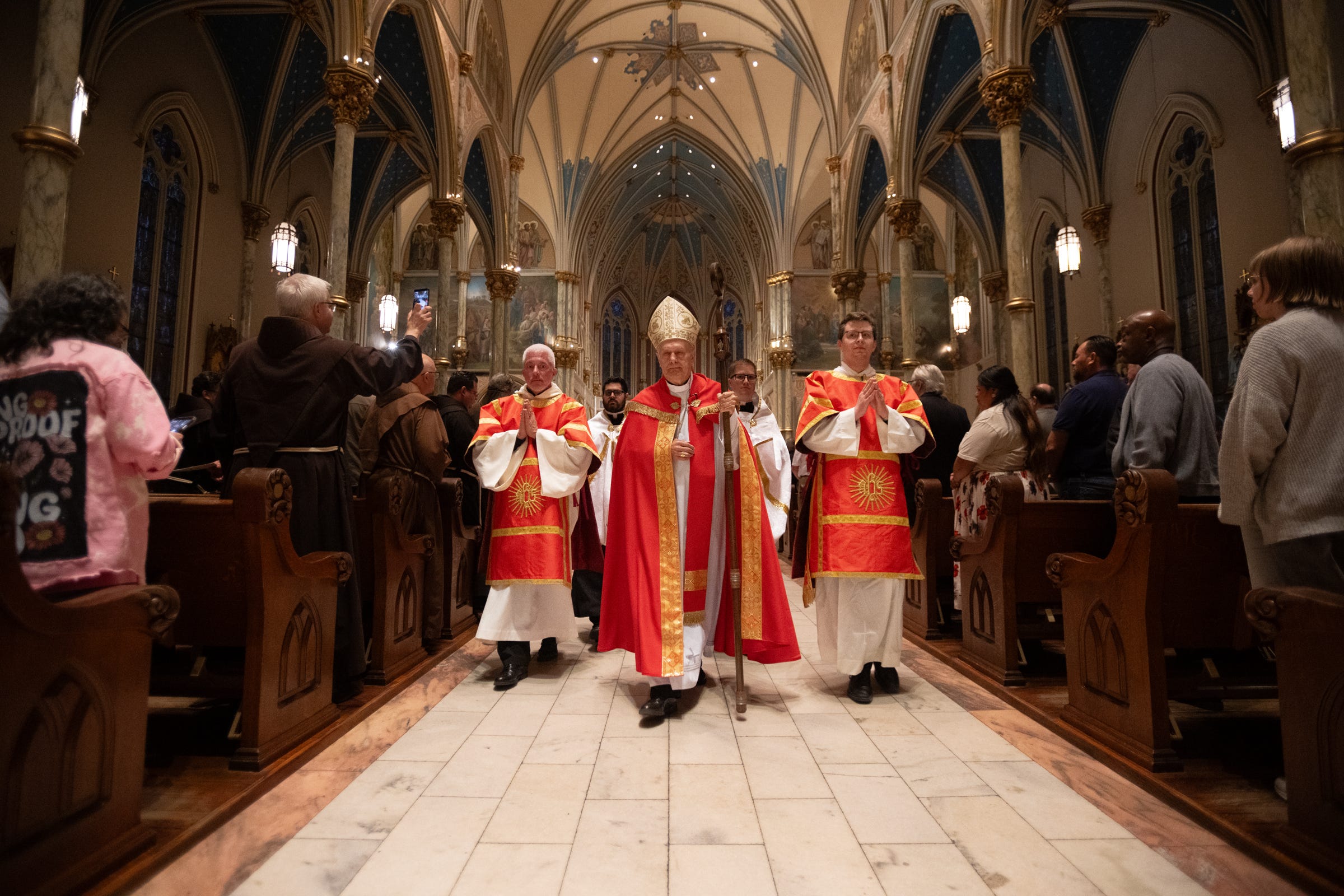
On October 31, I stood in the Savannah Convention Center beside the Savannah River as the Church beatified them. Their portraits hung from the towering ceiling above the main aisle, as if looking down from heaven while the entrance procession made its way forward. Beneath them, the faithful had gathered to give thanks for five men who offered their lives in witness to Christ.
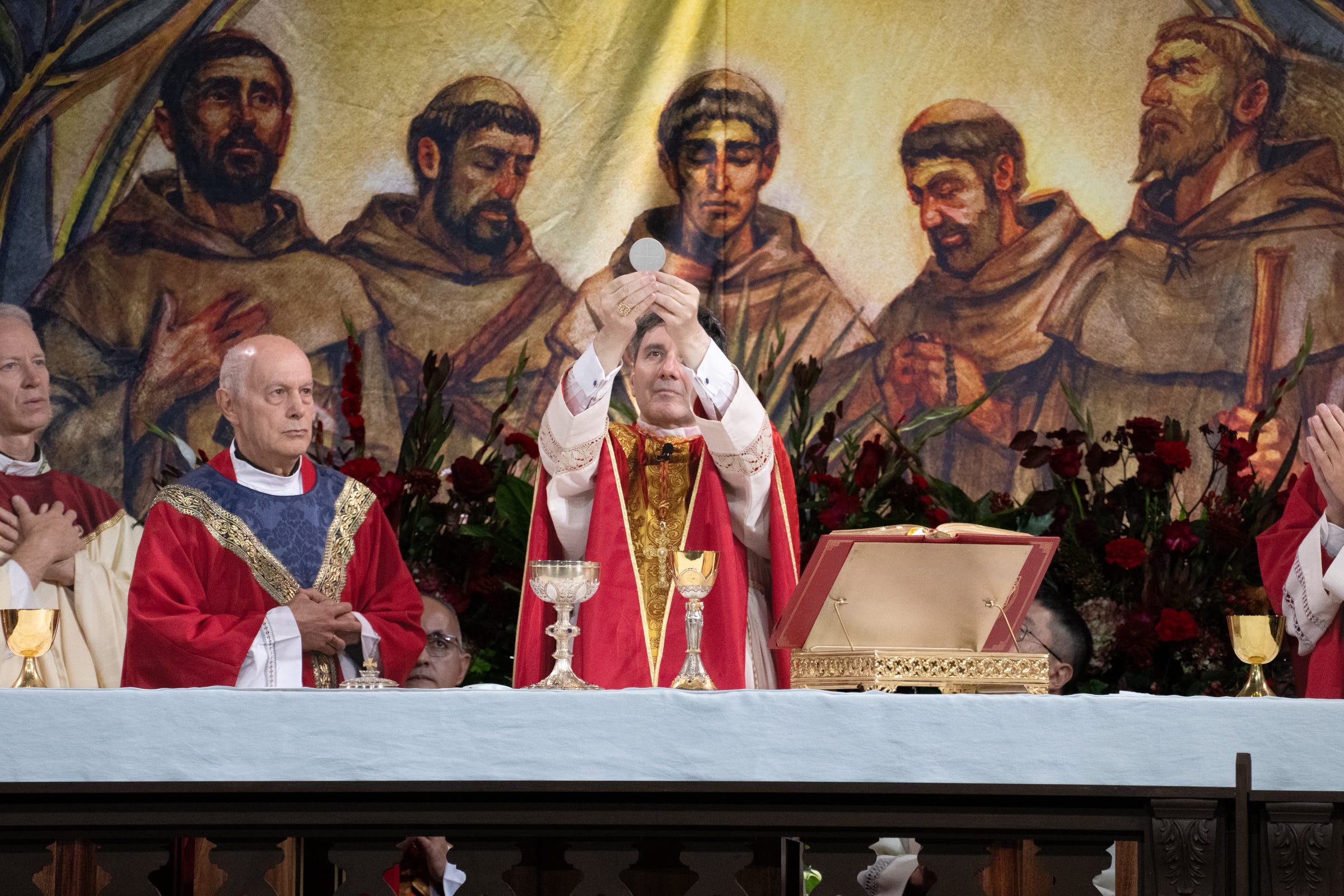
The Blessed Sacrament was at the heart of that celebration, as it had been at the heart of their mission. As it had been at Tupiqui, when Father Blas offered his last Mass.
We inherit so much through people whose names we’ll never learn. Someone built the church. Someone taught the prayers. Someone kept the faith through years when keeping it was difficult, costly, or dangerous.
Someone handed it to us.
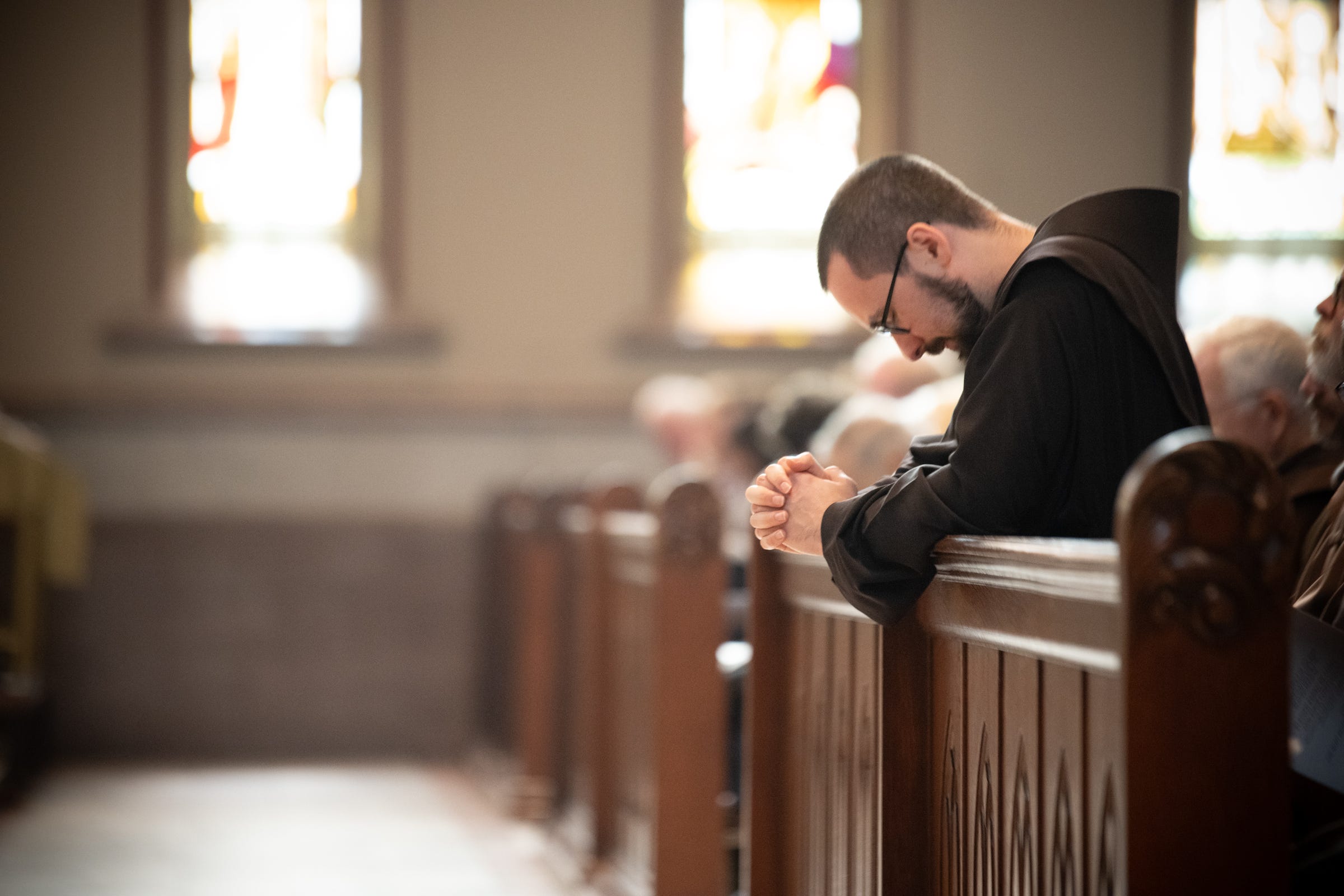
The Georgia Martyrs give five names and five faces to that immense company.
Their witness also asks something of us.
Because the faith entrusted to us will, in turn, be entrusted to someone else. Through what we teach our children. Through the care we give someone who’s suffering. Through our willingness to live what we profess when doing so becomes uncomfortable.
Back at the hotel that night, I thought of the distances those friars traveled, and then of the much smaller distances I sometimes hesitate to cross.
And I thought of the marsh.
Of the salt-heavy air and the vastness of the coast. Of men who crossed an ocean because they believed the people living here should know the Love of Jesus Christ.
They couldn’t see how far their witness would reach.
Neither can we.
But we can receive the faith with gratitude, live it with courage, and place it in the hands of those who come after us.
As they once placed it in ours.
Here, on the far shore.
Thanks for reading! This is a truly independent, reader-supported periodical. Your support is crucial. If you are able, please consider a paid subscription or making a ‘Patron of the Arts’ donation of any amount. By doing so, you are not just supporting this effort; you’re a vital part of this mission.
You have my heartfelt thanks for your generosity and support, and please keep me in your prayers, and know of mine for each of you. God Bless, Jeff
Holy Franciscan Martyrs, pray for us!