

I like pictures.
On the wall of my office, I have a few that I return to often.
One is of the Blessed Sacrament, held in a monstrance at the Shrine in Hanceville, Alabama. I took it during adoration while I was there for Mother Angelica’s funeral. It’s the kind of image you don’t just look at, you enter it.
I also have a sketch of an old seventeenth-century galleon, braced against stormy seas. It sails hard into dark, tumultuous skies. I’ve always loved the sea… the mystery of it, the adventure of it, the sense that something is always just beyond sight.
And then there’s another image tucked a bit off to the side.
A photograph I’ve always loved.
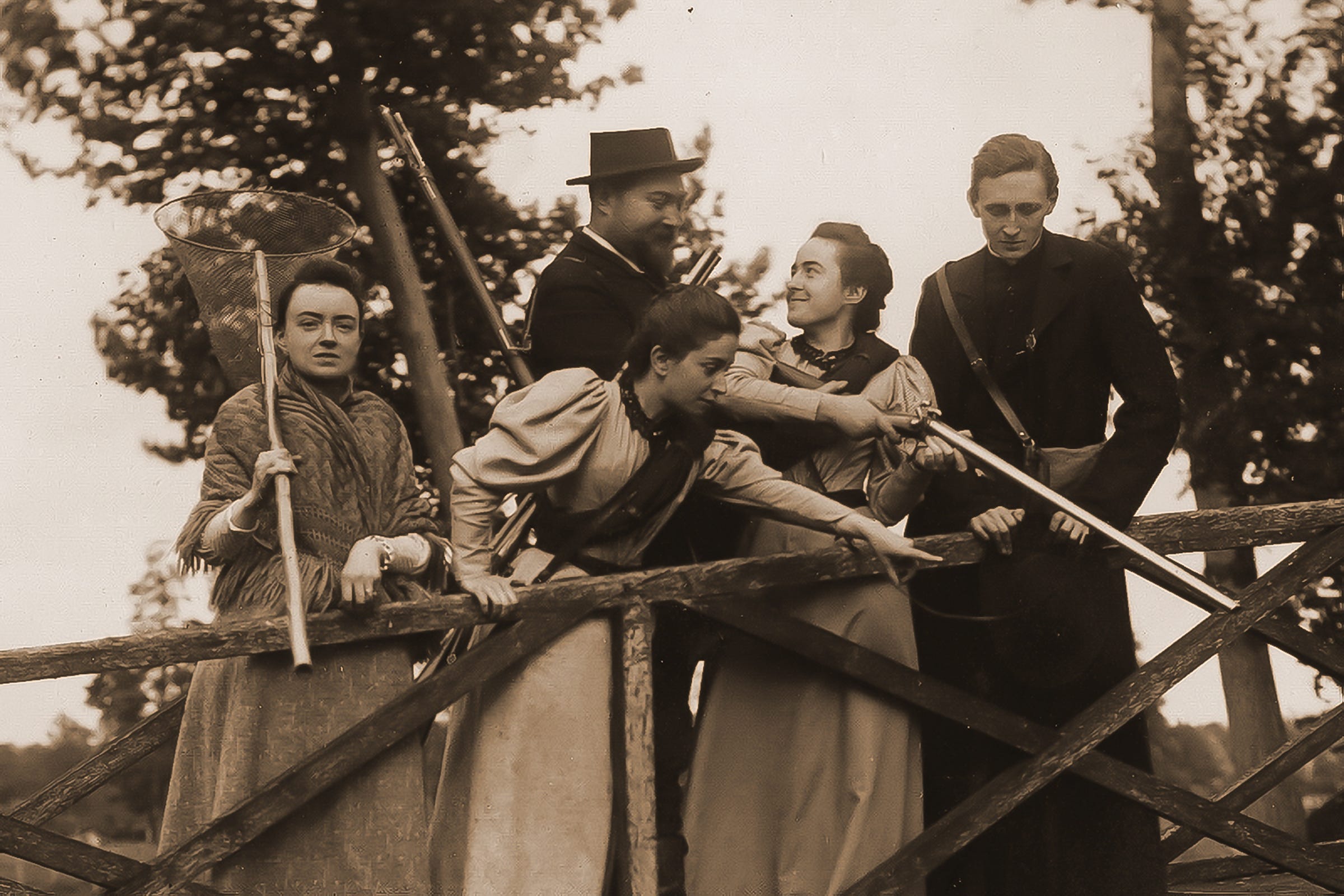
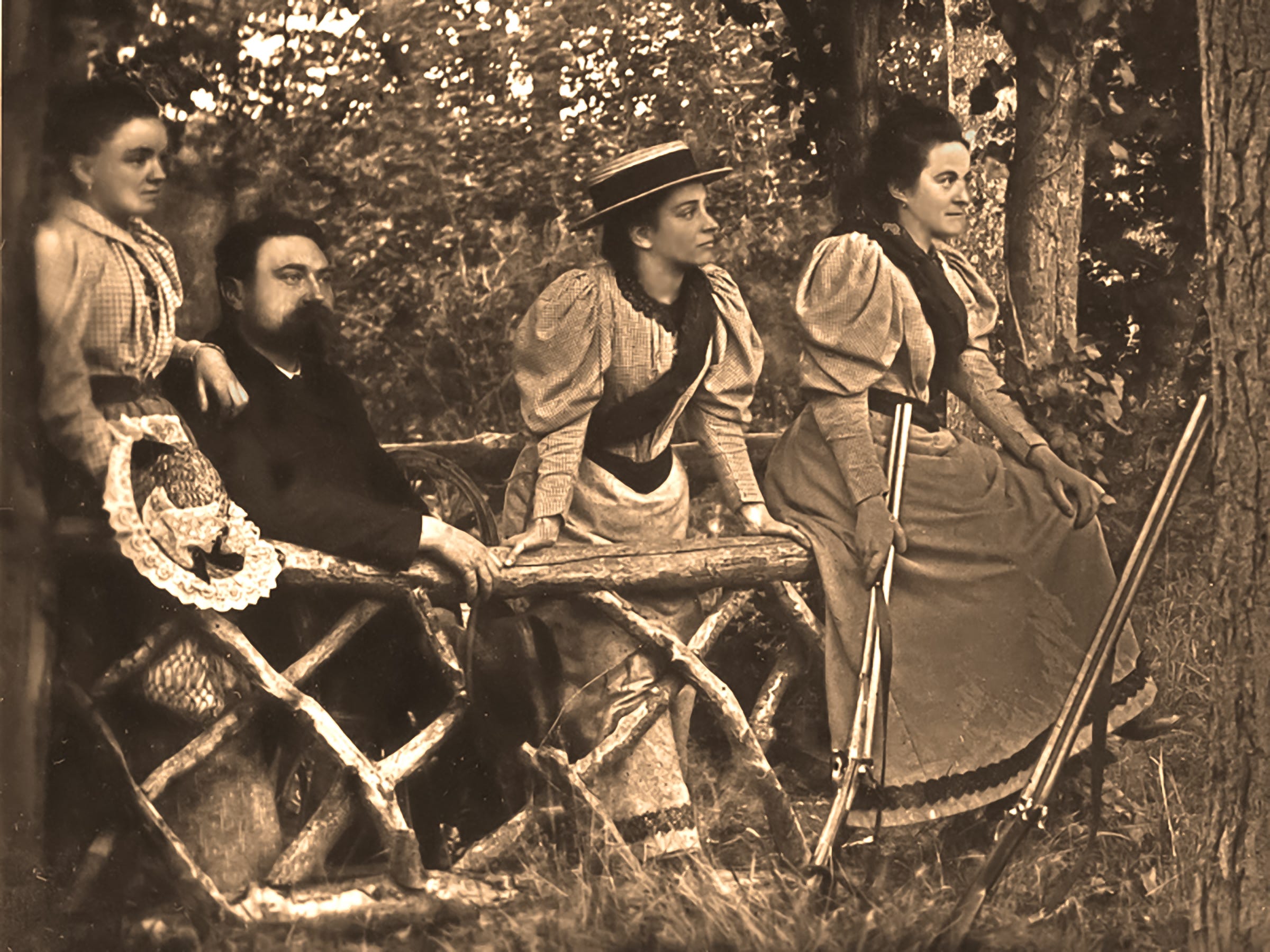
For years, I thought it was a candid moment from another era. A little wild. A little mysterious. Céline Martin and her friends, standing on a bridge, brandishing rifles like explorers or revolutionaries. I even used it once in an article about the pursuit of excellence.
It felt real.
But it turns out…
As usual…
I was completely wrong.
Last year, while diving deeper into the life of Céline Martin—the sister of Saint Thérèse of Lisieux, better known as Sister Geneviève of the Holy Face—I stumbled onto something astonishing.
That photograph wasn’t documentary at all.
It was part of a play.
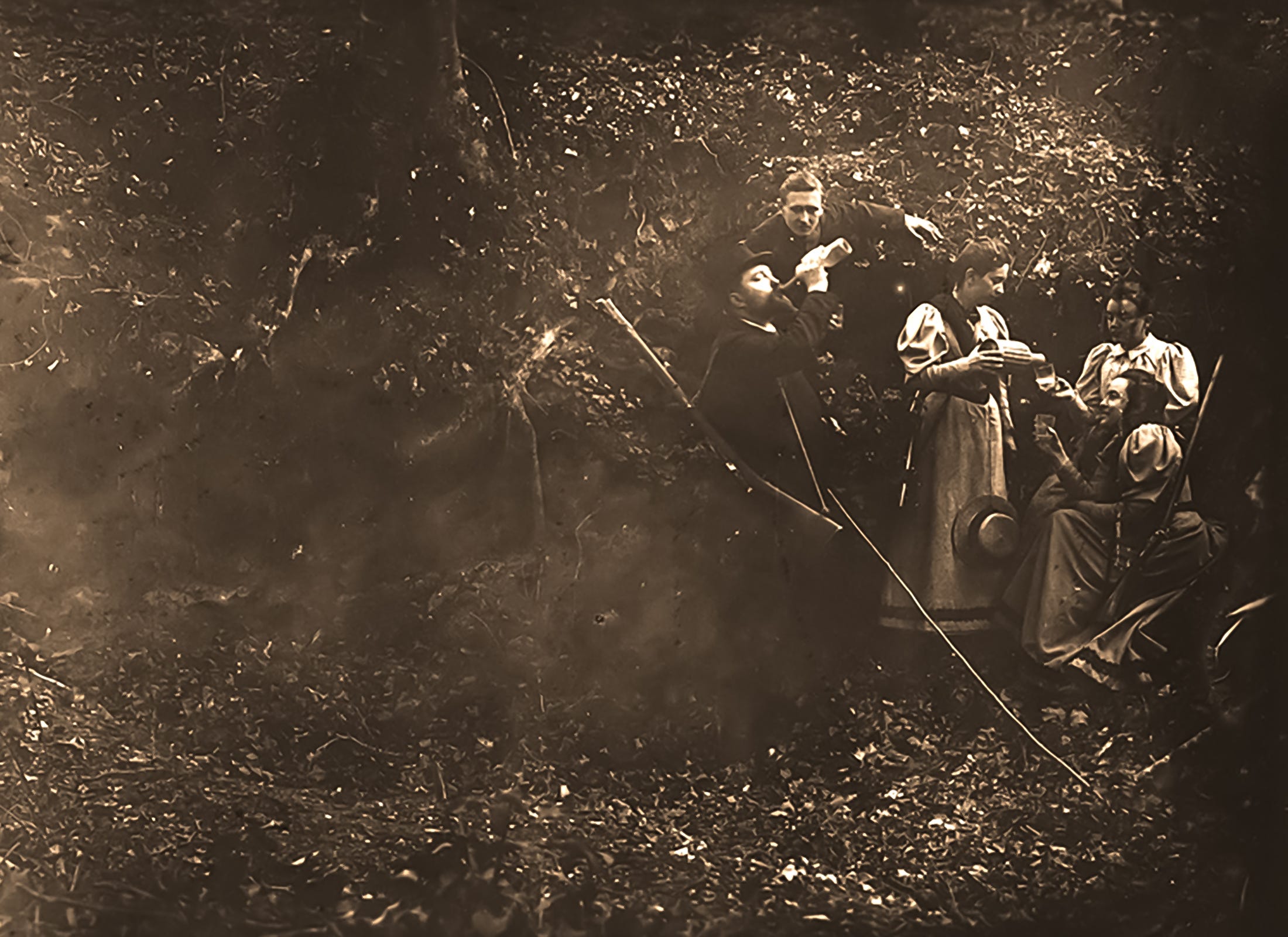
In July of 1894, Céline and some of her friends and family staged and photographed a twelve-scene production titled Voyage excentrique aux Cordillères des Andes—The Eccentric Voyage to the Andes. It was a kind of comedic “photo-theatre,” inspired by the Chilean travels of their friend, Abbé (Father) Joseph de Cornière, and performed on the Guérin family estate known as La Musse.
The troupe included the Abbé himself, Dr. Francis La Néele (Céline’s future brother-in-law), Marie and Jeanne Guérin, and Céline, armed with props, costumes, and a sense of gleeful adventure.
They weren’t crossing the Andes.
They were making up a story.
Creating a living photo-story decades before motion pictures existed.
Each scene was paired with a rhyming caption penned by the Abbé. The tone was whimsical, satirical, almost cinematic.
It begins like an expedition… and slowly unravels into delightful chaos.
The explorers lose their way. They tumble down ravines. They encounter a “panther.” They rescue one another with ropes. And finally, they return home—triumphant.
Reading the surviving verses feels like watching a silent film unspool…
“Down from the mountain’s craggy side
Our gallant band descends once more,
Through shadowed woods their steps they guide,
Still pressing on as once before…”
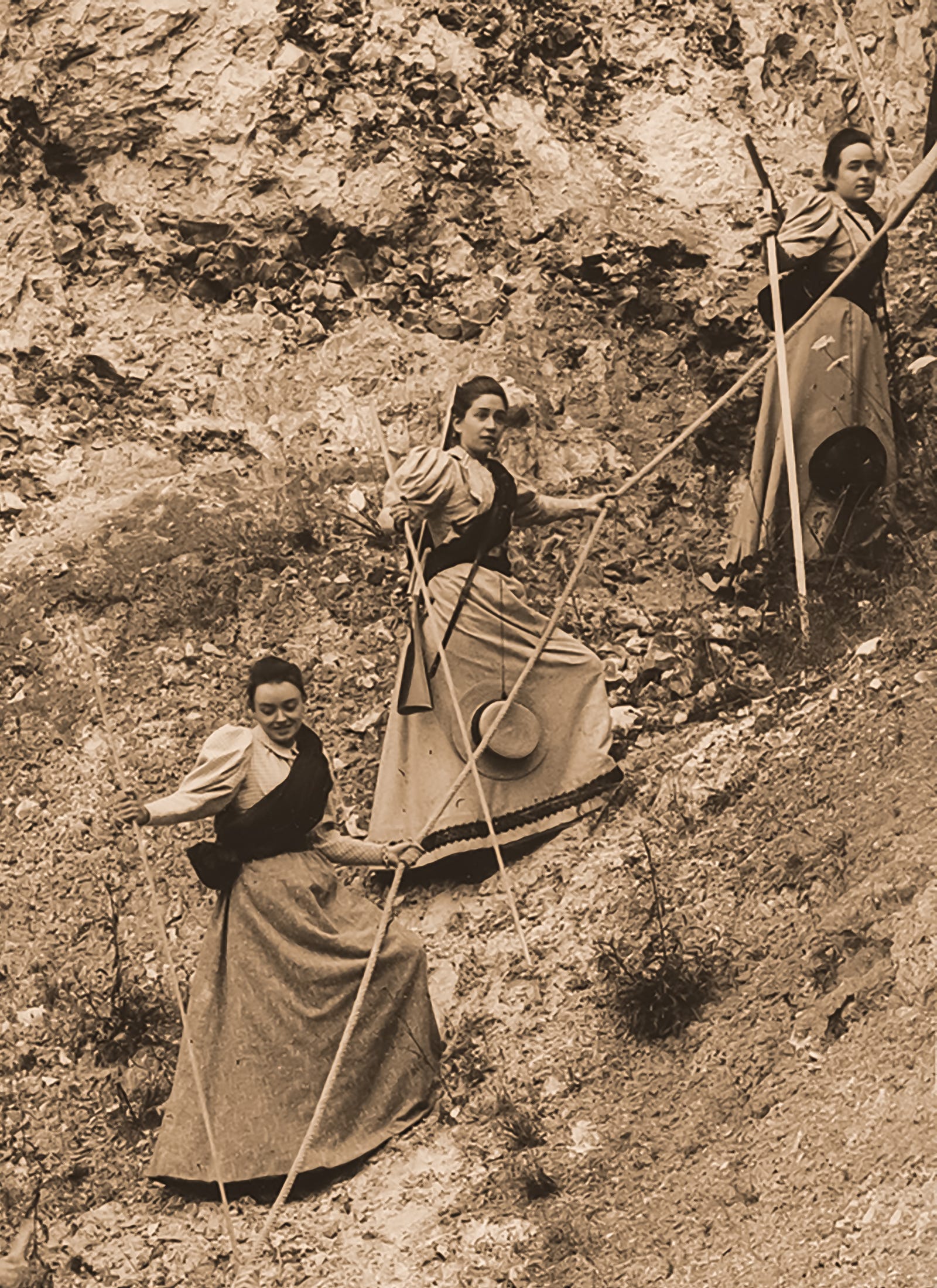
Then comes panic, a “terrifying roar” in the woods, followed by the doctor’s calm and the ladies’ shrieks:
“‘Pshaw!’ said the doctor, ‘calm your dread,
’Tis but a cat with lusty lungs!’”
And finally, the climactic moment:
“Behind the brush the hunters crouched,
‘Fire!’ cried the Abbé, quick and bold —
The beast leapt high — then headlong rolled,
Its mighty roar forever hushed.”
It’s brilliant.
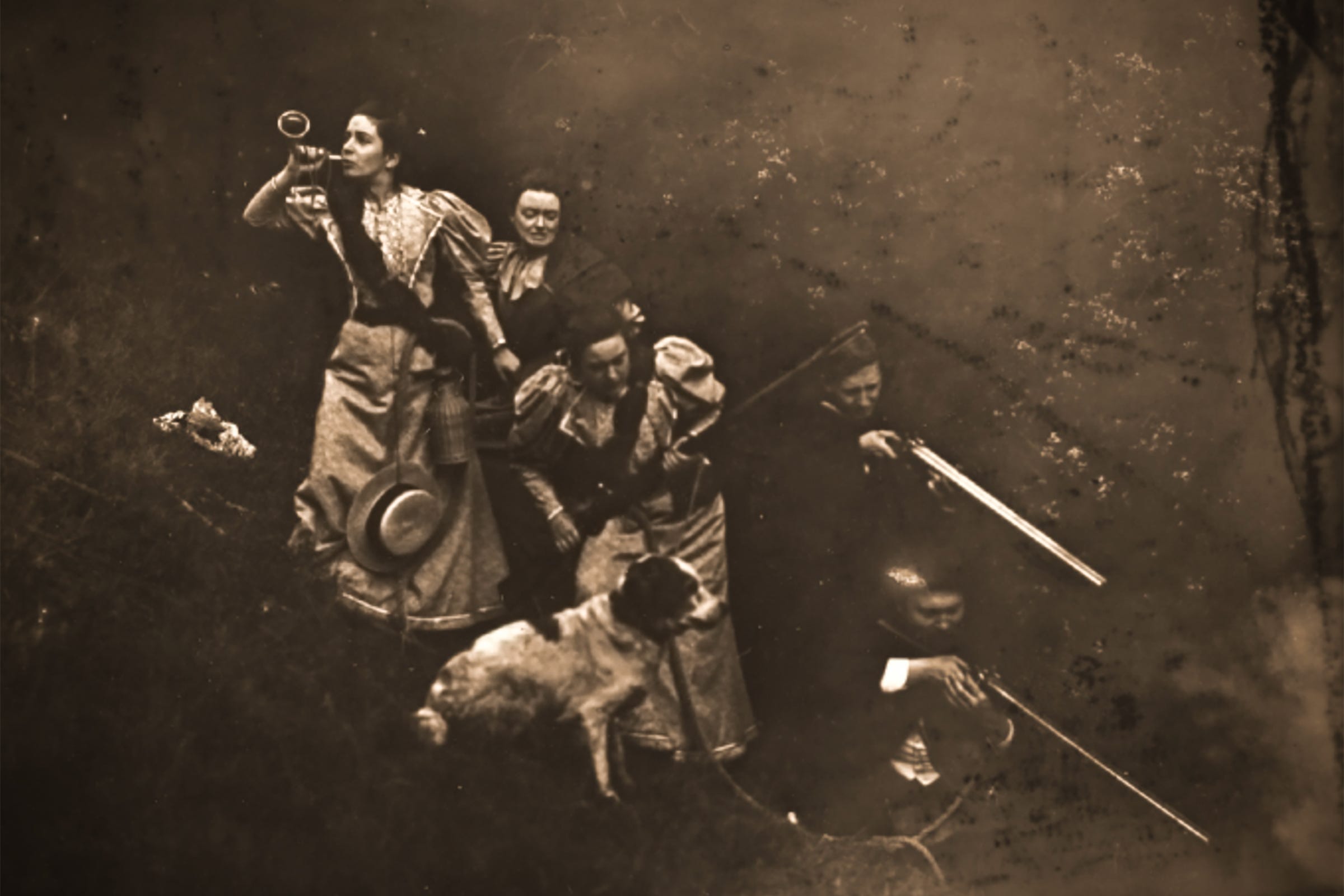
A nineteenth-century blend of slapstick and adventure, staged entirely for the camera.
You can almost hear the laughter between shots, the rustle of brush, the playful direction of the Abbé turned director.
But what moved me most is what this reveals about Céline Martin.
Here was a young woman in her mid-twenties, intelligent, devout, and deeply artistic, using a camera not just to capture reality, but to create story.
In an era when photography was still stiff and formal, Céline was experimenting with movement, emotion, and sequence.
She was, in a very real sense, inventing narrative photography.
And she was doing it in a Catholic household.
The Martins and Guérins weren’t rebelling against piety.
They were playing within it.
Their humor, their creativity, their collaboration, these weren’t distractions from faith. They were expressions of it.
The holy leisure of a family fully alive.
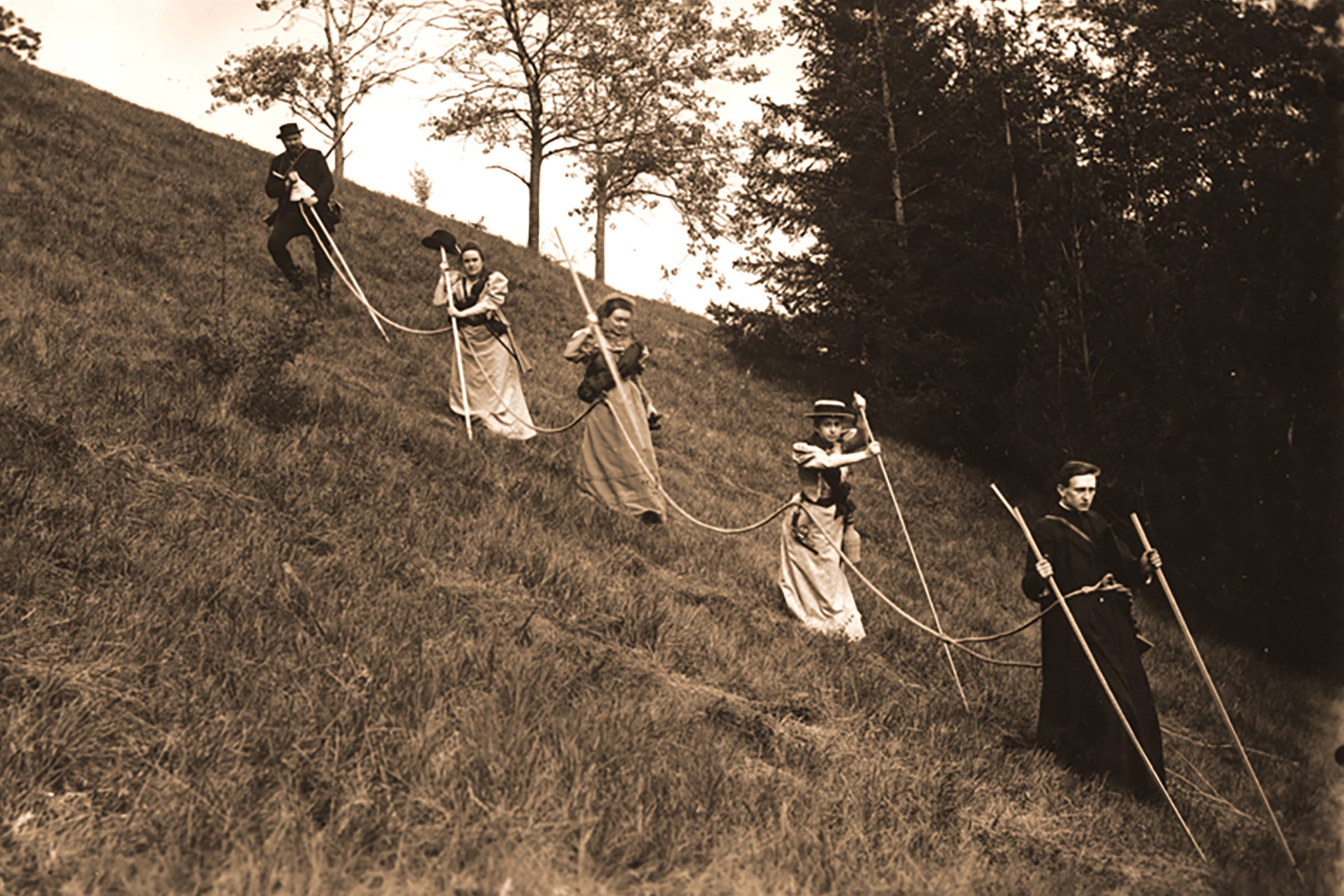
When historians point to Voyage excentrique as an early step toward cinema, they’re not exaggerating. It carries the same instinct that would later give rise to film: the desire to tell a story through light, gesture, and timing.
Céline may not have known it… but she was rehearsing the grammar of the moving image.
Of course, her story didn’t end in the fields of Normandy.
Two years later, she entered the Carmel of Lisieux, joining her sisters Pauline, Marie, and Thérèse.
There, she became the community’s photographer, painter, sculptor, and designer and the visual custodian of her sister’s legacy.
Every image of Thérèse that the world now knows…the serene gaze, the crucifix, the roses, passed through Céline’s hands.
Through her eye.
Through her heart.
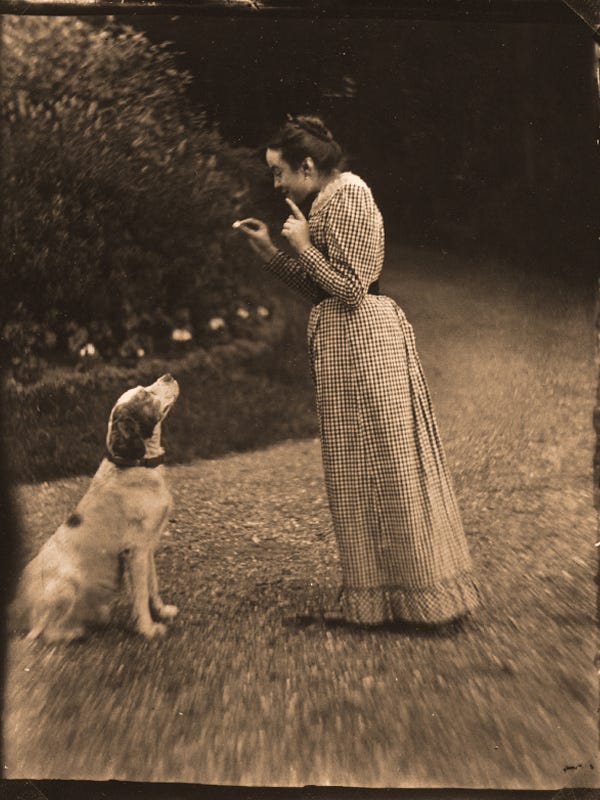
The same creative discipline that shaped her playful “Andes expedition” became a sacred vocation.
She transformed art into contemplation.
When I think about that, the photograph in my office changes again.
Those folks with rifles are no longer adventurers, or even actors.
They’re artists at play.
Pioneers of Catholic storytelling.
Their laughter, their make-believe peril, their joy, it all becomes something more.
A secret parable of holy creativity.
It would be easy to dismiss Voyage excentrique as a curiosity, a bit of Victorian whimsy. But I think it’s something closer to a manifesto…a reminder that faith and imagination are not opposites. They’re collaborators.
Céline’s little “film” was born from delight, discipline, and love, the same elements that make great art… and great sanctity. Her sister Thérèse once wrote that holiness consists in doing ordinary things with extraordinary love. Céline shows us that art can become that too. That even a make-believe adventure can echo eternity when the heart behind it is pure.
So yes, I was wrong about the photograph. It wasn’t a rugged expedition into the mountains. It was a staged comedy in a field just outside Lisieux.
But perhaps that makes it even better.
Because it reveals something essential about sanctity: Grace doesn’t erase our humanity… it illuminates it. That laughter, play, and artistic daring can be holy ground.
And maybe that’s the real journey. Not through the Cordilleras of the Andes, but through the imagination of a woman who learned to see God in light, shadow, and story.
I encourage you to view Voyage excentrique aux Cordillères des Andes—The Eccentric Voyage to the Andes in it’s entirety at the Les archives du Carmel de Liseiux
All photos are courtesy of https://archives.carmeldelisieux.fr/
Thanks for reading! This is a truly independent, reader-supported periodical. Your support is crucial. If you are able, please consider a paid subscription or making a ‘Patron of the Arts’ donation of any amount. By doing so, you are not just supporting this effort; you’re a vital part of this mission.
You have my heartfelt thanks for your generosity and support, and please keep me in your prayers, and know of mine for each of you. God Bless, Jeff
READ MORE!
Sister Geneviève of the Holy Face–Patron Nun of Photographers | Part 1

If she were a Saint, today would be her feast day.
Delightful commentary on a remarkable event, thanks, but I’m perplexed. How can Dr La Néele be Céline’s future brother-in-law when none of the girls ever married? Is there another way?
It is marvelous to see how Tom the spaniel became part of her cast of characters 😊