

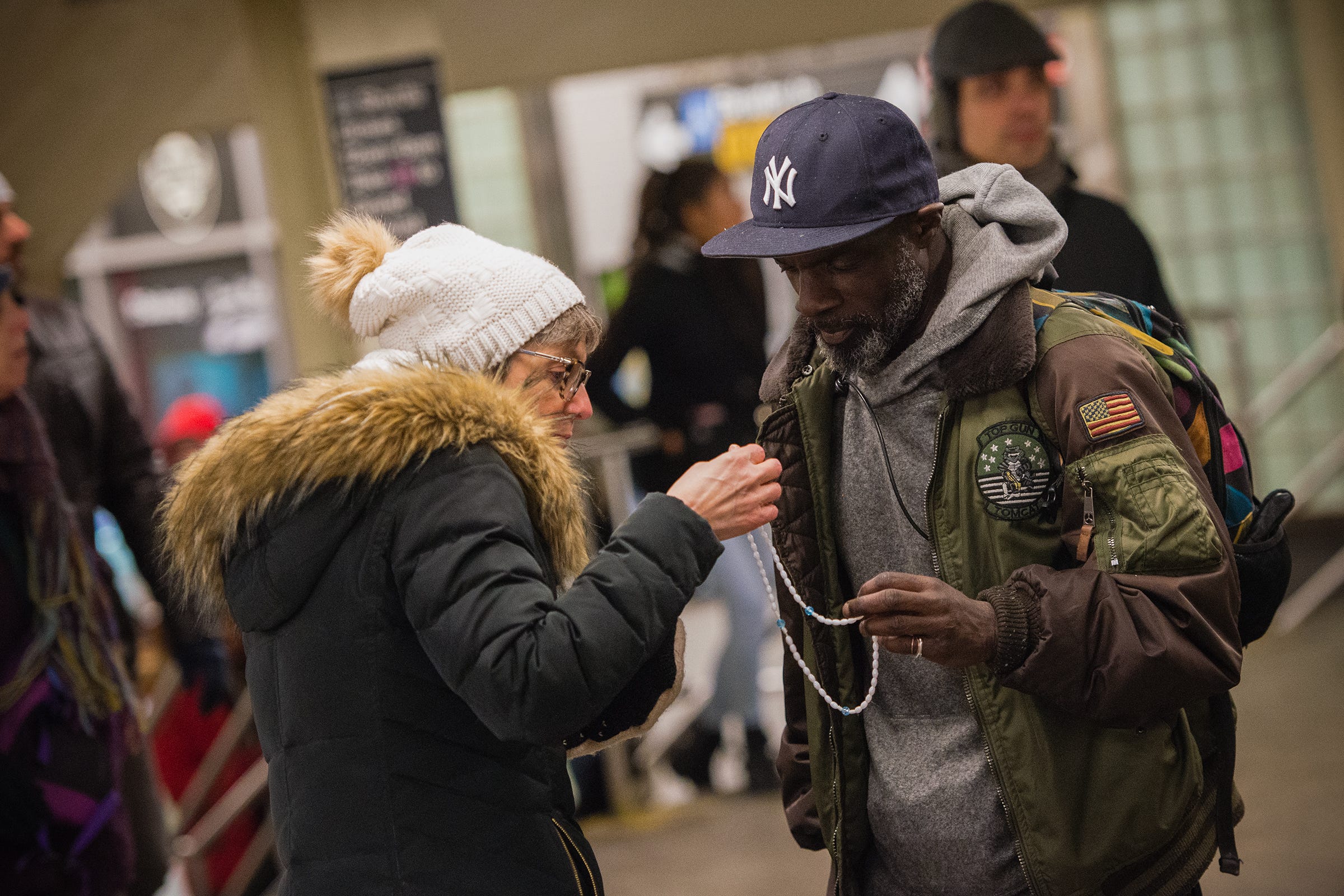
Every now and then you come across something that not only restores your faith in humanity, but reminds you of its inherent dignity and goodness.
And I, through no fault of my own, have fallen victim to this on more than one occasion.
A few of those moments remain etched in my mind.
The first happened a little ways back, when I was covering the Feast of Our Lady of Mount Carmel in Williamsburg, Brooklyn.
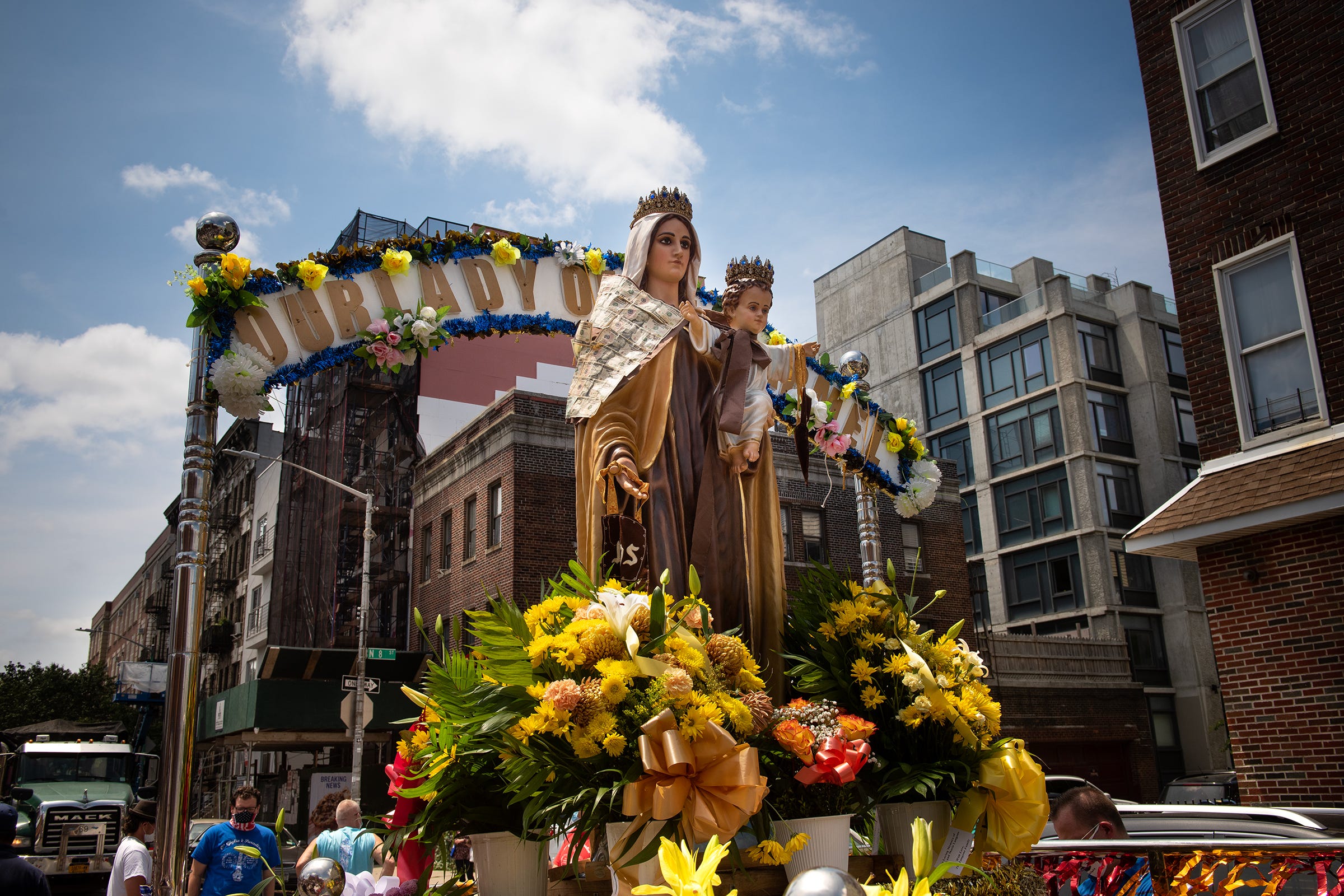
Brooklyn is a place like no other. Rich, storied, loud, colorful, stubborn, generous, and hungry. You can get the best Thai, Italian, Jamaican, and, well, I’ve yet to find a food group that they’re not the kings of.
And it stands to reason, after all.
It’s Kings County.
The Feast of Our Lady of Mount Carmel is one of those days when all the worlds collide. The old and the new. The traditional and the modern. The Catholic and, well, everything else.
The feast itself dates back to 1887, while the Brooklyn Giglio tradition, brought by immigrants from Nola, Italy, began in 1903. It’s a world unto itself, with the towering Giglio, sausage and peppers, a long Marian procession, and the great dancing tower carried through the streets by men whose shoulders seem to have been forged for this very purpose.
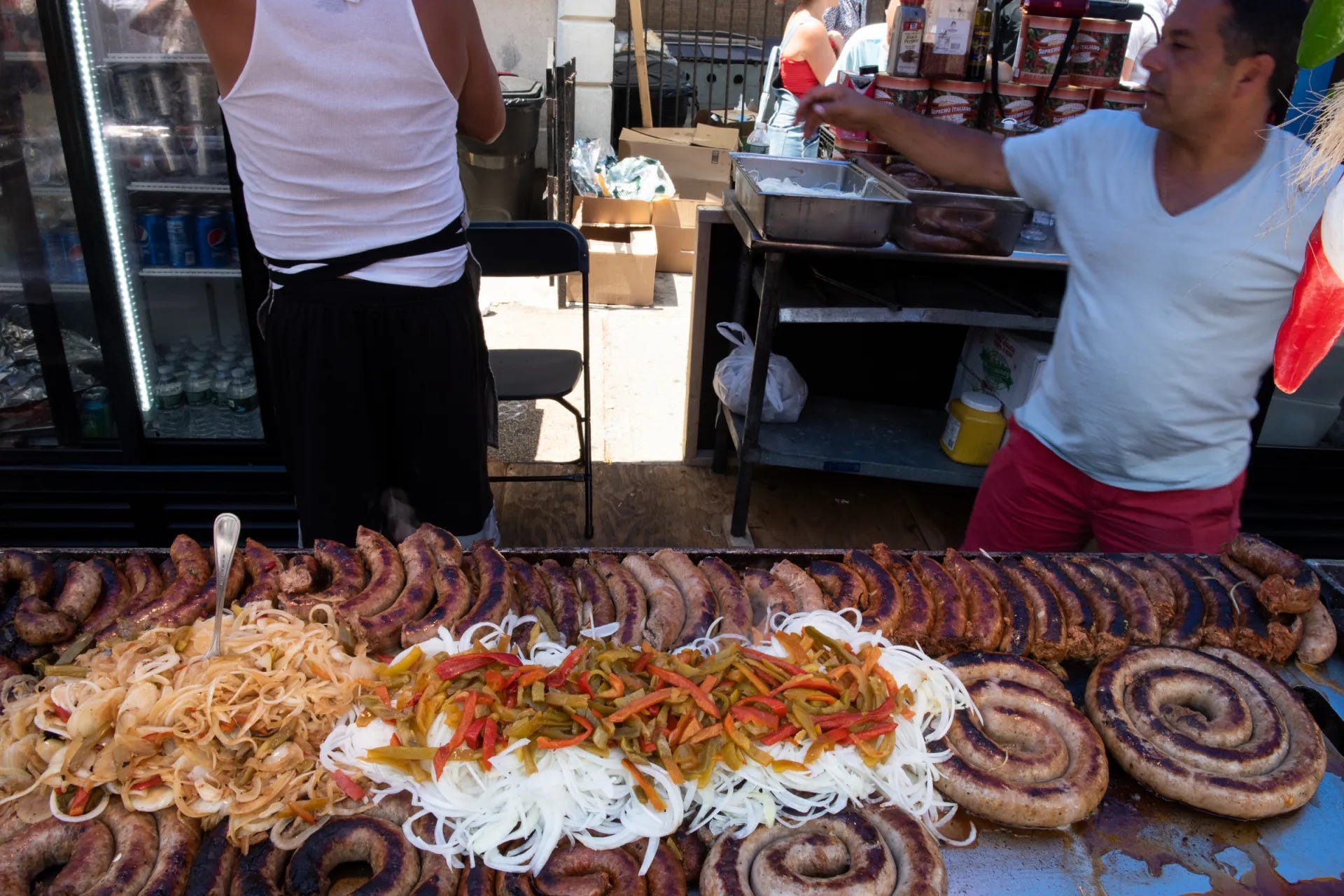
The celebration winds through parts of Williamsburg now filled with young professionals, artists, tech people, dreamers, and what have you, many of whom have probably had little contact with anything Catholic, let alone a roughly seven-story tower being shouldered by dozens of men and moved down an entire city block.
And then, as if that weren’t enough, the Giglio meets La Barca, the boat connected to St. Paulinus of Nola, and the whole thing becomes part procession, part family reunion, part street festival, part feat of engineering, and part visible proof that Catholic culture, when it’s fully alive, refuses to remain politely indoors.
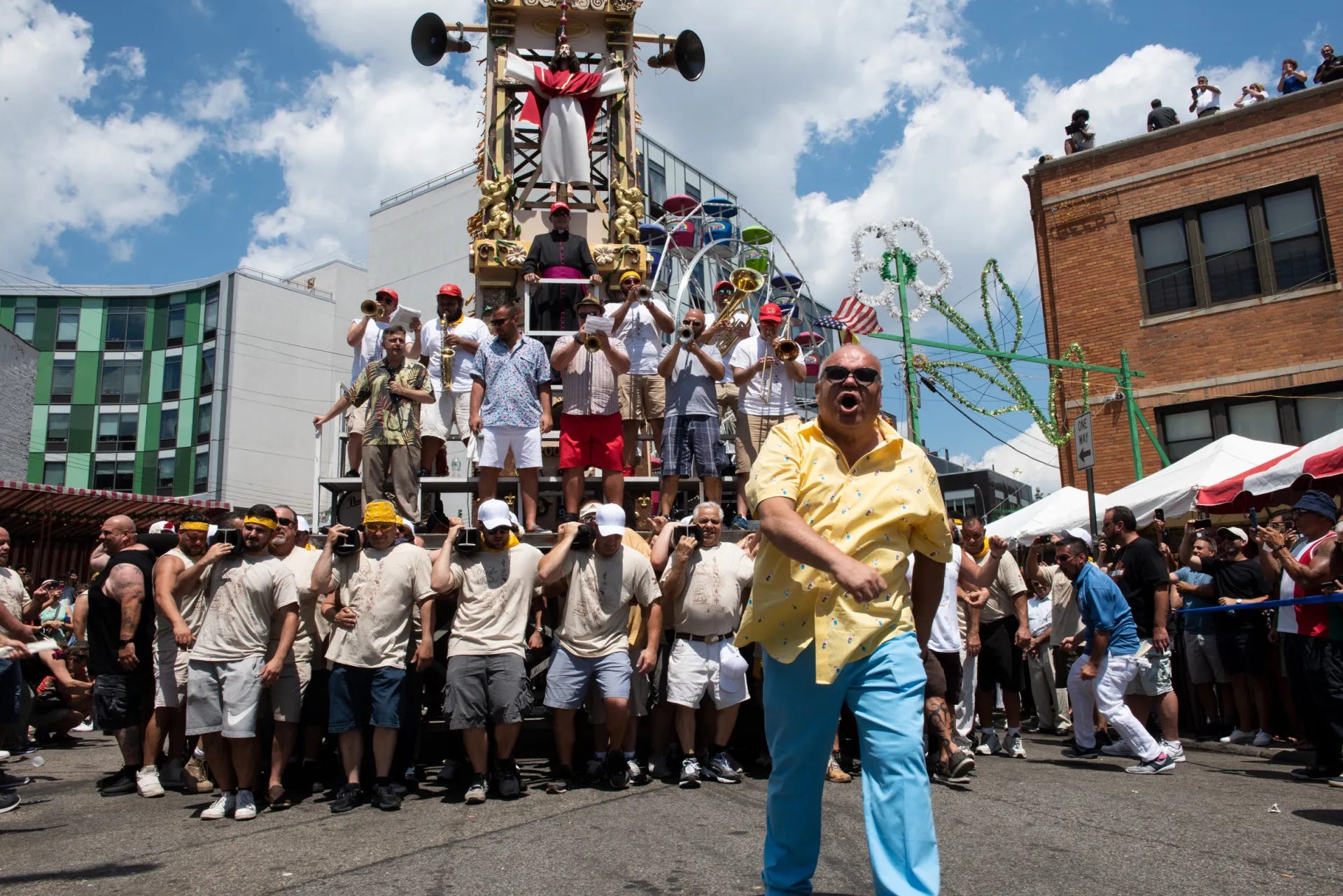
Well, on that particular day it felt like it was a thousand degrees out.
If you stood still long enough, you could be drawn into a serious meteorological debate over whether the heat rising from the melting asphalt or the rays of the burning sun were worse.
I’ll say this. Covering processions in conditions like that is certifiably a form of penance.
And if you had to wear a suit in such conditions?
Perhaps a nonstop ticket to heaven.
And there was one such man who may have earned that stripe.
As I continued my backwards sprints, attempting in vain to stay ahead of the floats, the man in the suit, John Quaglione, whom I’d only met earlier that day, turned to me and said what all people walking in a procession, in lava-like conditions, wearing a suit, say:
“Is it hot enough for ya?”
I replied with the heartfelt, concurring nod in the affirmative, followed by the slow shake of the head indicating that this was, well, less than ideal.
And with that, I returned to my trying-to-take-photos dance as I moved through the procession.
After about half an hour, I’d reached the point where my cameras, which normally feel like tools of the trade, had begun to feel like medieval punishment devices with straps.
Then, out of the crowd, John walked straight up to me and thrust two bottles of ice-cold water into my hands with a big Brooklyn:
“Here ya go!”
To say his graciousness was unexpected would make it into the top three understatements of the century.
I was flabbergasted.
Grateful.
But flabbergasted.
Who does that? I asked myself as I guzzled the water, not caring that it was spilling all over my shirt.
And why?
The answer would come later, as life brought other encounters that also left me just as happily confused.
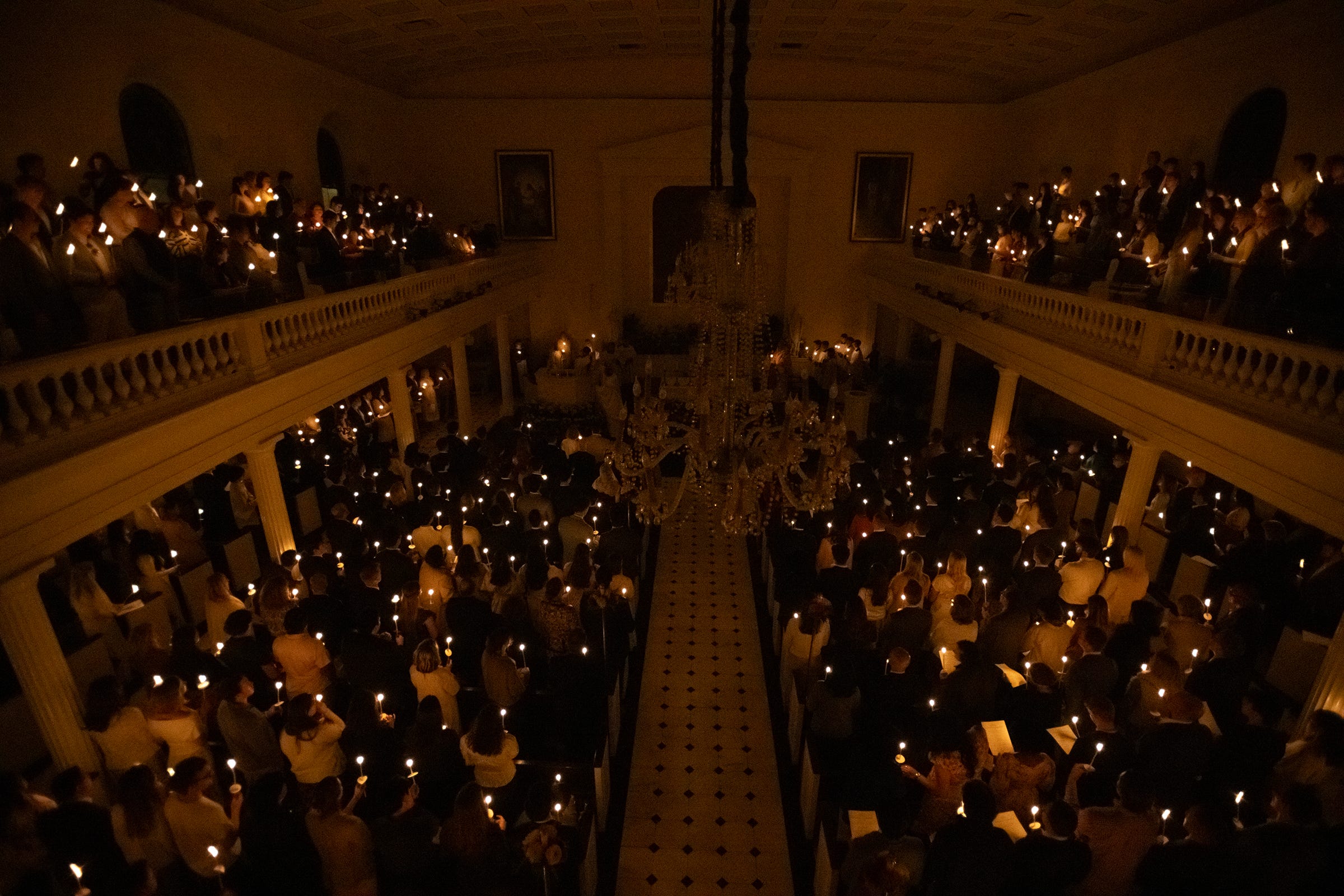
More recently, on an evening that was strikingly the opposite, cold, dark, and rainy, in a different borough altogether, in a different church, for a different liturgical celebration, something similar occurred.
It was the Easter Vigil at St. Joseph’s Church in Greenwich Village.
I arrived early, which has yet to prove a bad idea, and made my way up and off to the side of the expansive marble sanctuary. The church was darkened, and the whole place carried that particular blend of somber anticipation and whispered greetings that belongs to Holy Saturday night.
Hundreds of young Catholics, and soon-to-be Catholics, had also arrived early, wisely, if you ask me, to claim one of the coveted seats in this particularly line-out-the-door church.
A church, I should add, that could certainly benefit from an addition.
Darn NYC landmark rules.
I sat comfortably in the darkness, taking in the scene, when a lone voice cut through it and asked, “Would you like to sit over here on a chair?”
A little startled, I smiled and replied, “No, but thank you for asking. I’m fine here.”
And I was fine there.
The floor is actually a very underrated place for a photojournalist. Your gear can’t fall, you’re out of the way, and people who like seats are rarely fighting over a place to sit on the cold marble floor.
There’s always room on the floor.
But it was what she said next that really got my attention.
“Okay, well then I’ll come join you!”
Come again?
And she did.
She, a university student named Lauren, sat beside me, albeit in a chair, and what followed was a very pleasant, and perhaps unknowingly needed, conversation about life, faith, and the wonder of it all.
No, it wasn’t a bottle of water. It didn’t save me from the heat or cool down my body temperature or keep me from collapsing on a Brooklyn street in front of Our Lady and half of Williamsburg.
But it came from the same generous place.
Which brings us to today.
This afternoon I heard a thump outside my front door, a package left on the step by our friendly neighborhood UPS man. He’s one person I’m always happy to see. Aside from his friendly disposition, he’s usually bearing some sort of gift.
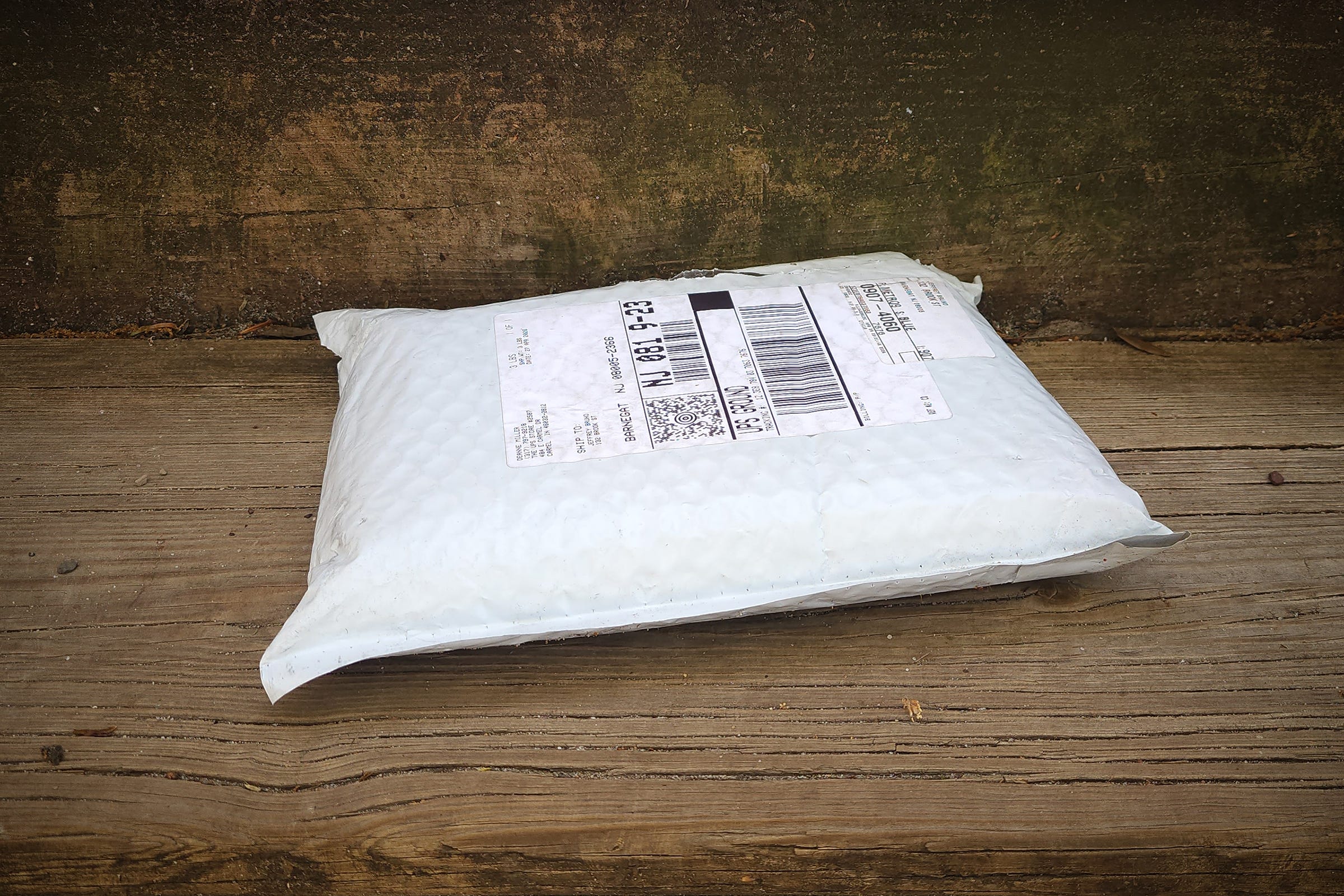
And this time was no exception.
I picked up the weighty, bubble-wrapped package from the stairs, hence the thump, and gently squeezed it the way a child does at Christmas, taking that thirty-second examination of the outside to see what might be on the inside before shredding the paper and tearing it open.
Some things never change.
But what I was holding in my hands was more valuable than its contents.
What rested in my hands was an unselfish, thoughtful act of charity.
Not long ago, I’d written about regrets I carried. One of them was that I’d not gone to college in any meaningful way, let alone a Catholic one. In writing the piece, I’d taken some time to reflect on what I actually regretted. Not the vague, dramatic kind of regrets we sometimes imagine we should have, but the ones that still live in some dark corner of the mind.
The ones that every once and a while cause you to wince.
And while the regrets that stood out may possibly seem superficial to many, they are not superficial to me.
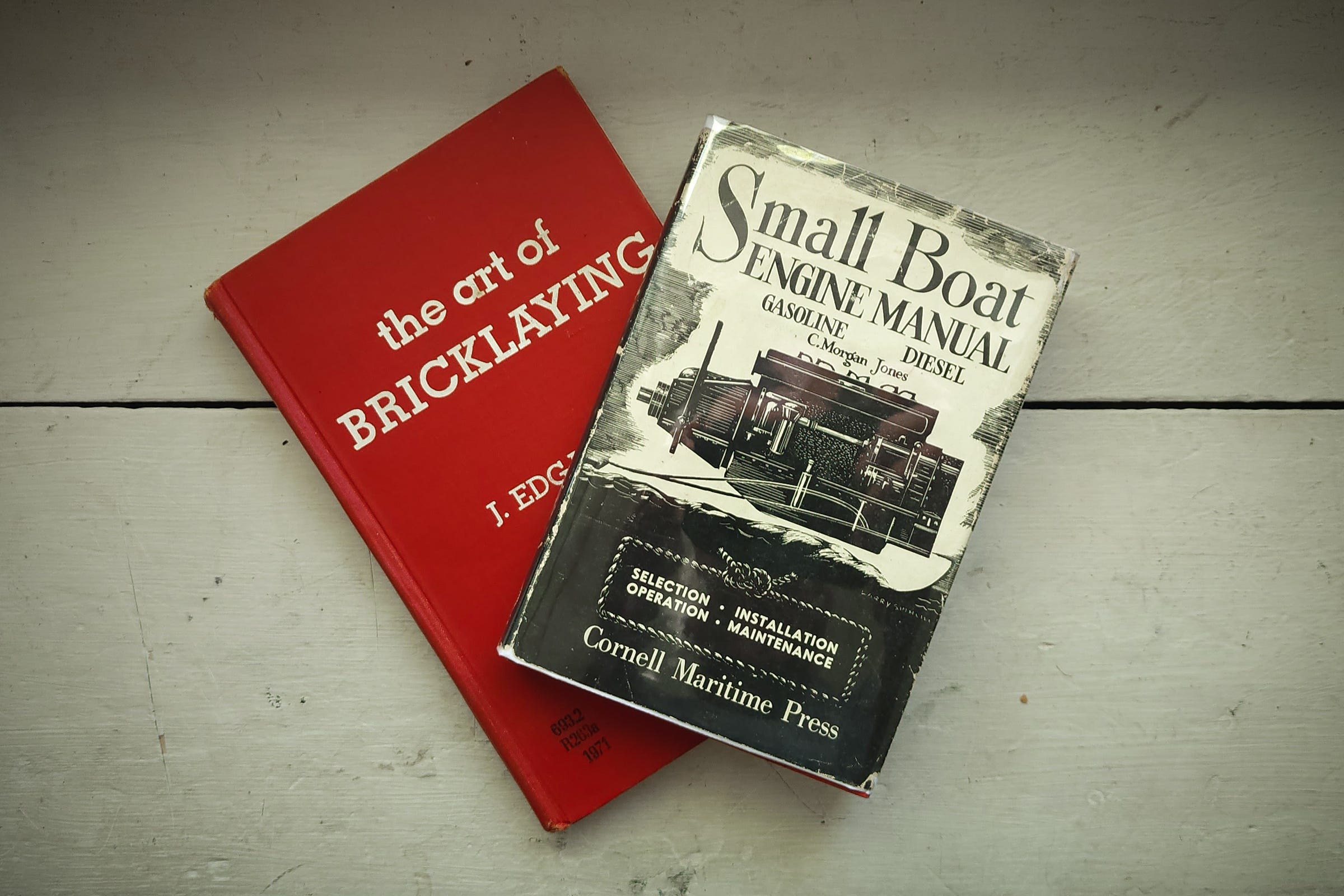
Inside that white bubble-wrapped envelope from Indiana were two items that had significantly formed me in my youth.
And regrettably, two items I’d lost somewhere along the way.
One was The Art of Bricklaying by J. Edgar Ray. The other was Small Boat Engine Repair by C. Morgan Jones.
The first had been given to me years ago by a lovely old Italian lady whose husband had passed on, but who, in life, had been a master bricklayer.
I know it may seem strange, but I’d been enamored with bricklaying as a kid. My father, and his father before him, were builders, highly skilled builders. I grew up in that shadow, and at least for a time, with that expected path stretched out before me.
The only problem was that it wasn’t my desired path.
Still, I studied. I schlepped bricks. I mixed cement. I built things in my youth under the watchful eye of my father, and I can still see the dozens of patterns and purposes hidden within the art.
That book serves as a kind of time machine, transporting me back to the beginning of the journey, when life was all unbridled possibility, fueled by youthful dreams.
The other book is how I learned practically everything I know about internal combustion engines, on boats, cars, lawn mowers, chainsaws, and whatever else I thought I could fix without making it worse.
It was written in the forties, like many of the books I own.
It’s brilliant because it establishes the one thing crucial for having mastery in any subject.
The basics.
If you interiorize the words in a book like that, you can fix almost anything. Sure, there are computers and sensors now. But the fundamentals remain the same.
It’s with the knowledge I acquired from that handy little book that I’ve kept every car I own running well past its expected lifespan.
And it was from that little manual that I earned my PhD in shady-tree mechanics.
But I digress.
(Often, as you’ve probably noticed.)
The reason those two books, masterpieces, really, were back in my hands was because a thoughtful woman named Deanne had read that article, remembered what I had lost, searched them out, bought them, wrapped them, and sent them across the country.
No promise of anything in return. Just an act of charity conceived quietly in one heart and delivered to another by a thump on the front step.
And maybe that’s why these moments stay with me.
John handing me two bottles of ice-cold water on a Brooklyn street that felt like the inside of a pizza oven.
A young woman at the Easter Vigil seeing me sitting alone on the marble floor and deciding, not to leave me there, but to join me.
Deanne finding two old books from the half-forgotten library of my childhood and returning them to me as if they were relics.
Small things, maybe.
But only to someone who has never needed water.
Or company.
Or the sudden mercy of being remembered.
These gestures do something to a person. They slip past the defenses. They walk right around the cynicism, the exhaustion, the self-reliance, the private little wounds we keep filed away under ‘that’s life.’
They arrive without warning and announce that goodness is still out there, still moving, still looking for a place to land.
And when it lands, it can change the temperature of a day.
It can warm the cold marble beneath you.
It can turn a package into a kind of sacrament of memory.
Maybe that’s what startles me most. Not that kindness exists. I know it does. We all do, at least in theory.
What startles me is that it sometimes comes looking for us before we know enough to ask for it.
Unprovoked.
Which may be another way of experiencing Grace.
And Grace, thankfully, has never been known to wait for permission.
Because beneath every real act of kindness, every act of mercy, every act of charity, there is love.
And love?
That’s always been God’s department.
And as all good things come from God.
Kindness is certainly no exception.
Thanks for reading! This is a truly independent, reader-supported periodical. Your support is crucial. If you are able, please consider a paid subscription or making a ‘Patron of the Arts’ donation of any amount. By doing so, you are not just supporting this effort; you’re a vital part of this mission.
You have my heartfelt thanks for your generosity and support, and please keep me in your prayers, and know of mine for each of you. God Bless, Jeff

The Two Words at the End of an Email

The year before Mother Angelica passed away, I received a call that caught me off guard.
A thought provoking post. It's true, kindness exist in many forms and makes us feel seen.