

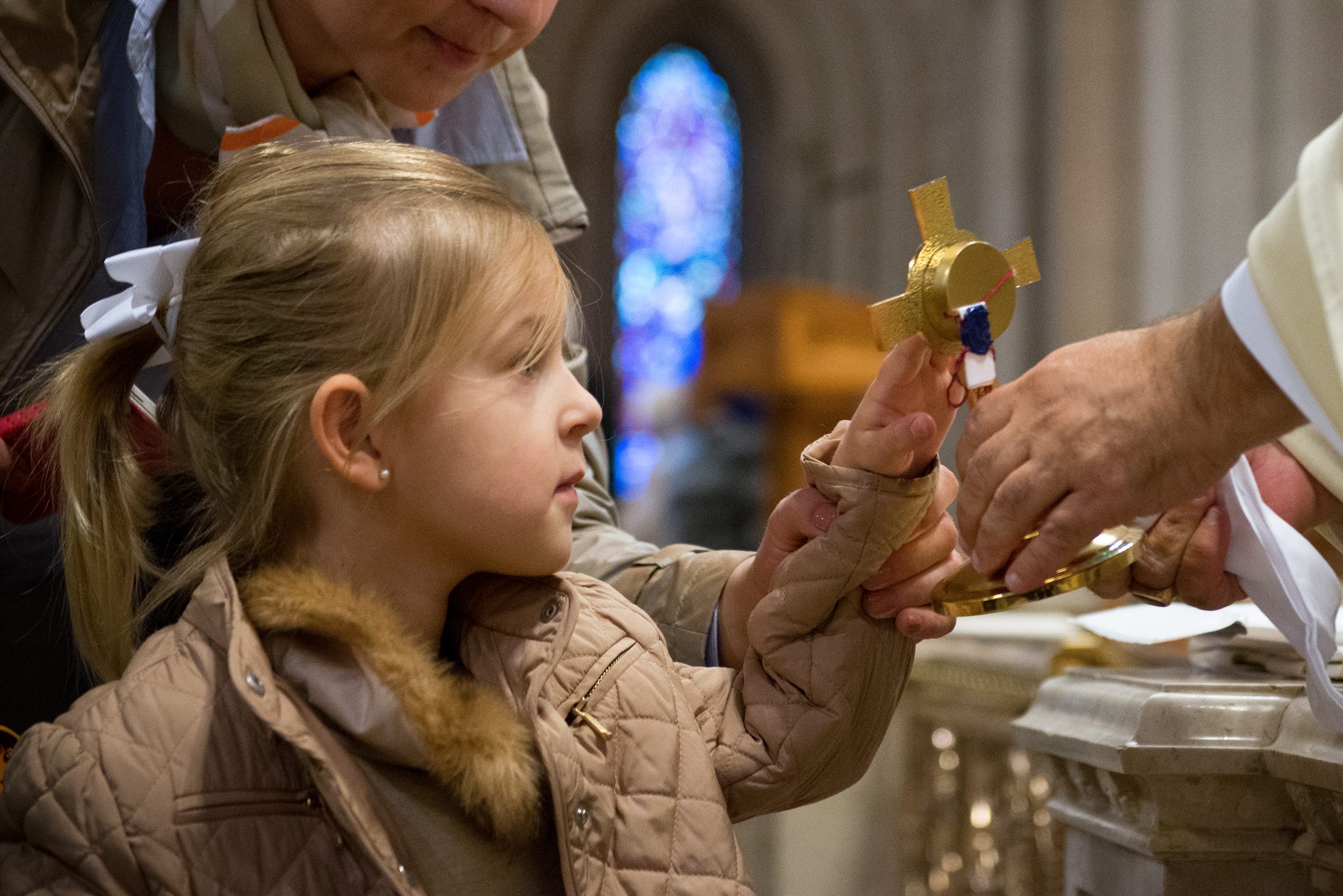
In my tiny office, in a drawer just to the left of my desk, there’s a lock of my daughter Amy’s hair.
I can’t remember how many years it’s been there. But I remember how it got there.
“Daddy, can you cut my hair?”
She was about ten. She’d brushed her long blond hair straight and gathered the bottom four inches with a rubber band. My job was simple: find the sharpest scissors I owned and cut straight, just above the band.
When finished, the little bundle resembled a broom. While Amy concerned herself with whether I’d cut it straight, I opened the drawer and tossed it in.
“You’re keeping it?”
I shrugged.
“Why not?”
She laughed and shook her head. “Oh, Daddy, you’re so funny!”
She’s a married mother of three now. But whenever I come across that lock while rummaging through the drawer, there she is again. Ten years old. Trusting her father with a pair of scissors.
And my heart feels warm.
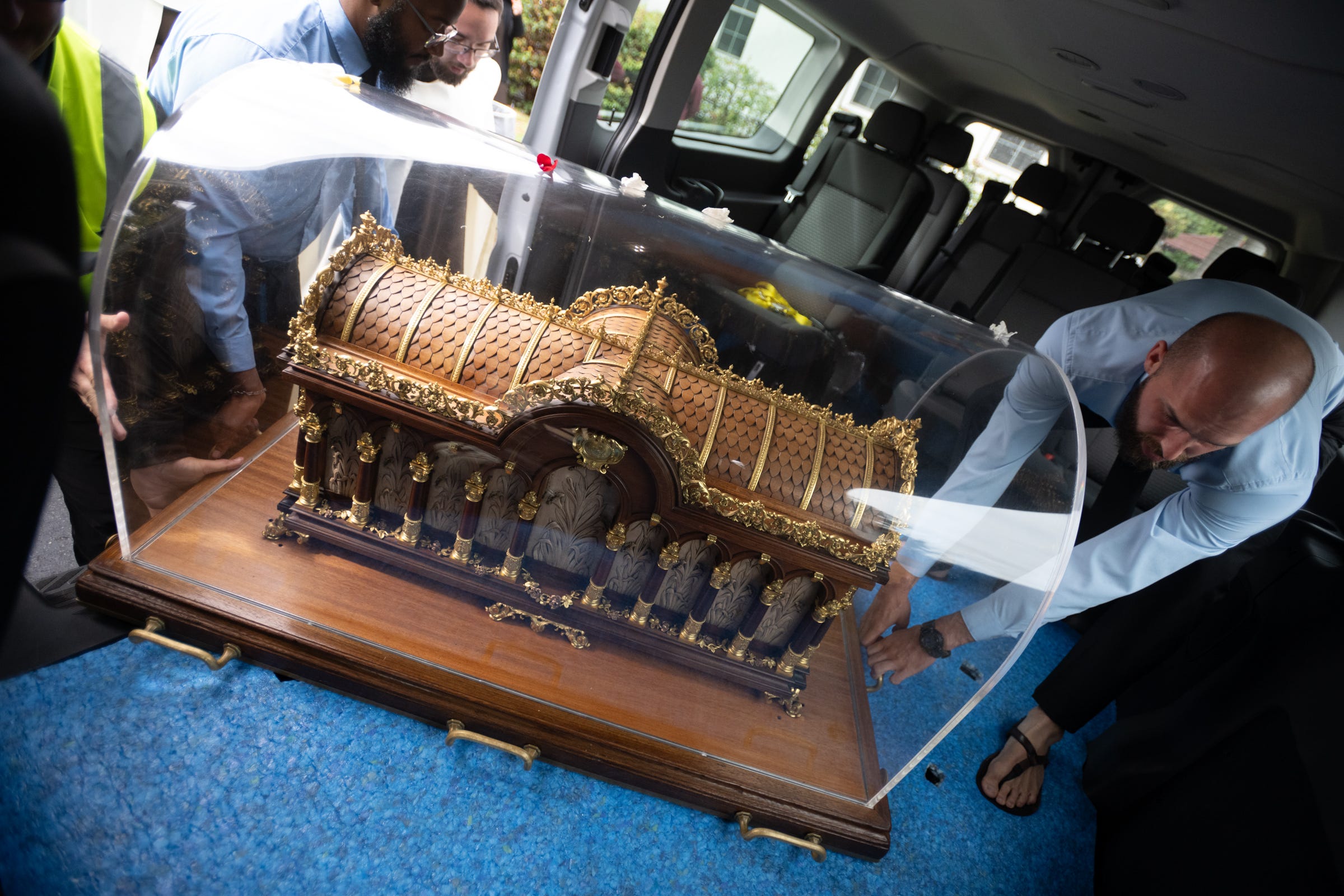
Recently I received an email from a dear priest friend, Fr. Donald Kinney OCD, that brought another memory back. A similar one. He’d arranged for me to travel to California to photograph the relics of St. Thérèse of Lisieux last year. And with her October 1 feast day approaching, he recalled that a year had passed since her relics arrived in the United States.
The trip had been as much a pilgrimage as an assignment for me.
It was also the beginning of a change I hadn’t expected.
Over the years I’ve encountered all sorts of attitudes toward relics, from bewilderment to profound devotion. My own was somewhere in the middle. I understood that the Church honored them. I just hadn’t given much thought to why.
I knew Thérèse’s sister Céline better than I knew Thérèse herself. Céline, who became Sister Geneviève of the Holy Face, was the photographer responsible for most of the surviving photographs of her sister.
And as someone who looks at a lot of pictures, I’d found my way into the family through her images. Now was the chance to know the woman in them.
I landed at LAX and headed to Redondo Beach with Thérèse’s autobiography, Story of a Soul. In the days that followed, I immersed myself in her words.
Days later, when I entered the church where her relics would soon be offered for public veneration, I felt a kinship I hadn’t anticipated.
A peace. A familiarity. A closeness.
Someone I’d been getting to know through the pages of a book suddenly felt very near.
I knew the bones in the reliquary possessed no magical power. They belonged to a woman who’d lived, suffered, loved and given herself to Christ. A woman now alive in Him.
But I was beginning to understand how something so tangible could draw my heart toward someone I couldn’t see.
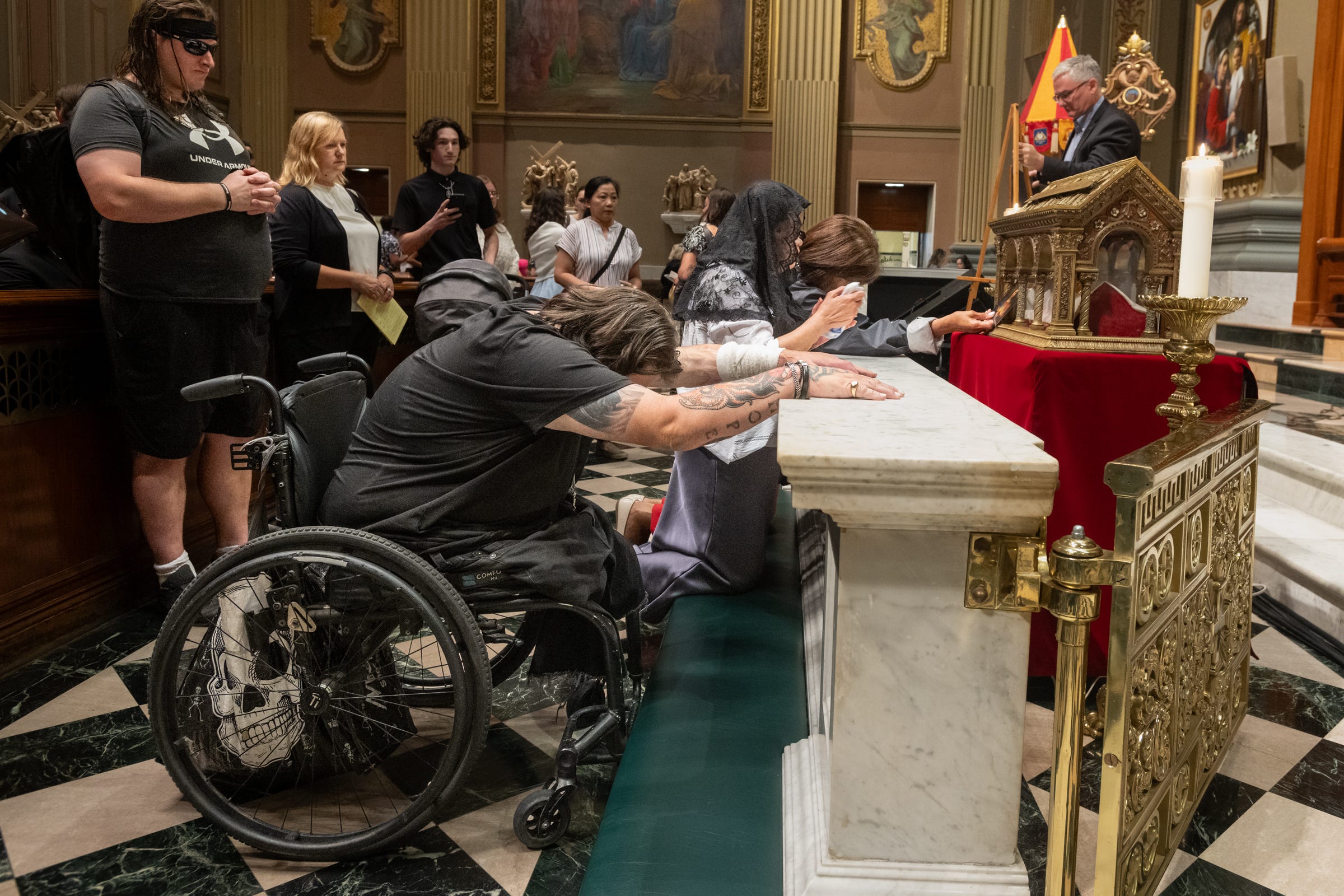
More recently, I photographed the relics of St. Margaret Mary Alacoque for the Knights of Columbus, accompanying them through Newark NJ, Philadelphia, and Havertown, Pennsylvania.
That same sense of closeness returned.
As I watched person after person kneel in prayer, I was moved by the depth of their devotion. There was something in the way they approached her that I was still learning to understand.
Then came my last day with the relics.
A few weeks earlier, I’d hurt my left shoulder while changing the linens on my elderly father’s mattress.
It burned. It ached. It interrupted my sleep.
And two major assignments were approaching: Fulton Sheen’s beatification in St. Louis and the Dominican Rosary Pilgrimage in Washington two days later. Two long stretches of carrying cameras, lifting lenses and working on my feet. The equivalent, in my world, of two marathons in the same week.
I wondered how I’d manage.
I worked through the pain. By the final day in Havertown, it was so severe that I had to lift my left arm with my right hand.
Before leaving the Sacred Heart adoration chapel at St. Denis Parish, I knelt beside Margaret Mary’s relics. I thanked her for the days I’d spent accompanying her, for her devotion to the Sacred Heart of Jesus, for helping so many people turn toward His love.
And I said goodbye.
It felt like saying goodbye to a friend.
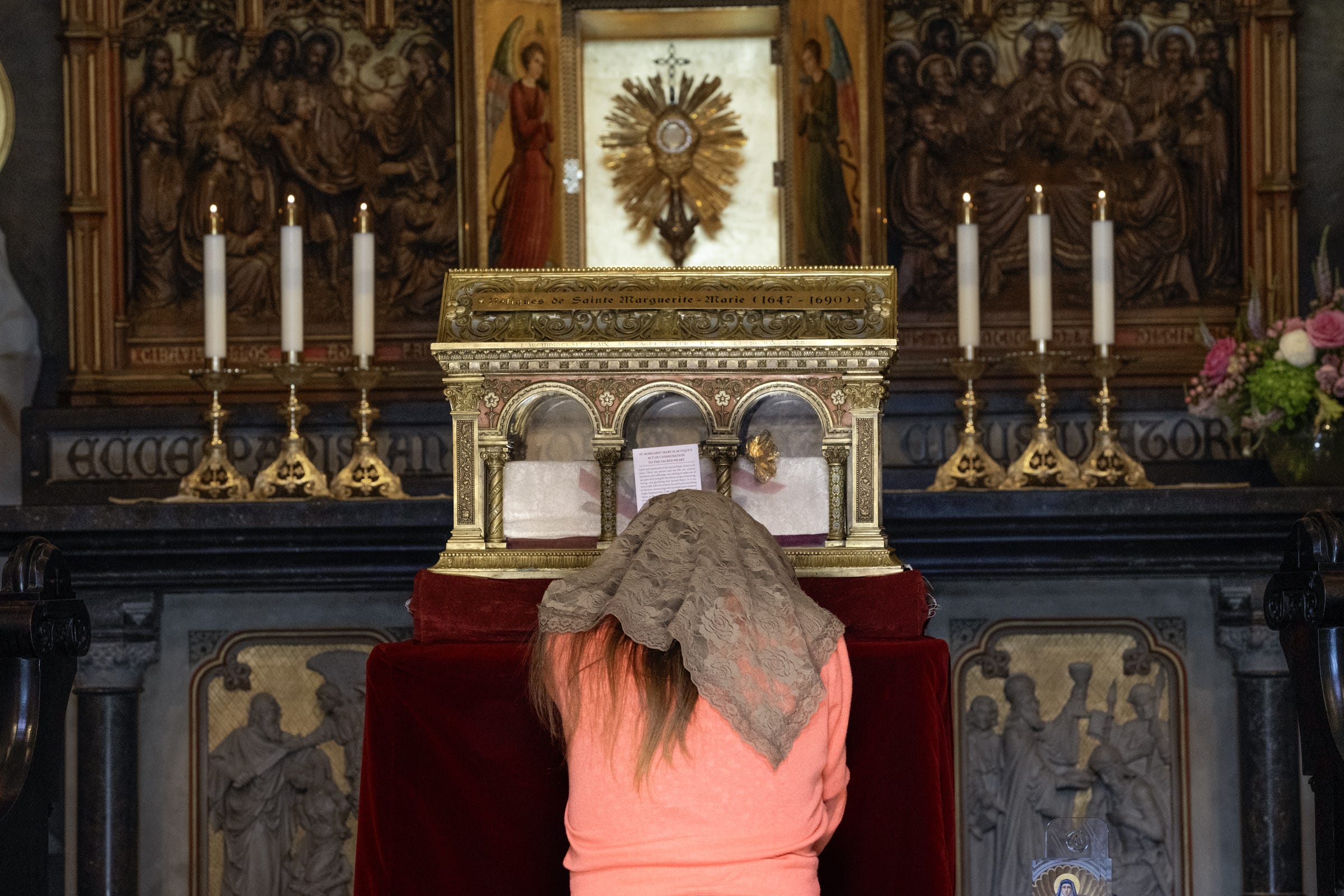
After the three-hour drive home, I arrived exhausted, hurting, and grateful. I collapsed into bed. For once, exhaustion overpowered the pain.
The next morning brought a deep blue sky and a gorgeous sunrise. Lying there, I thought about the weeks behind me. The miles. The people. The privilege of witnessing faith lived so passionately in churches and chapels across the country.
Then I rolled over.
And stopped.
My shoulder didn’t hurt.
I moved it cautiously. Up. Down. Sideways.
Not a hint of pain.
I lay back down.
And I laughed.
God will never be outdone in His generosity.
A miracle?
I can’t tell you medically what happened.
I can tell you that the night before, I’d needed one hand to lift the other arm. By morning, I could move it freely.
For my money, it was a miracle.
And I’m grateful.
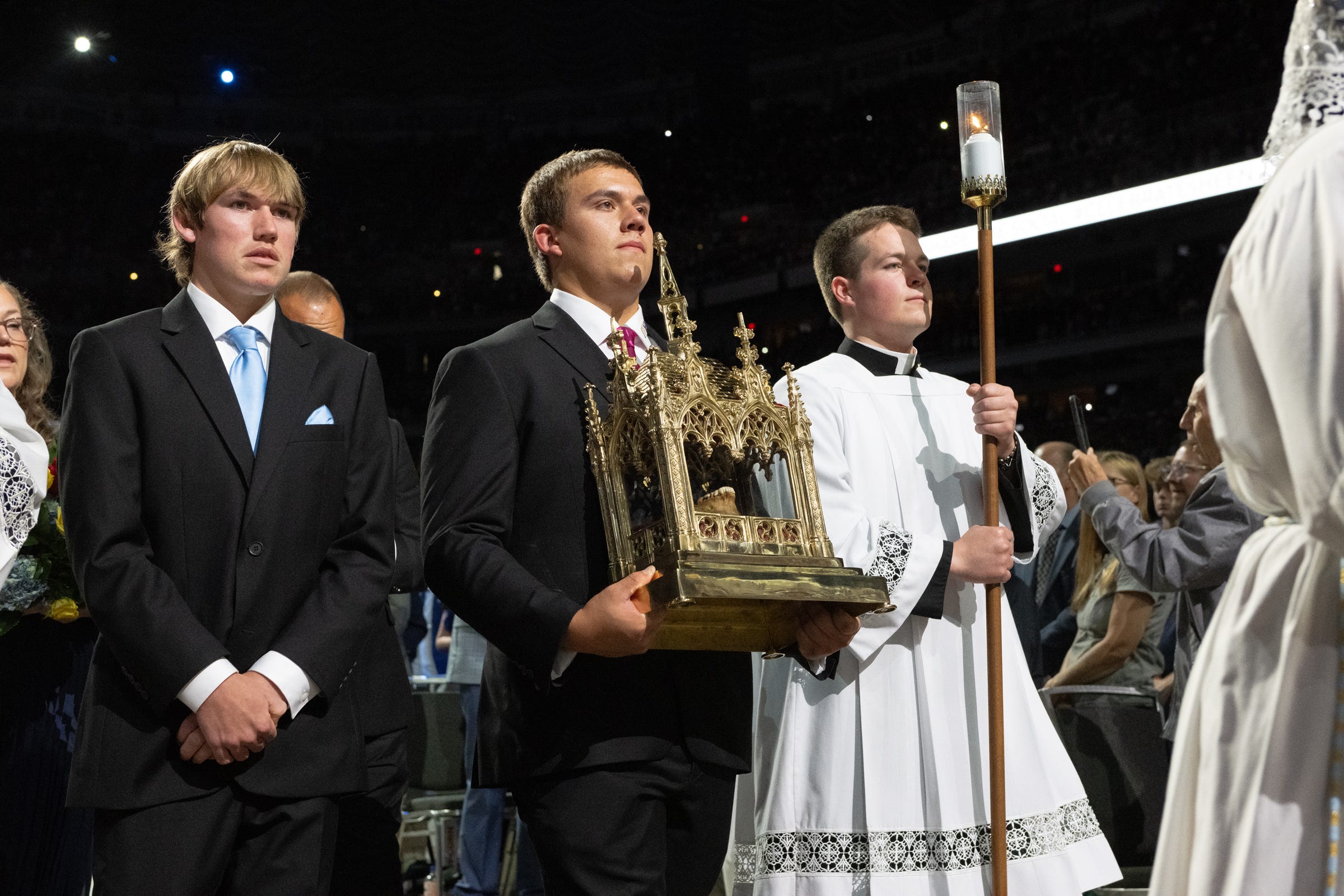
A little over a week later, I knelt pain- free in the center aisle of the Dome in St. Louis, surrounded by tens of thousands of people gathered for the beatification of Fulton Sheen.
His relic was carried toward the altar by James Fulton Engstrom, the boy whose healing through Sheen’s intercession had been recognized by the Church as a miracle.
Watching them pass, I couldn’t help but smile.
Hello, Archbishop.
I’d begun these journeys with a camera and a fair measure of skepticism. Somewhere along the way, the saints had become friends.
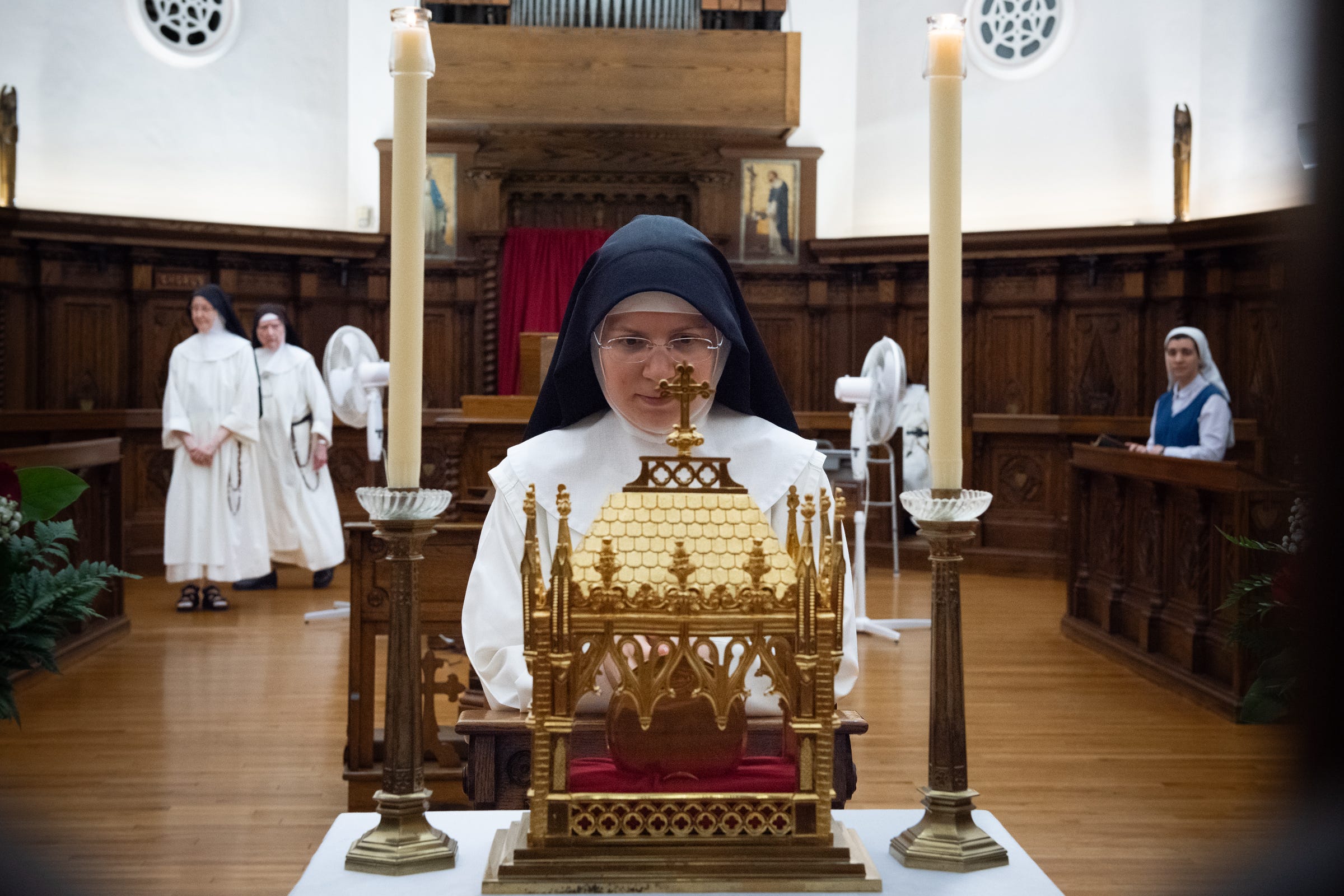
Relics helped make that friendship tangible. They reminded me that the saints were real people who’d walked through this world with bodies as vulnerable as ours, who’d known weariness and suffering, and who’d kept turning toward Christ.
Now they pray for us as we make our way toward Him.
That lock of Amy’s hair helps me understand.
I don’t open the drawer because I love hair. I open it and remember someone I love. The little bundle brings back her voice, her laughter, the child she was and the father I was learning to be.
Love gives it meaning.
The communion of saints reaches further still. Those who’ve gone before us are alive in Christ. They can pray for us, cheer us on, help us keep going until, by His Grace, we reach our Father’s arms.
There are days when that finish line feels very far away.
And then there are mornings when you wake, move an arm that hurt the night before, and lie back down laughing.
Back in my office, the little lock of blond hair is still in the drawer.
“You’re keeping it?”
Of course I am.
Thanks for reading! This is a truly independent, reader-supported periodical. Your support is crucial. If you are able, please consider a paid subscription or making a ‘Patron of the Arts’ donation of any amount. By doing so, you are not just supporting this effort; you’re a vital part of this mission.
You have my heartfelt thanks for your generosity and support, and please keep me in your prayers, and know of mine for each of you. God Bless, Jeff
Thank you so much for this. It helps me better understand the befriending of saints. It felt like something so intangible and impossible to me- but now, wow! I am excited! This is for us all- not just a select few.