

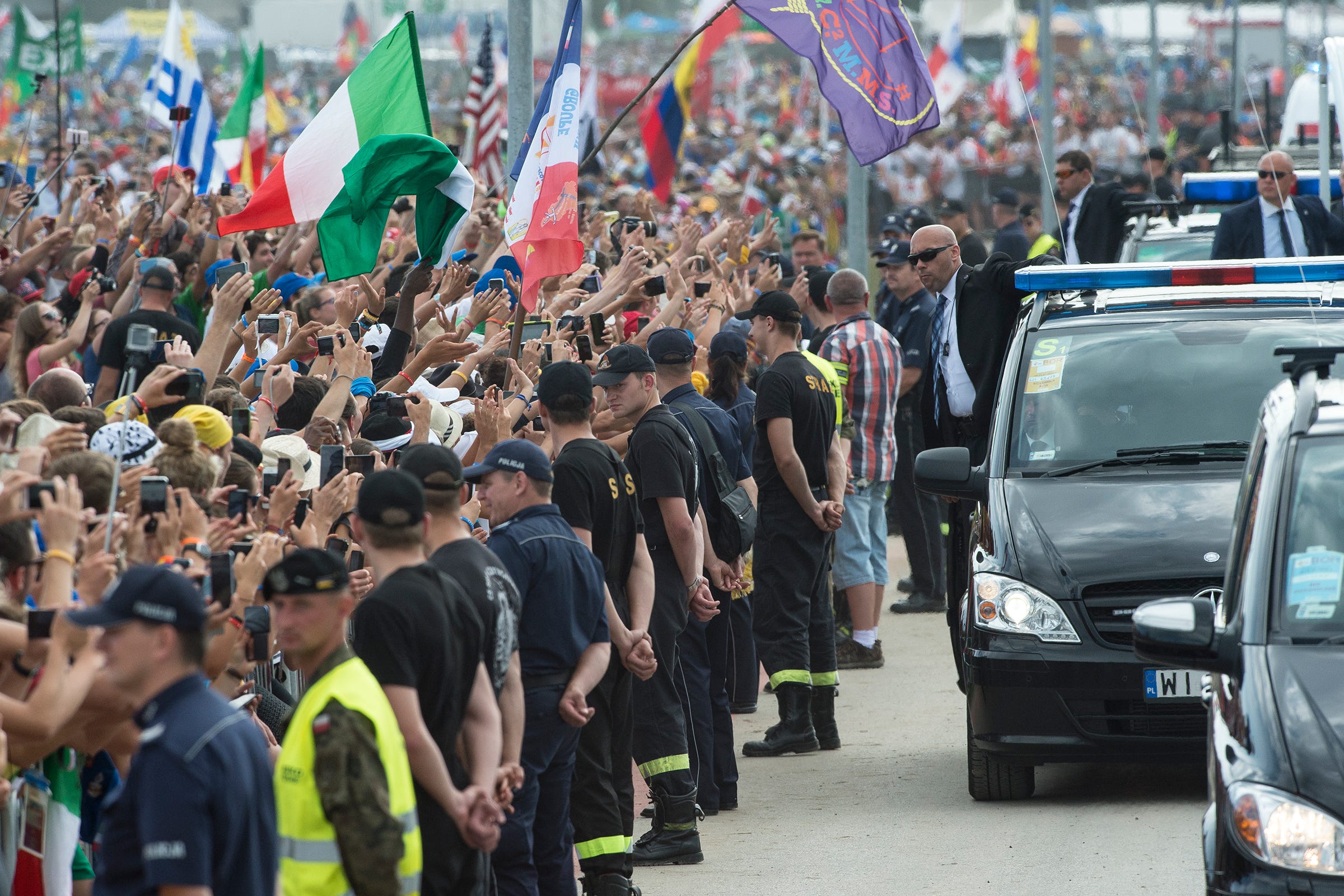
“Hurry up! They’ll leave without you!”
The woman barked the words through a thick Polish accent and glared at me with the annoyance of a mother who’d had just about enough of a petulant child.
“Pool Zero?” I asked, sheepishly.
“YES, YES. Now hurry!”
And with that, I was off on one of the many misadventures of my life as a photojournalist.
There was a tiny voice in my head that whispered, Maybe you should check again.
But it was 4:00 in the morning. It was dark. The group of journalists I was apparently supposed to be with was already far ahead of me, their flashlights bobbing and fading into the distance like fireflies disappearing into the Polish countryside.
So I told the tiny voice to pipe down.
I’ve got this.
We walked for roughly thirty minutes, stumbling through the dark, through trees and uneven ground, following the glow of lights and the low murmur of people who seemed to know exactly where they were going. Eventually the wooded path opened into a massive field.
The sun was just beginning to rise.
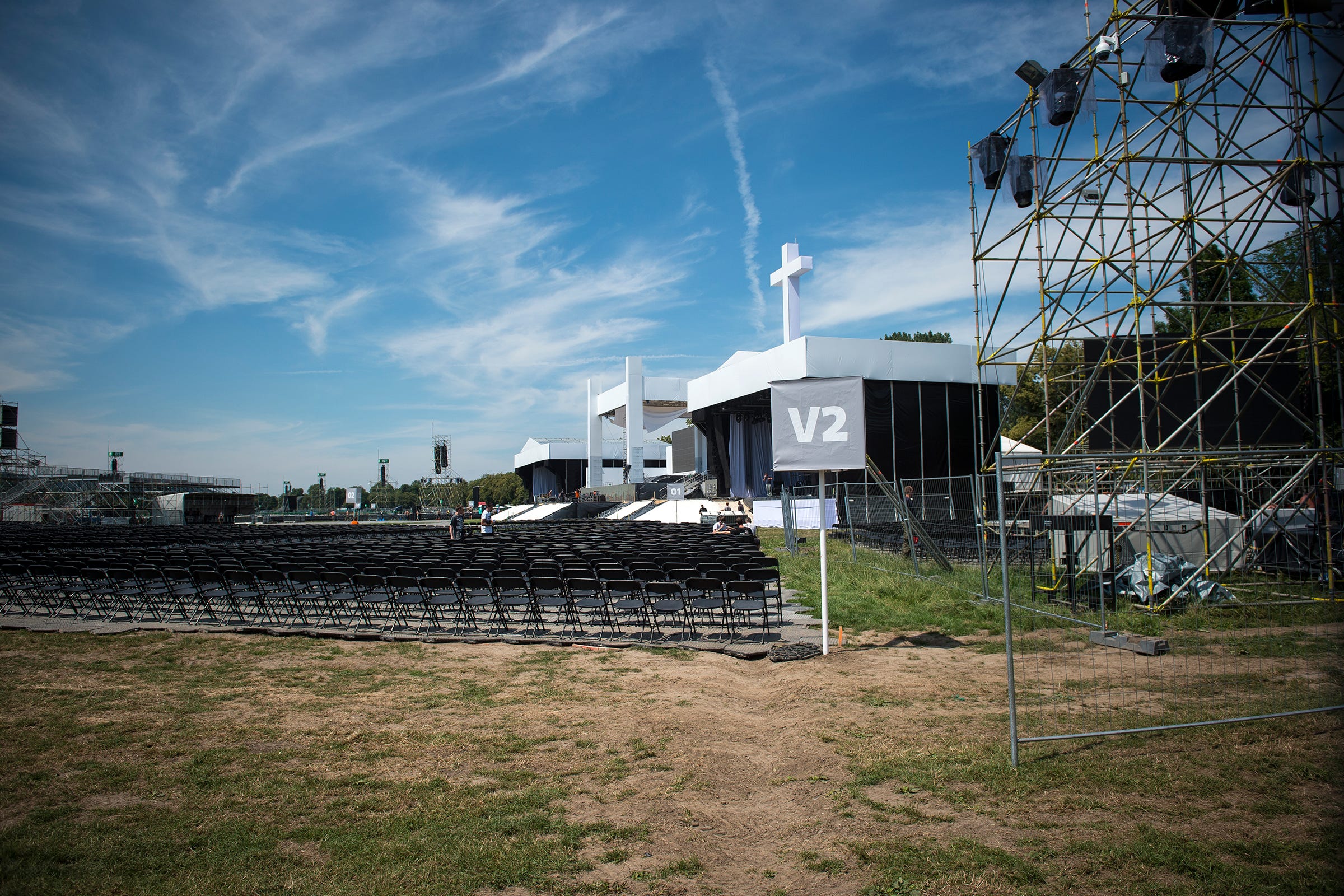
Ahead of us, in the half-light, stood the enormous stage and altar where Pope Francis would celebrate the closing Mass for World Youth Day in Kraków, the city forever tied to Saint John Paul II, the pope who gave the world World Youth Day.
It was vast.
Even in the dim light, before the crowds fully emerged, the scale of it was staggering. The altar seemed to rise out of the field like some kind of temporary cathedral built for a nation of pilgrims. Everywhere there were barriers, scaffolds, security lanes, press areas, military personnel, volunteers, radios, cables, and the quiet electricity that comes before a major papal event.
At the first security checkpoint, I was searched and waved through.
Then another checkpoint.
Then another.
Then another.
Each time, I presented my credentials with the confidence of a man who had no idea he was walking deeper and deeper into a problem. There were conversations between our security escorts, nods from officials, quick glances at badges, and then gates opening.
No one stopped me.
No one said, “Sir, you are absolutely not supposed to be here.”
No one grabbed me by the collar and said, “American photographer, turn around before this becomes a story you will one day have to write.”
So I kept going.
By then, the sun had risen, and I had settled into the rhythm of the work. That strange photographer rhythm where you stop thinking like a normal person and start thinking in angles, sightlines, access, and light.
Where can I shoot from?
Where will the Pope be?
Where will the procession enter?
I wandered around the enormous altar area for hours, looking for perches, studying the structure, making mental notes, and slowly convincing myself that somehow, against all odds, I had landed in exactly the right place.
Then my phone rang.
“WHERE ARE YOU?”
I smiled.
“You’re not going to believe this,” I said, trying not to sound too pleased with myself. “I’m standing right beside Pope Francis’ chair on the altar.”
There was silence on the other end.
Not ordinary silence.
Cathedral silence.
The kind of silence where you begin to realize that whatever you just said has not had the effect you intended.
Then came the words.
“You’re supposed to be with the Popemobile!”
I laughed, because clearly there had been some kind of misunderstanding.
“No, no, no,” I said. “It’s fine. They told me this is where I’m supposed to be.”
“WHO told you?”
“The person at the security tent I asked for directions.”
Even as the words came out of my mouth, I could feel the tiny voice returning.
This time, it was no longer whispering.
It was lighting flares.
Another silence.
“Well,” he finally said, “if you’re already there, there’s nothing we can do now. Just do what you can and we’ll talk later.”
And for the first time that morning, the bright little fantasy I had built around my amazing access began to dissolve.
Maybe I wasn’t a highly resourceful photographer who had somehow navigated the system with brilliance and instinct.
Maybe I was just plain ‘ol lost.
This possibility was confirmed almost immediately when a security guard approached me.
He looked at my credentials.
Then he looked at me.
Then he looked back at my credentials in a way that suggested my day was about to change.
“Come with me, please.”
He brought me to a more senior official, who examined my badge with the weary disappointment of a man who had seen this kind of thing before, probably from Americans.
“This is not the credential for this area,” he said. “You’ll have to leave.”
Mass was about to begin.
My life didn’t flash before my eyes, exactly, but my assignment did. My coverage. My access. My editor. Every photo I had imagined making that morning. Every frame I was now not going to make.
And after hours of wandering around like I owned the place, the full horror of the situation finally began to dawn on me.
I had been in the wrong place for hours.
Not just a little wrong.
Not “wrong gate” wrong.
Not “wrong press riser” wrong.
The kind of wrong where men with radios start talking about you in another language.
I begged.
Then I pleaded.
Then, for good measure, I begged again.
The senior official listened for a moment, which was more mercy than I probably deserved. Then he said I would need to speak to his boss.
That sounded hopeful.
It was not.
They began escorting me toward the exit, and with each step, another wave of panic rose in me. The altar receded behind me. The place where I thought I was supposed to be, the place I had spent all morning preparing to shoot from, was slipping away.
Then I saw the tent.
It was surrounded by armed Polish soldiers.
Out of the tent came a man with the kind of authority that does not need to raise its voice. He walked toward me with military precision and the expression of someone who had absolutely no interest in hearing a long explanation from a sleep-deprived American photographer.
“So,” he said. “What is this?”
At this point, I abandoned all dignity.
I explained. I apologized. I gestured. I probably pointed at things that didn’t need pointing at. I may have looked like a man trying to negotiate international law using only panic and hand movements.
He stared at me.
I continued.
He stared some more.
Finally, perhaps because he understood my situation, or perhaps because he simply wanted me to stop talking, he asked, “Where do you want to go?”
“The altar,” I said.
Then, because desperation makes theologians of us all, I added, “Please?”
He turned to another soldier and barked something in Polish.
A yellow wristband appeared.
The commander fastened it around my wrist.
Then he barked at another soldier near a truck and ordered him to drive me back.
As I climbed in, the commander leaned toward me.
“You better hurry,” he said. “Mass will be starting soon.”
I don’t know exactly what prayer I offered in that truck, but I know it was sincere. I had received mercy from a Polish military commander, and I wasn’t about to waste it.
When I arrived back near the altar, I stepped out with the confidence of a man wearing a cheap plastic yellow wristband that he now believed to be the key to the Kingdom.
I was back.
I was legal.
I was saved.
Or so I thought.
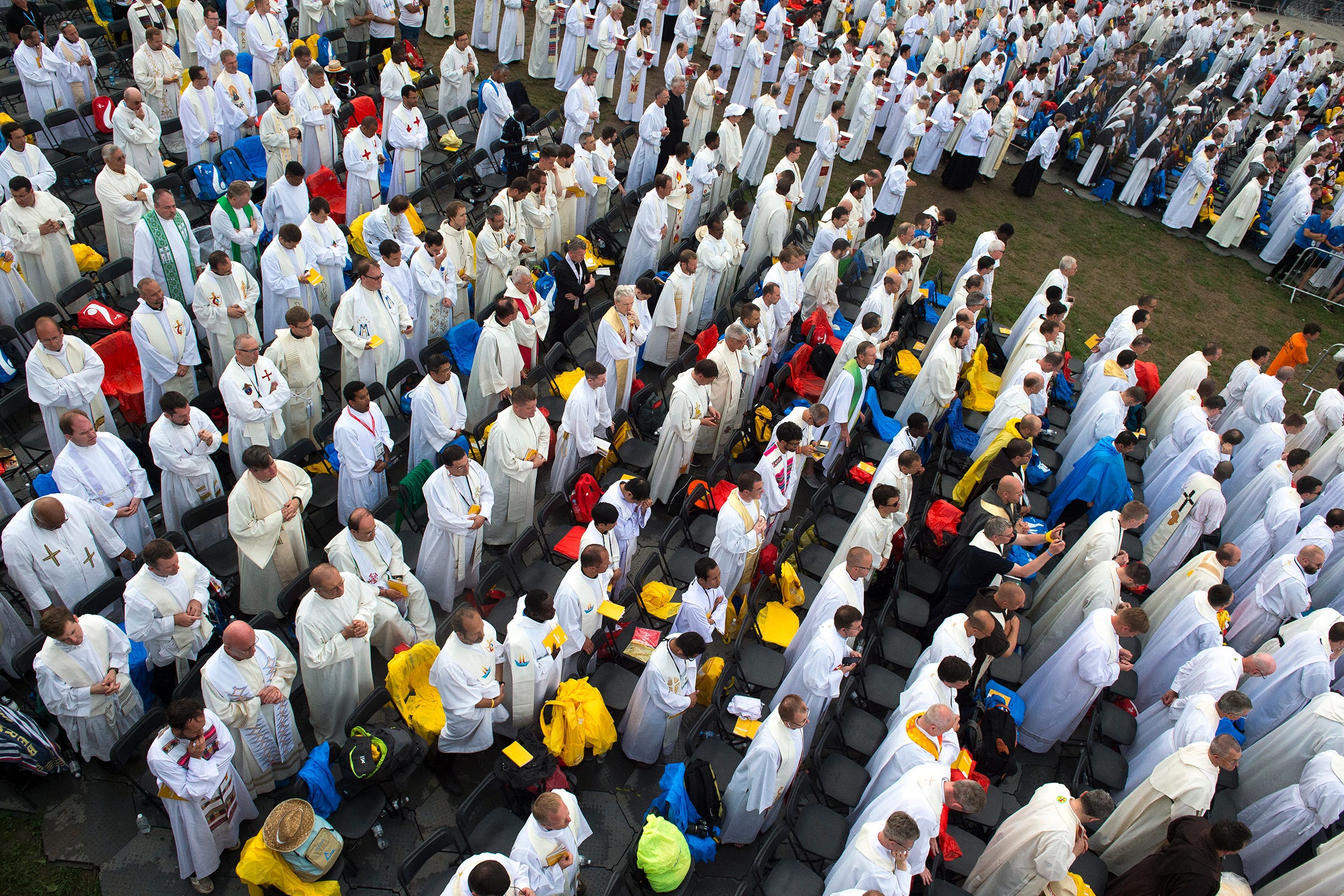
I made my way toward the altar area and joined another photographer who seemed to know what he was doing, which is usually a good survival strategy. The choir began. The entrance procession was forming. The great movement of the liturgy, the security operation, the global broadcast, and the press pool all began moving at once.
Then I heard a voice to my right.
“Can I see your credentials?”
I turned with confidence.
This time I had my badge and my yellow wristband.
I presented both like a man producing diplomatic immunity.
He looked at them.
“These are the wrong credentials for here.”
My heart stopped.
Not again.
I began explaining about the tent, the commander, the truck, the wristband, the mercy of God, the whole epic tale of my morning.
But just then the Vatican pool photographers arrived.
The VAMP, as they’re referred to.
The people who were actually supposed to be there.
And in that instant, the entire scene broke open.
The procession was moving. The Pope was arriving. Cameras lifted. Bodies shifted. Security attention scattered.
So I did what any calm, reasonable, well-credentialed professional would do.
I bolted into the chaos and started taking pictures.
For a few blessed seconds, I was free.
Pope Francis approached the altar.
The crowd sang.
The music swelled.
The Holy Father kissed the altar.
Then security caught on.
Of course they caught on.
One does not simply vanish into a papal Mass wearing the wrong badge and a suspiciously miraculous yellow wristband.
They began moving toward me again.
That might have been the end of it, but my friend and fellow photographer Paul Haring saw what was happening. Paul, who knew exactly what he was doing and was exactly where he was supposed to be, gestured to one of the officials, and somehow, by the slenderest thread of goodwill, I was allowed to remain a little longer.
A few more moments.
A few more frames.
A little more mercy.
But all good things must come to an end.
As Mass began in earnest, I made myself scarce.
There is no elegant way to say this.
I hid.
Not in a criminal way. Not in a dramatic spy-movie way. More in the way a photographer hides when he knows that visibility is currently not his friend.
The altar structure was massive, with scaffolding, stairs, platforms, supports, and dark little pockets where a person could disappear if he had enough motivation and a long enough lens.
I tucked myself into the structure and tried to become part of the architecture.
When I saw security, I moved.
When they moved, I moved somewhere else.
I darted, ducked, paused, photographed, waited, and prayed that nobody had the energy to make a serious project out of removing me before the Mass ended.
For the next stretch of time, I was less a member of the press corps than a raccoon in a tuxedo at a state dinner.
But I kept shooting.
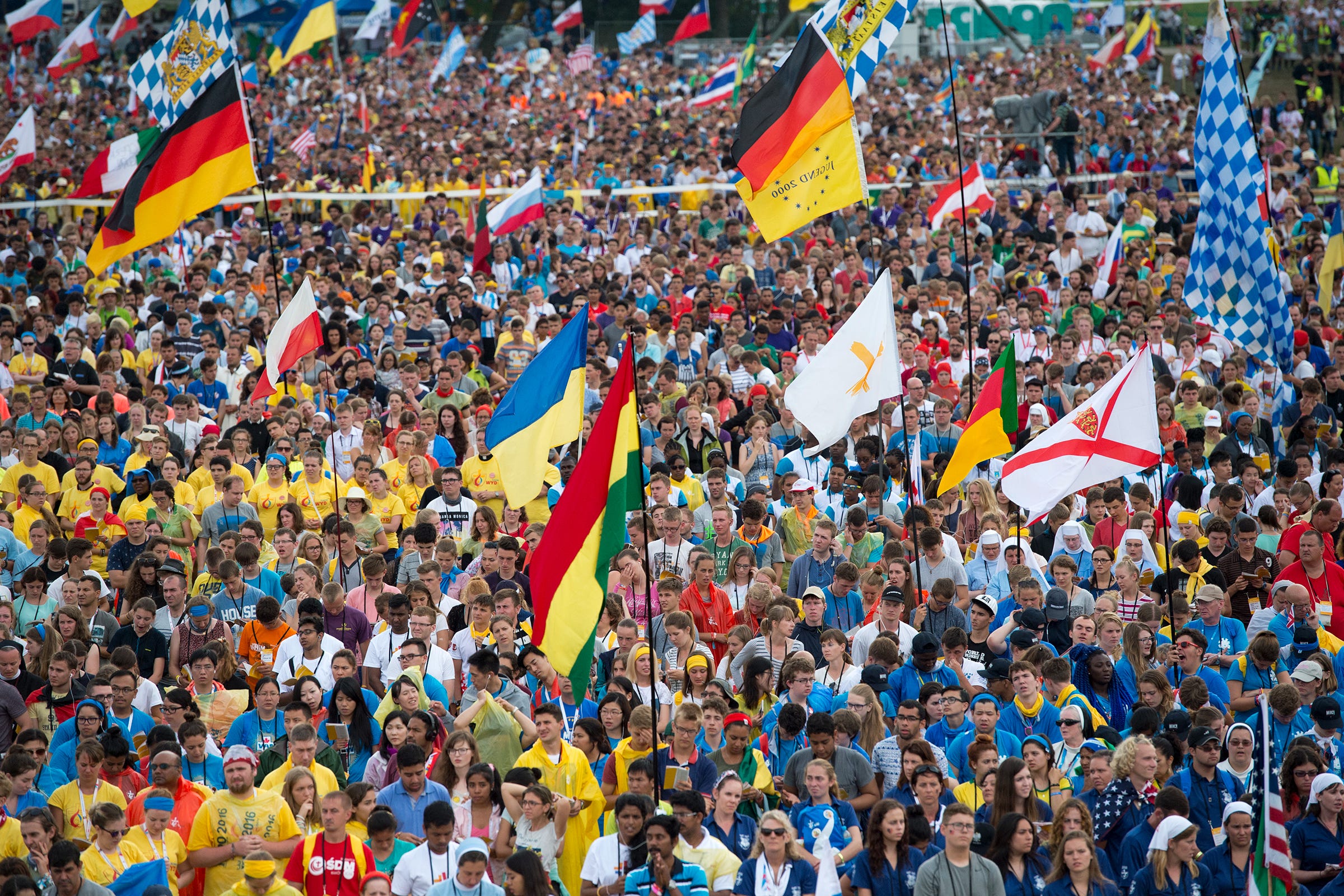
And slowly, impossibly, I made it through.
When the choir began the recessional and Pope Francis rose to depart, I knew the day was nearly over.
Then I was spotted.
This time, there was no explaining. No tent. No commander. No yellow wristband miracle. Mass was over, and I had only one remaining strategy.
Run.
I scrambled down a long scaffold stairway with a voice somewhere behind me telling me to stop.
I did not stop.
At the bottom of the stairs, I saw a door.
I grabbed the handle, twisted it, threw it open, and ran through.
And then I froze.
Standing before me were hundreds of Polish soldiers in formation.
All of them looking directly at me.
My eyes went wide.
Their eyes went wide.
For one impossible second, I thought, This is it. This is how it ends. Not with a photograph. Not with glory. But with an international incident and a very uncomfortable phone call home.
Then their eyes shifted.
Not to me.
To a door just to my left.
It opened slowly.
The soldiers snapped to attention and raised their hands in salute.
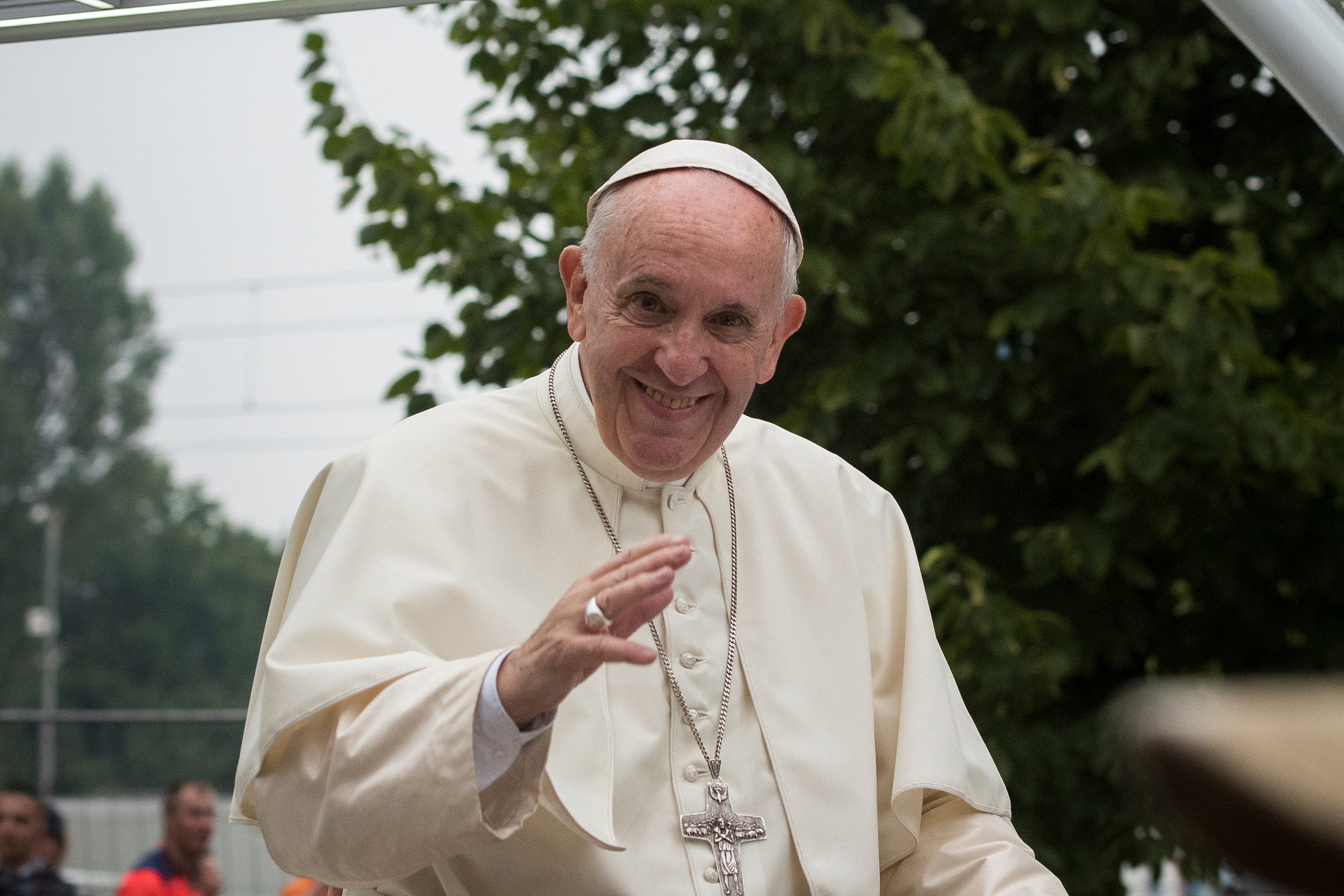
And out stepped Pope Francis.
He turned.
He saw me.
And he raised his hand in blessing.
Now, it’s entirely possible that he was blessing the soldiers, the people behind me, the general area, the nation of Poland, the entire Church, or some combination of all of the above.
But I was closest.
So I’m going to believe it was for me.
He smiled, stepped into the Popemobile, and blessed us again.
And there I was.
After all of it.
After the wrong directions, the checkpoints, the panic, the pleading, the military tent, the yellow wristband, the truck ride, the second expulsion, the hiding, the scaffolding, the stairs, and the door I was never supposed to open.
I had ended up beside the Popemobile.
The very place I had been told I was supposed to be in the first place.
If I had tried to get to that exact spot at that exact moment, it would have been impossible.
No credential would have gotten me there.
No plan would have gotten me there.
No carefully mapped route, no perfect command of Polish, no cleverness, no professional instinct would have placed me on the other side of that door at the precise moment Pope Francis walked out.
But the wrong directions did.
And perhaps that’s what has stayed with me all these years.
I was in Poland to work. That was the truth of it. Long days. Little sleep. Thousands of photographs. The constant mental arithmetic of a photojournalist trying to be in the right place before the moment disappears.
I had very little time to experience the thing I was covering. I rarely do.
That’s one of the strange burdens of this work. You can stand in the middle of history and still be thinking about shutter speed.
But at the end of that long, ridiculous, grace-filled morning, I was given something I couldn’t plan for and didn’t deserve.
A Pope’s blessing.
Literally.
And maybe figuratively too.
I had spent the whole day trying to get where I thought I was supposed to be.
And somehow, in the end, I arrived exactly where I was meant to be.
In the loving embrace of God’s Mercy, with a wink and a smile.
Which is why, whenever I think back on that morning in Kraków, I don’t remember it first as a security failure, a credentialing disaster, or the closest I have ever come to being tackled by the Polish military.
I remember it as the day God used bad directions to lead me to a moment of Grace.
And why I may never ask for directions again.
But then again…
Thanks for reading! This is a truly independent, reader-supported periodical. Your support is crucial. If you are able, please consider a paid subscription or making a ‘Patron of the Arts’ donation of any amount. By doing so, you are not just supporting this effort; you’re a vital part of this mission.
You have my heartfelt thanks for your generosity and support, and please keep me in your prayers, and know of mine for each of you. God Bless, Jeff
You see, God does have a sense of humor!
This was fantastic. I laughed out loud but I had a tear in my eye at the same time.