

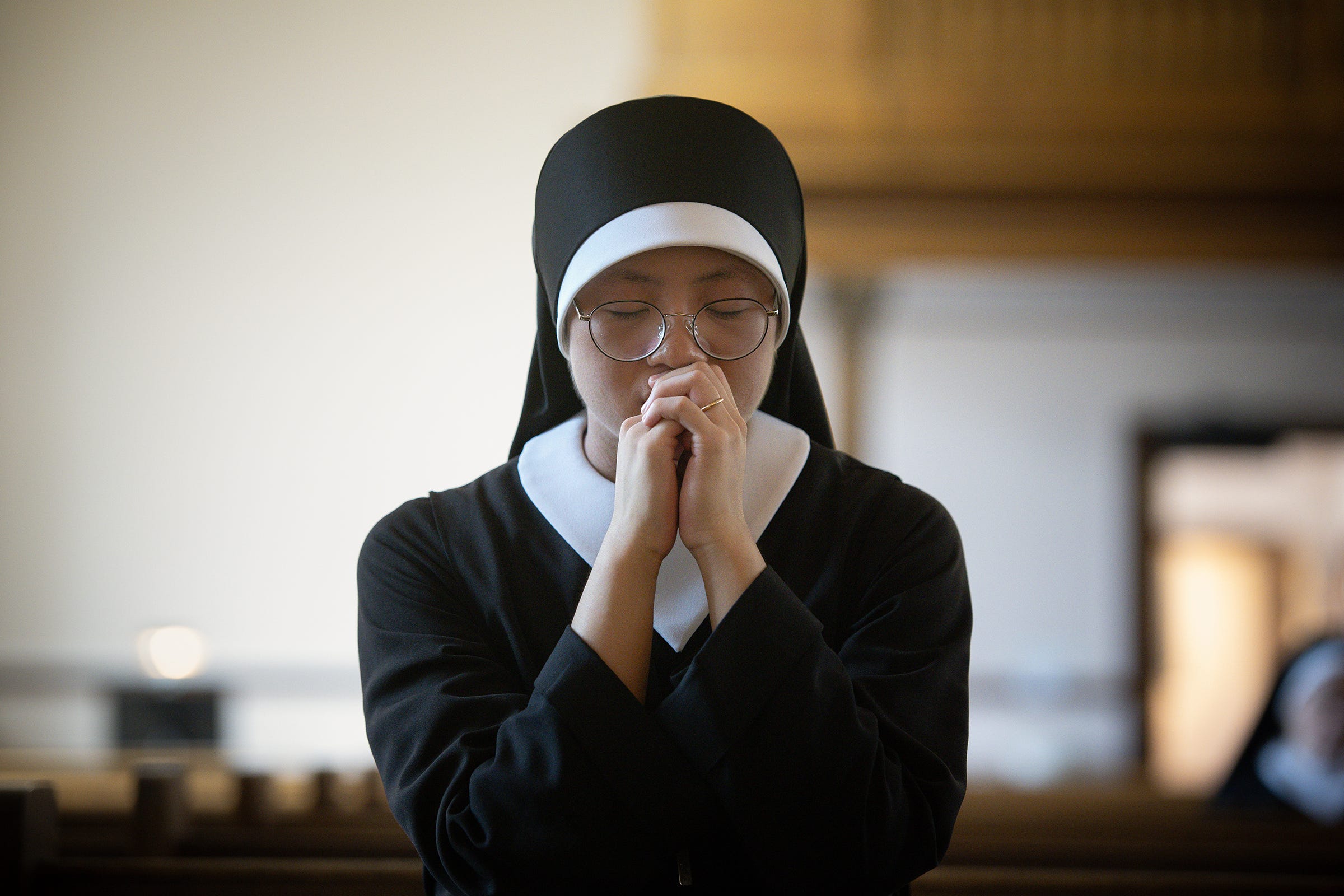
If the town below tells you what was once visible, a day inside the Motherhouse reveals what’s hidden.
From the outside, the Holy Family Motherhouse rises above Baltic with a quiet authority. It’s not dramatic in the way a cathedral is dramatic. It doesn’tt overwhelm the senses. It simply stands there, solid and watchful, looking out over a valley that has seen smokestacks, immigrant families, schoolgirls, weddings, funerals, First Communions, and generations of Sisters moving through the same halls in white habits and black veils.
The Motherhouse is connected to the Academy of the Holy Family, the school founded by the Sisters in Baltic in 1874. The present school building, built in 1914, feels like part of the same long sentence, joined physically and spiritually to the Motherhouse beside it.
But inside, it’s less a building than a small world.
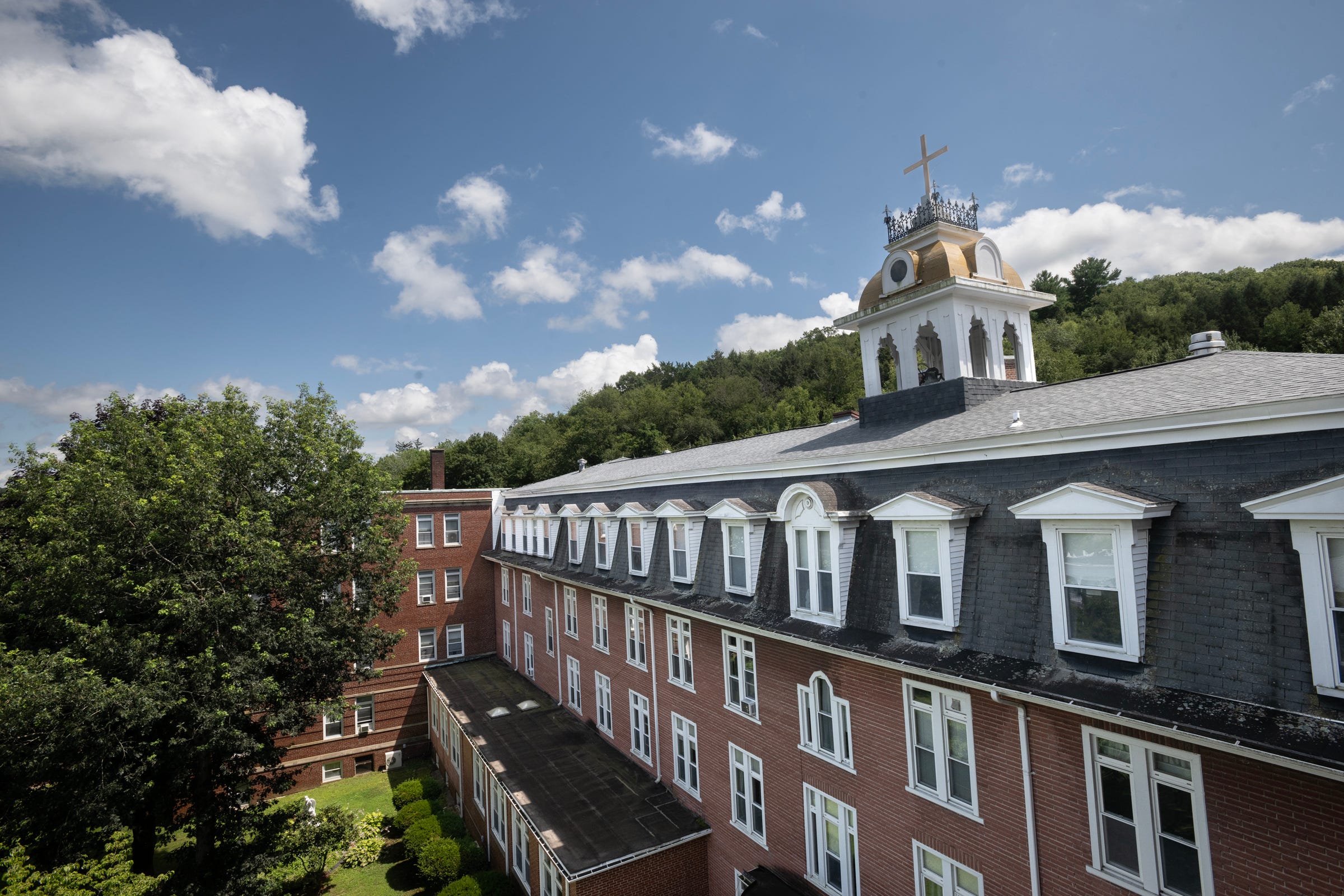
A corridor opens into another corridor. A stairwell turns unexpectedly. A hallway that seems to be leading one way suddenly reveals a chapel door, a sitting room, a relic case, a classroom wing, a kitchen, a dining room, or a quiet corner.
The Motherhouse is a labyrinth of passageways and sections, the kind of place where you begin to suspect that a map might just prove handy, if you were in any kind of hurry.
By the time I slipped into the chapel early on the second morning, the Sisters were already in place.
Rows of veils.
Heads bowed.
The soft rustle of pages turning.
“Lord, open my lips…”
“…and my mouth will proclaim your praise.”
The words rose and fell like breathing.
Above the altar, a great mural of the Holy Spirit seemed to gather the whole chapel beneath its wings. It felt like a presence. The dove hovered over the sanctuary, over the tabernacle, over the Sisters in choir, over the worn wood and folded hands and bowed heads.
And with every sunrise for over 150 years, the Sisters were doing what they do every day: standing before God on behalf of a world that mostly doesn’t know they exist.
Light from the stained-glass windows moved slowly across the floor.
A young Sister sang with her eyes closed. Across from her, an older Sister leaned heavily on the wood of the pew, her hands marked with age.
Two ends of the same rope.
Between them was the whole mystery of religious life: not escape from the world, but a long fidelity within it. A richer one.
After Morning Prayer and Mass, the silence of the chapel gave way to the gentle commotion of community life: cups being filled, chairs scraping against the floor, quick footsteps in the hallway, the low murmur of conversation, and laughter rising from somewhere just out of sight.
“Did you get your coffee yet?” one Sister asked, spotting me hovering with my camera, feeling a little out of place.
A few minutes later I was in the kitchen, fielding questions about where I’d come from, who I work for, how many kids I have. One Sister wanted to know why anyone would voluntarily live in New Jersey. Another assured me they would pray for me.
I’m still not entirely sure if the two comments were related.
That was one of the surprises of the Motherhouse.
You arrive expecting silence, and there is silence. Deep silence. Holy silence.
But there’s also laughter.
There’s teasing.
There’s the unmistakable sound of women who have lived together long enough to know one another’s habits, timing, weaknesses, favorite chairs, preferred coffee, and best jokes.
The day didn’t unfold like a program. It unfolded like a household.
One minute I was standing in a dishwashing room where steam rose from the machines. The next, I was in a hallway watching one Sister pause beside an elderly member of the community, adjust a blanket, offer a few quiet words, and draw out a tired but very real smile.
Elsewhere, school life continued on the other side of the connected buildings. Students passed through the same larger world of prayer, discipline, and formation that has shaped young women here for generations. The Academy is not a memory preserved under glass. It’s still a school. Still regular and boarding. Still alive with the ordinary hopes and worries of students who probably don’t realize, at least not yet, how much history surrounds them.
And then there were the relics.
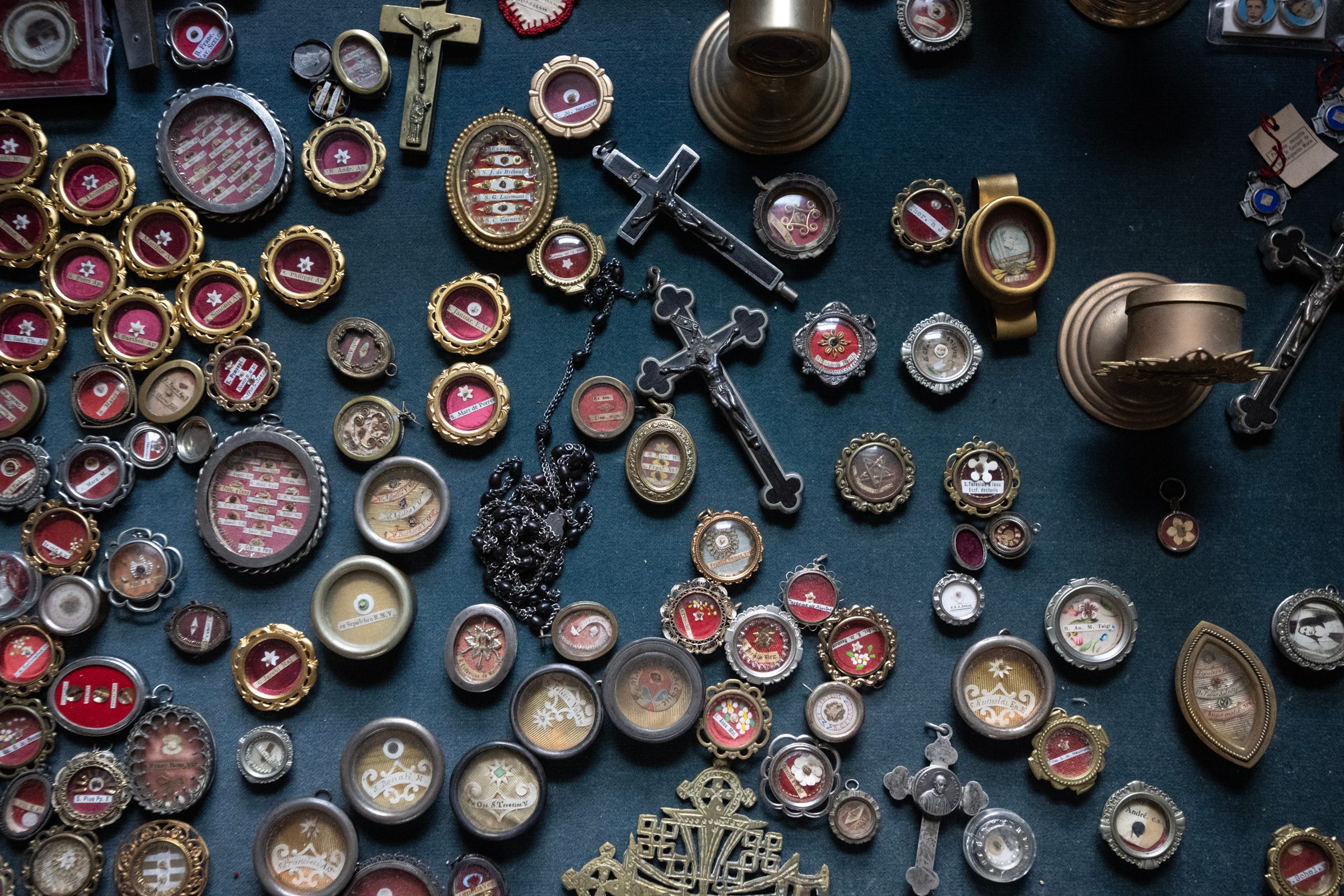
Tucked within the Motherhouse is a remarkable collection as if the saints themselves had taken up residence in the walls. Tiny fragments of holy lives rested behind glass. Names from across the long story of the Church stood silently in their cases, not as curiosities, but as company.
That’s what the Motherhouse began to feel like to me.
A sacred community.
The Sisters in the chapel.
The students in the school.
The saints in their reliquaries.
The town below.
The river still moving silently through the valley.
And Holy Spirit overshadowing, protecting, and shining His Grace upon it all.
It would be easy to call this place a remnant of another age, but that would be the wrong word. A remnant is what’s left over.
This is not left over.
This continues to move, and remains.
“What do you want people to know about your life here?” I asked one of the Sisters.
She paused.
“That it’s real,” she said. “People imagine a museum. But this is very alive.”
That sentence stayed with me because it named exactly what I’d been seeing.
Inside the Motherhouse, hidden above a former mill town in eastern Connecticut, Grace was not only surviving.
It’s moving through the halls.
It’s laughing over coffee.
It’s singing beneath the Holy Spirit.
And it’s caring for the old, teaching the young, feeding the hungry and passing quietly from one generation to the next.
Faithfully.
And that’s been the story of Grace from age to age since the beginning. And in this sleepy town of Baltic, there’s no exception.
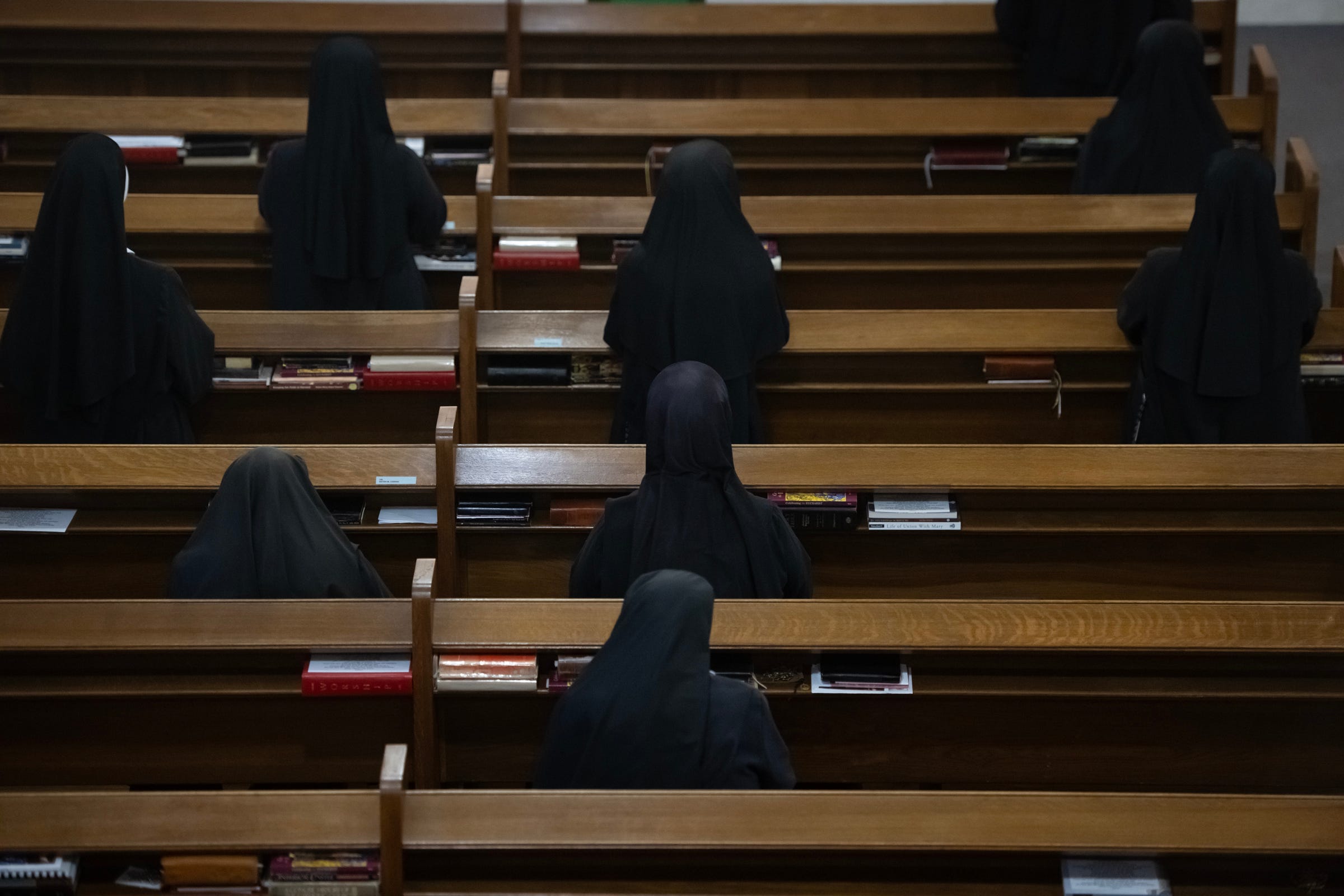
Before the Motherhouse begins to move, it gathers in silence.
Rows of black veils face the altar, each Sister hidden from view and yet fully present, joined in the prayer that has carried this community through generations. In the Motherhouse, the day does not begin with activity. It begins with Christ.
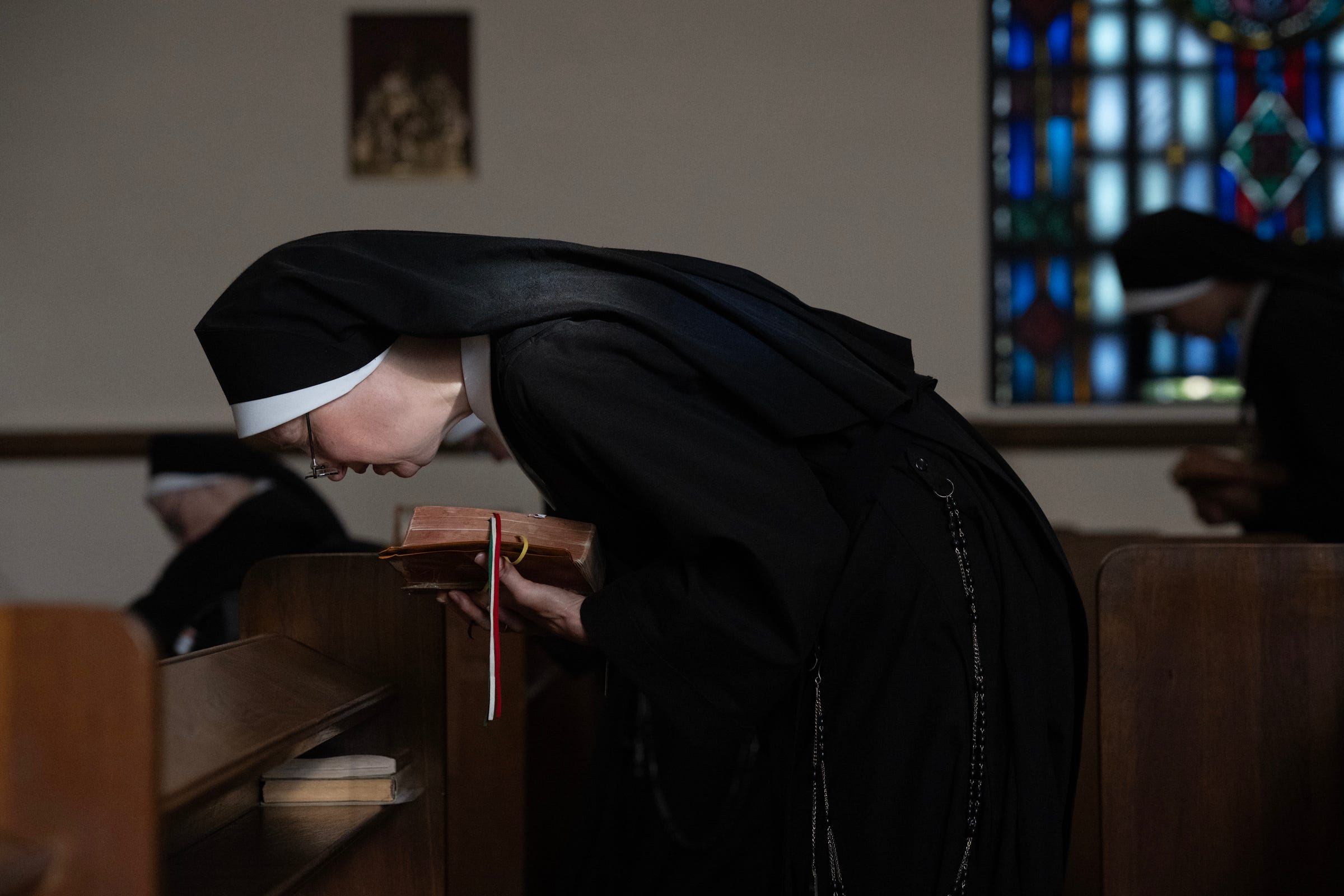
A Sister bows over her prayer book as the community prays the Divine Office, the kind of hidden work that leaves no noise behind, but somehow holds everything else together.
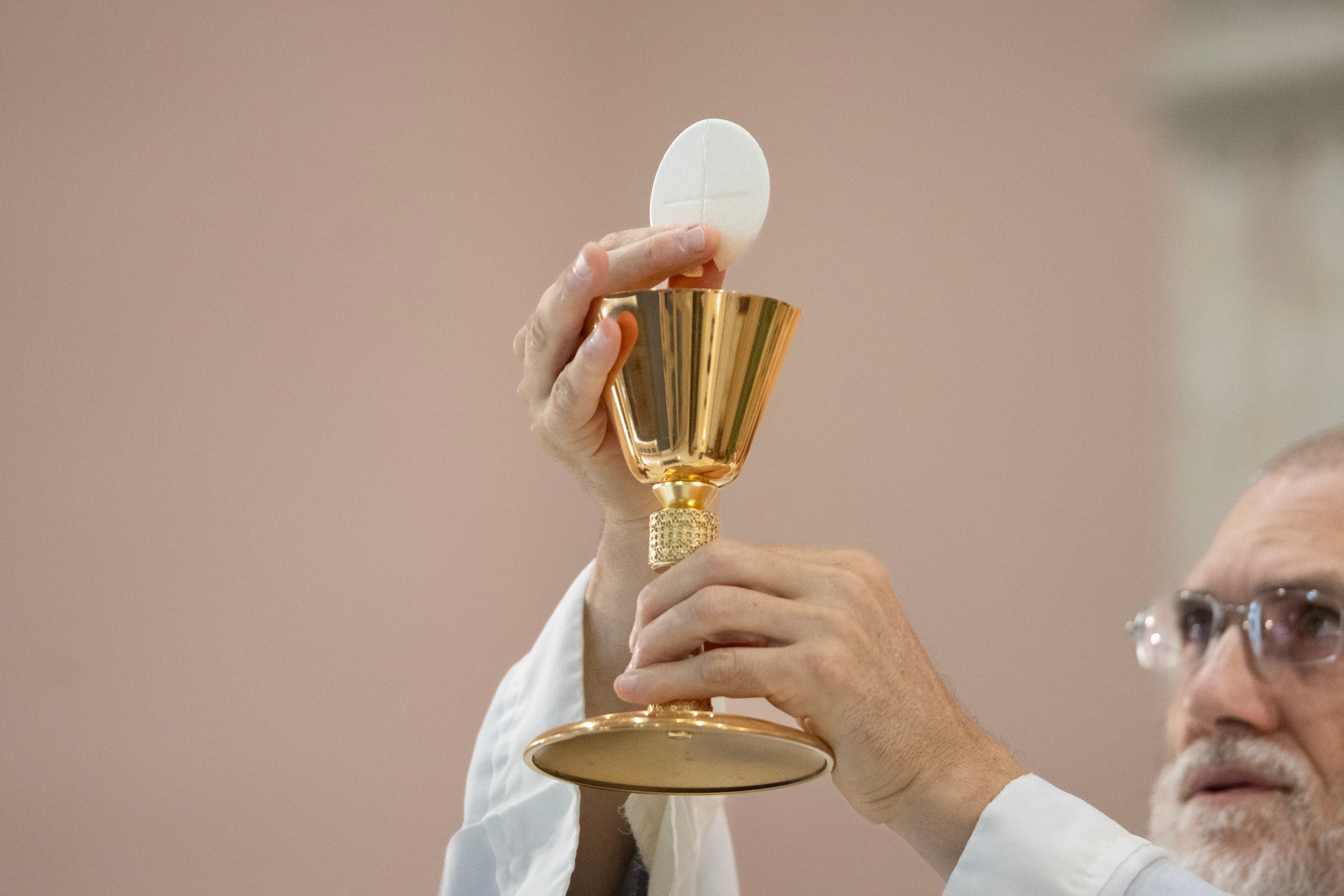
At the center of the house is not a memory, or a mission statement, or even the long history of the community. It is Christ himself, lifted above the chalice in the silence of the Mass, the source from which everything else flows.
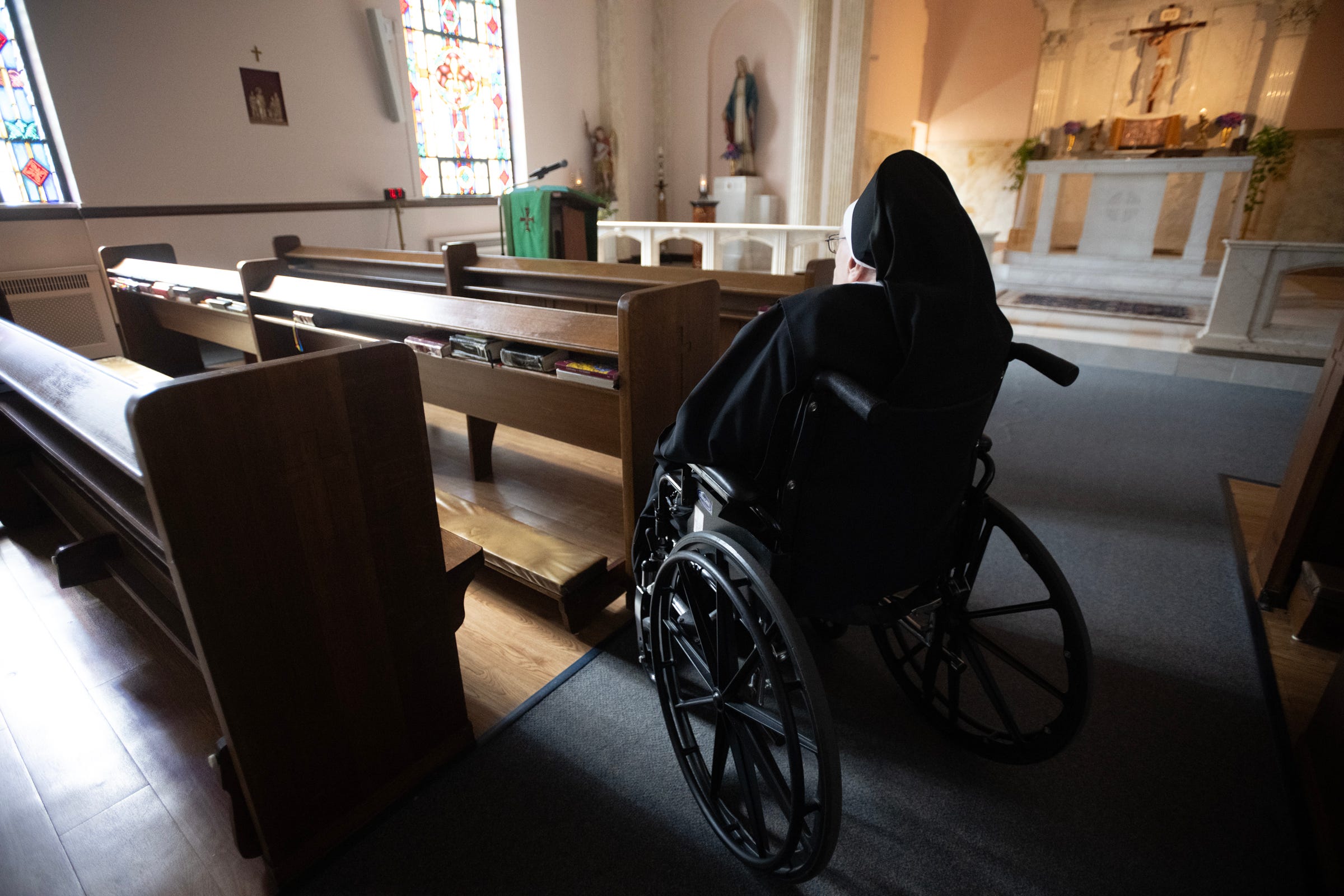
An elderly Sister prays the Stations of the Cross daily from her wheelchair before the altar, framed by stained glass and morning light. In the Motherhouse, fidelity is not measured only by movement, but by remaining.
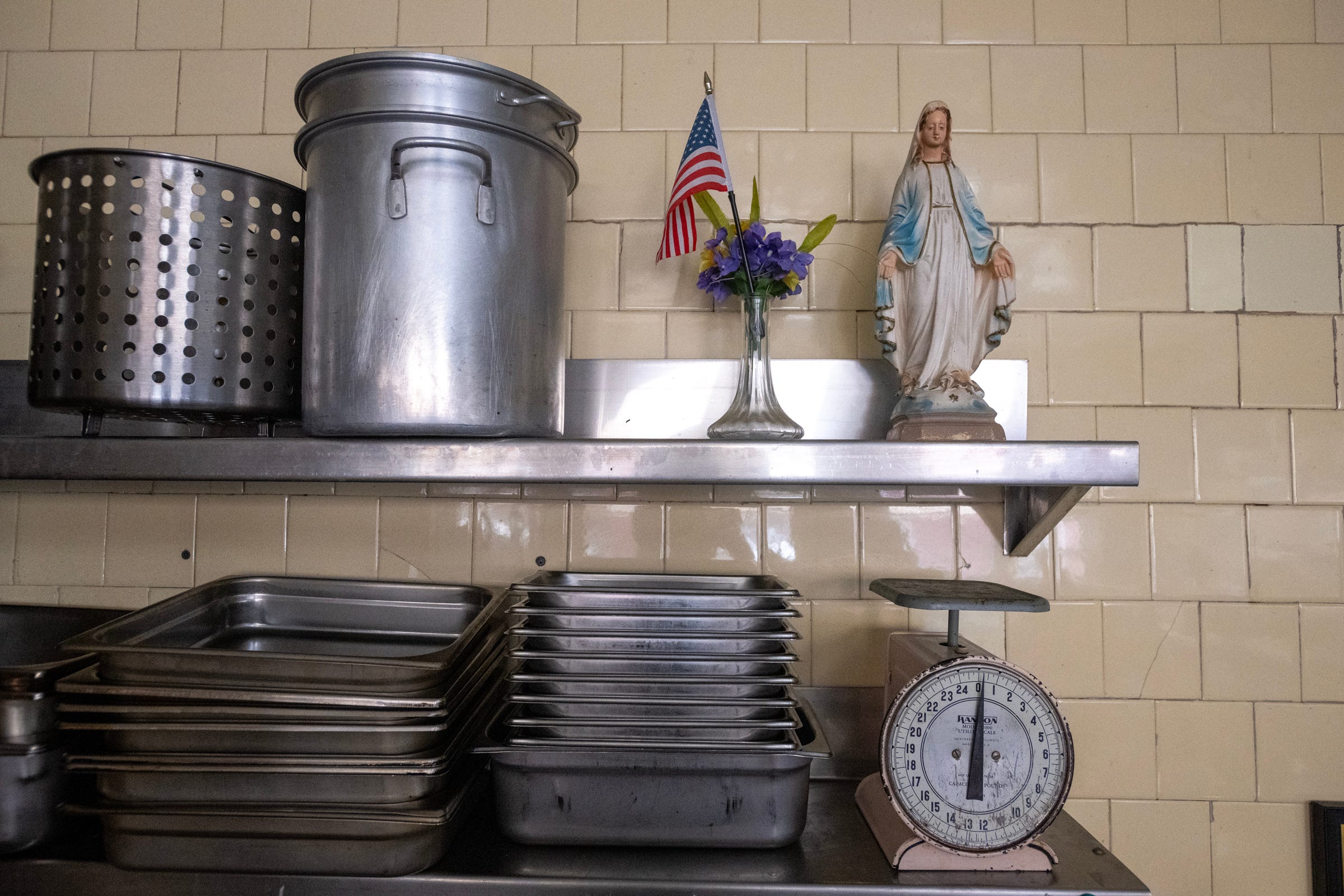
In the kitchen, the sacred and practical sit side by side: steel pans, an old scale, flowers, an American flag, and a small statue of Our Lady watching over it all. Here, Grace does not float above ordinary work. It settles in among the pots and shelves.
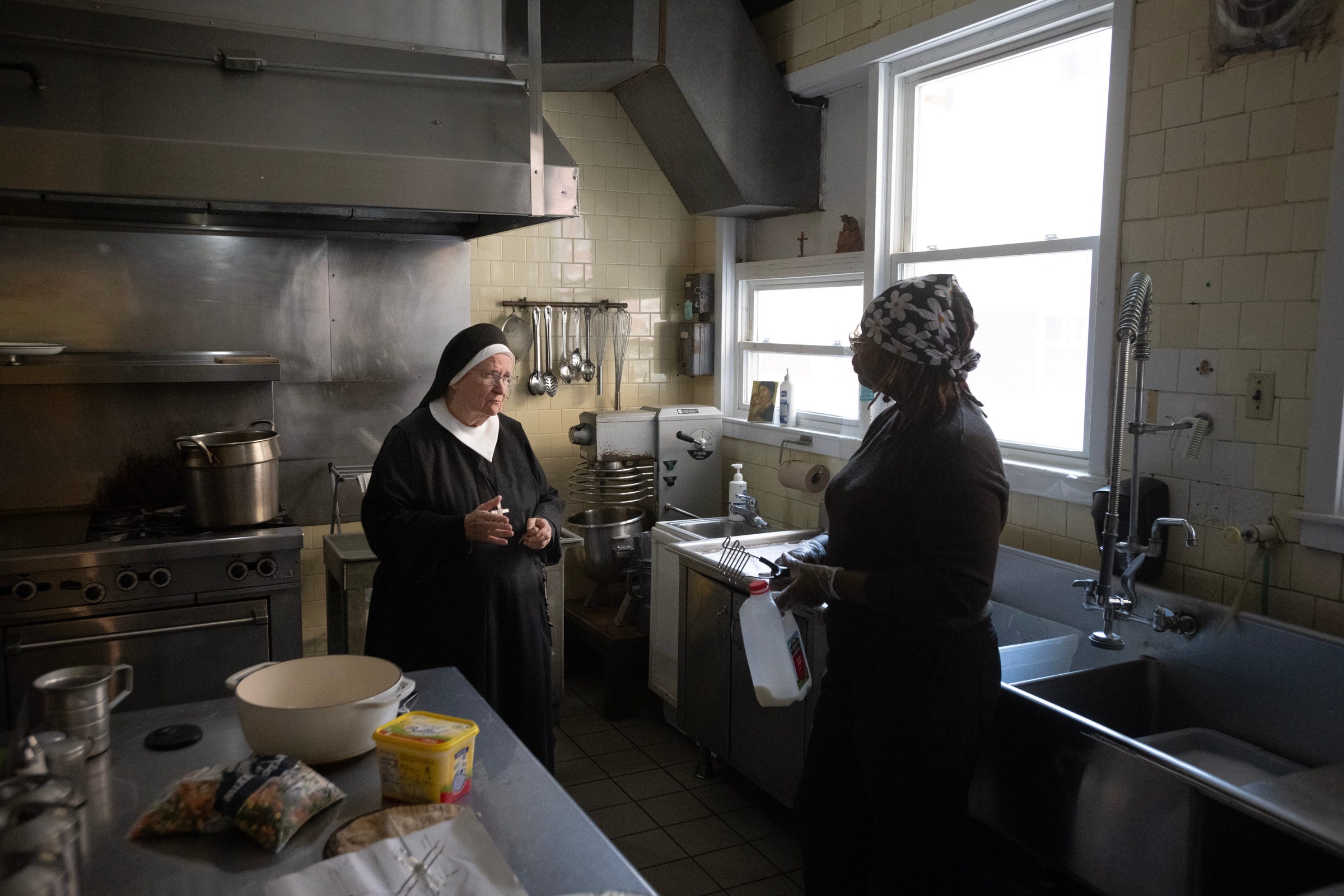
The life of the house moves through the kitchen as naturally as it moves through the chapel. Meals are planned, dishes are washed, questions are asked, and the ordinary work of feeding one another becomes part of the larger prayer.
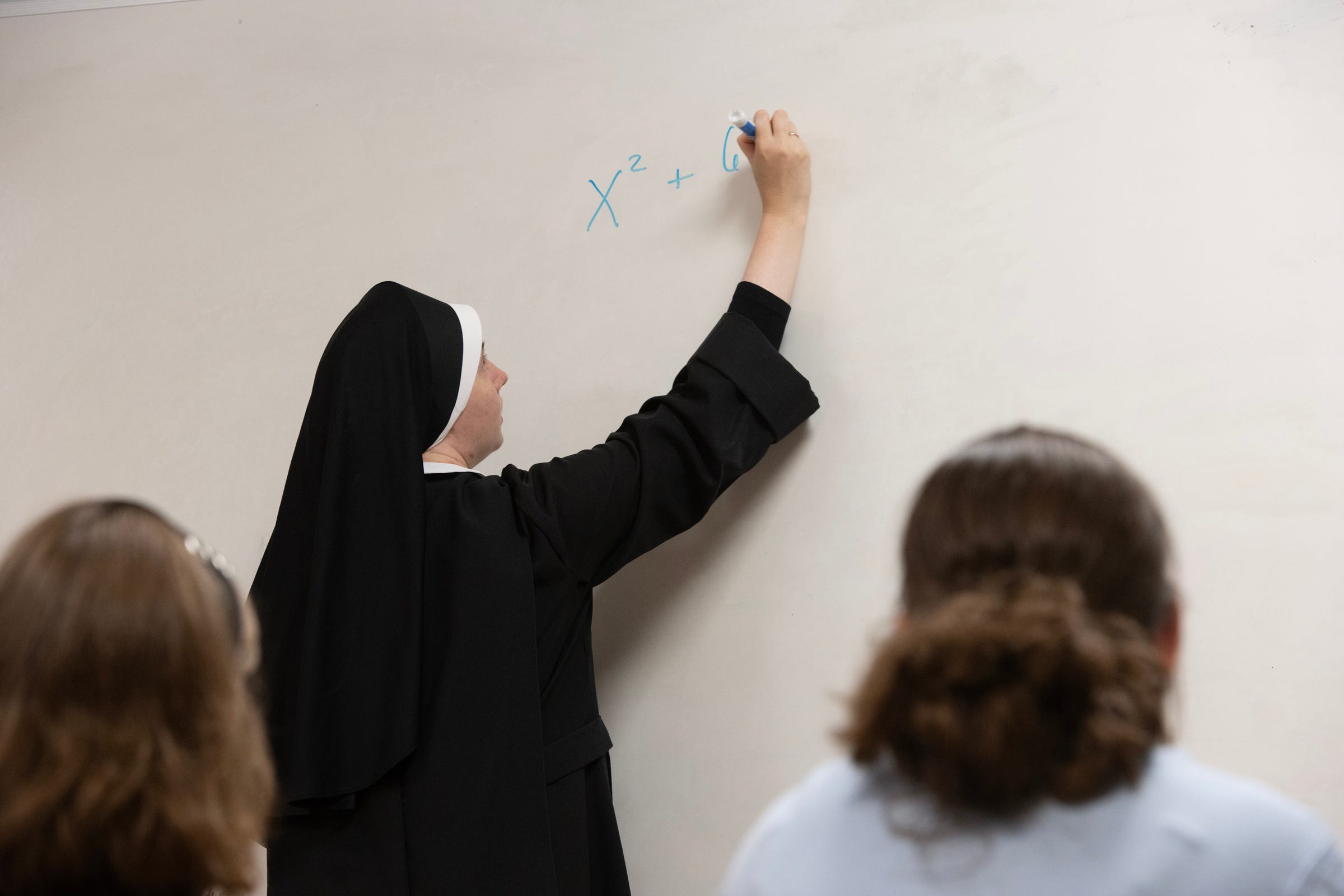
On the school side of the Motherhouse, a Sister writes an equation on the board while students follow from their desks. The Academy of the Holy Family is not a preserved memory. It is still a school, still forming young women under the same roof where generations have prayed.
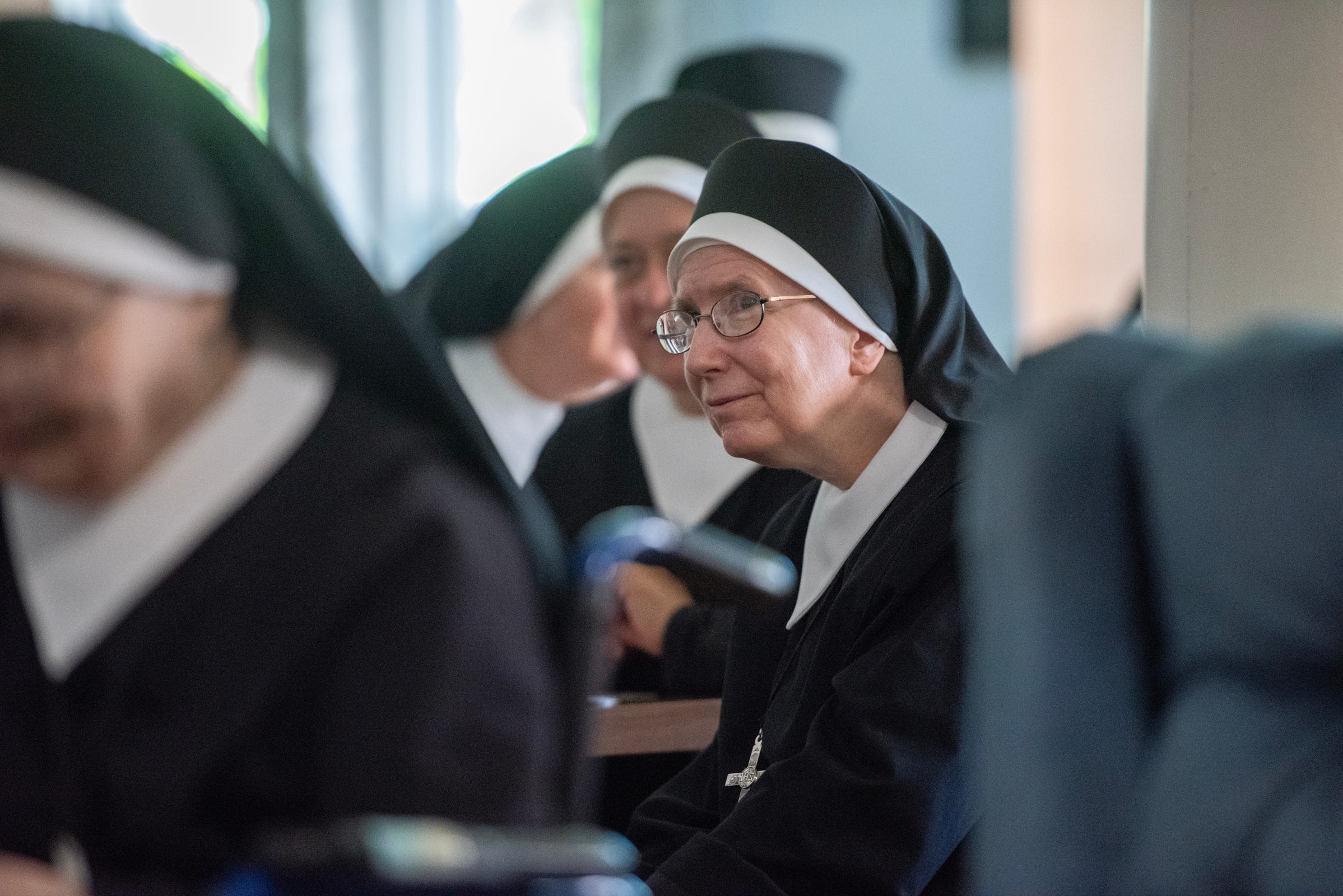
In the refectory, the pace loosens. Between prayer and work, there is the quiet companionship of women who have shared years of service, carrying in their faces the peace of a life given steadily, day after day.
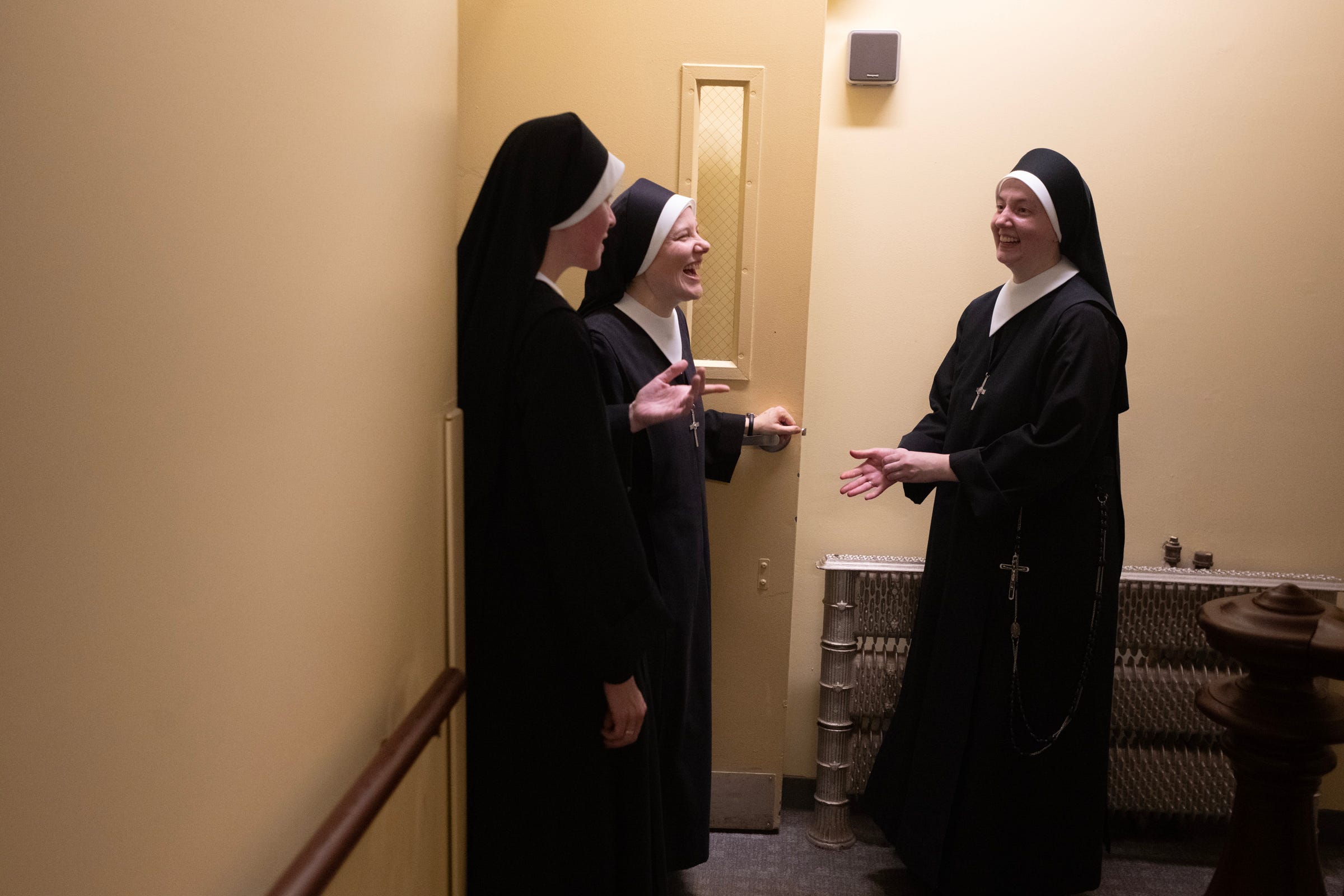
The halls of the Motherhouse are not solemn all the time. Around corners and on stair landings, laughter breaks open the silence, revealing a community as human as it is holy.
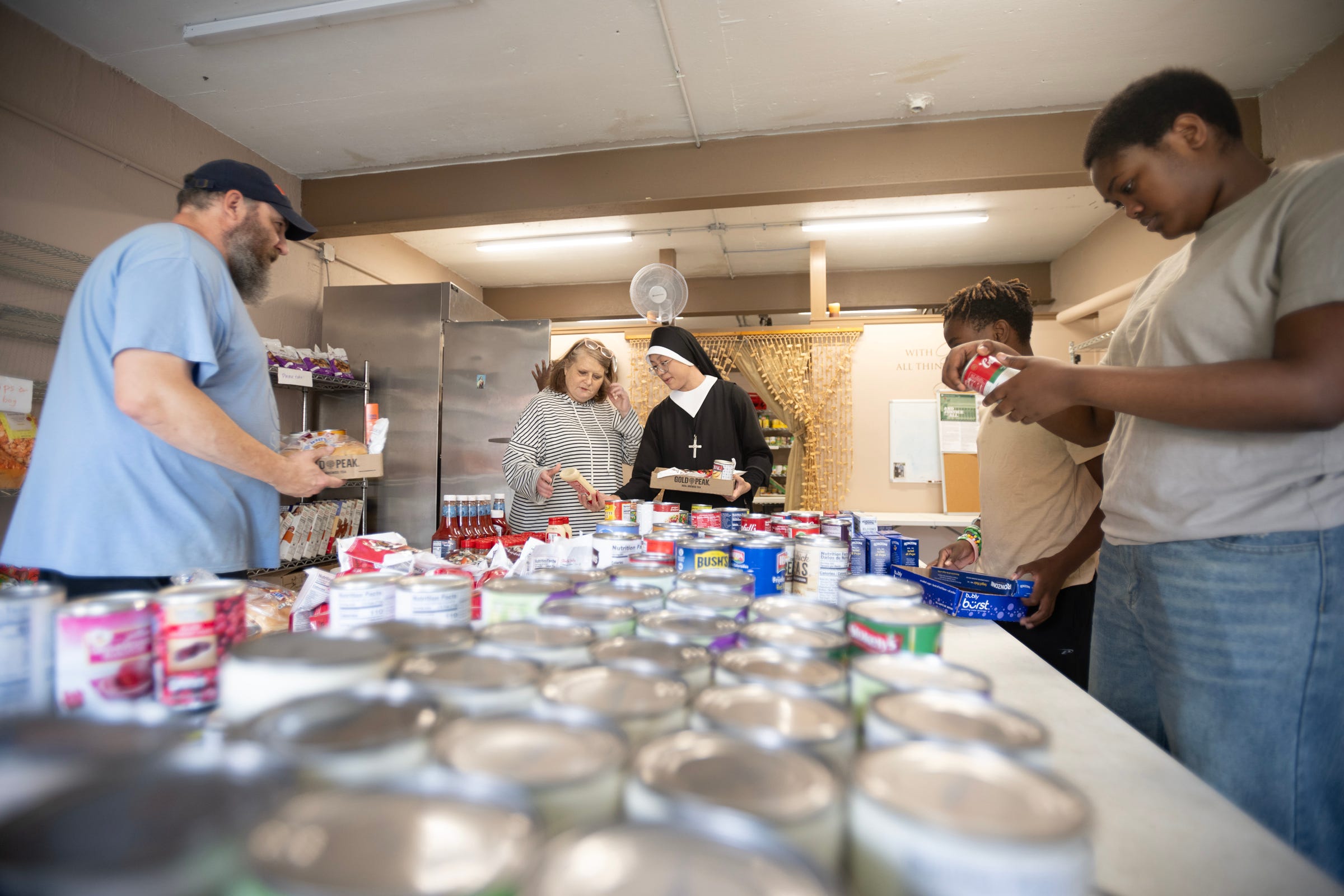
In the food pantry, cans of food become a different kind of liturgy. Hands sort, stack, count, and prepare, making sure someone hungry will be fed. The prayer of the chapel does not stay in the chapel. It moves toward the next person in need.
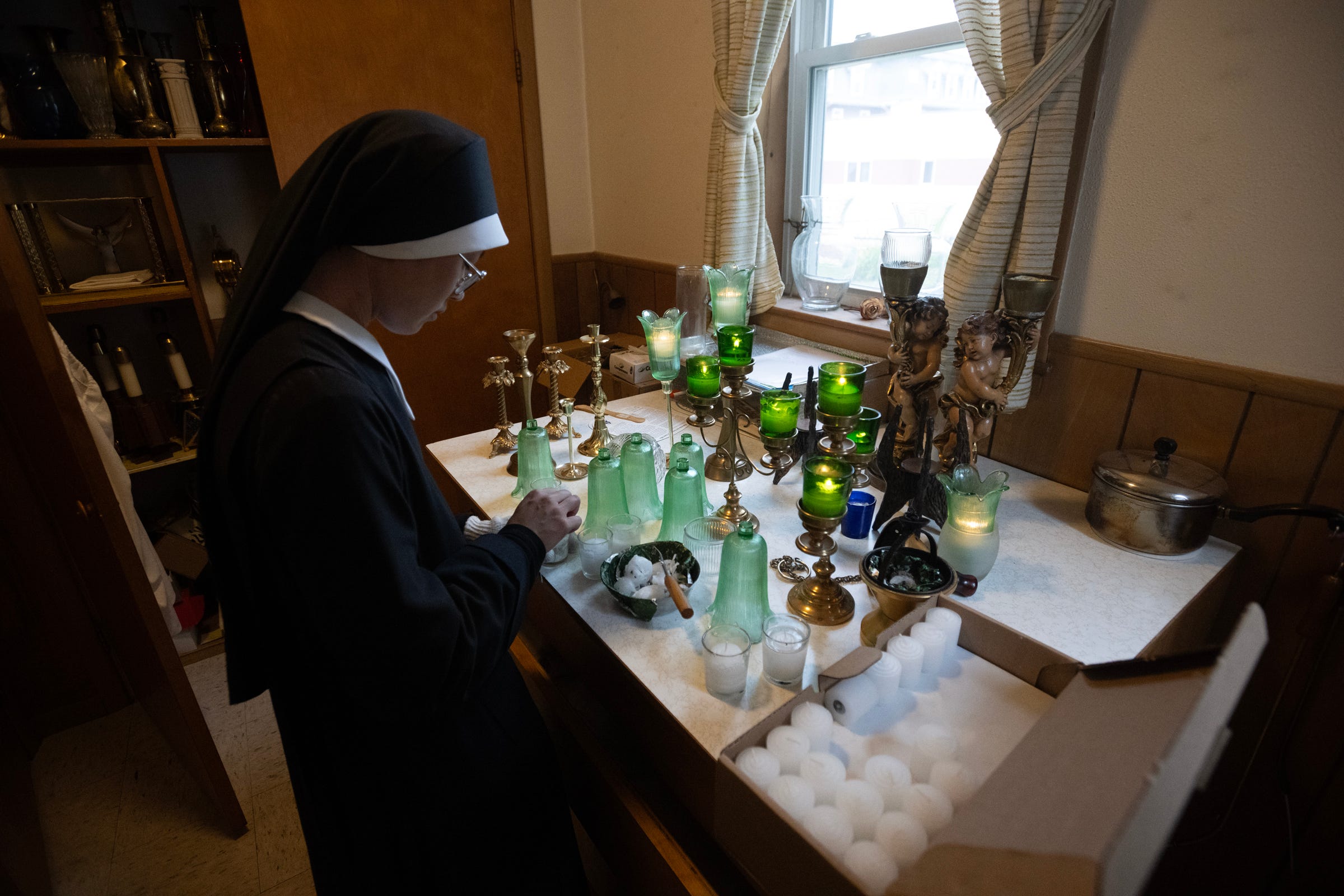
A Sister prepares candles and devotional vessels by a window, the small mechanics of prayer laid out on a worktable. Even here, in the unnoticed tasks, the life of the chapel is being tended.
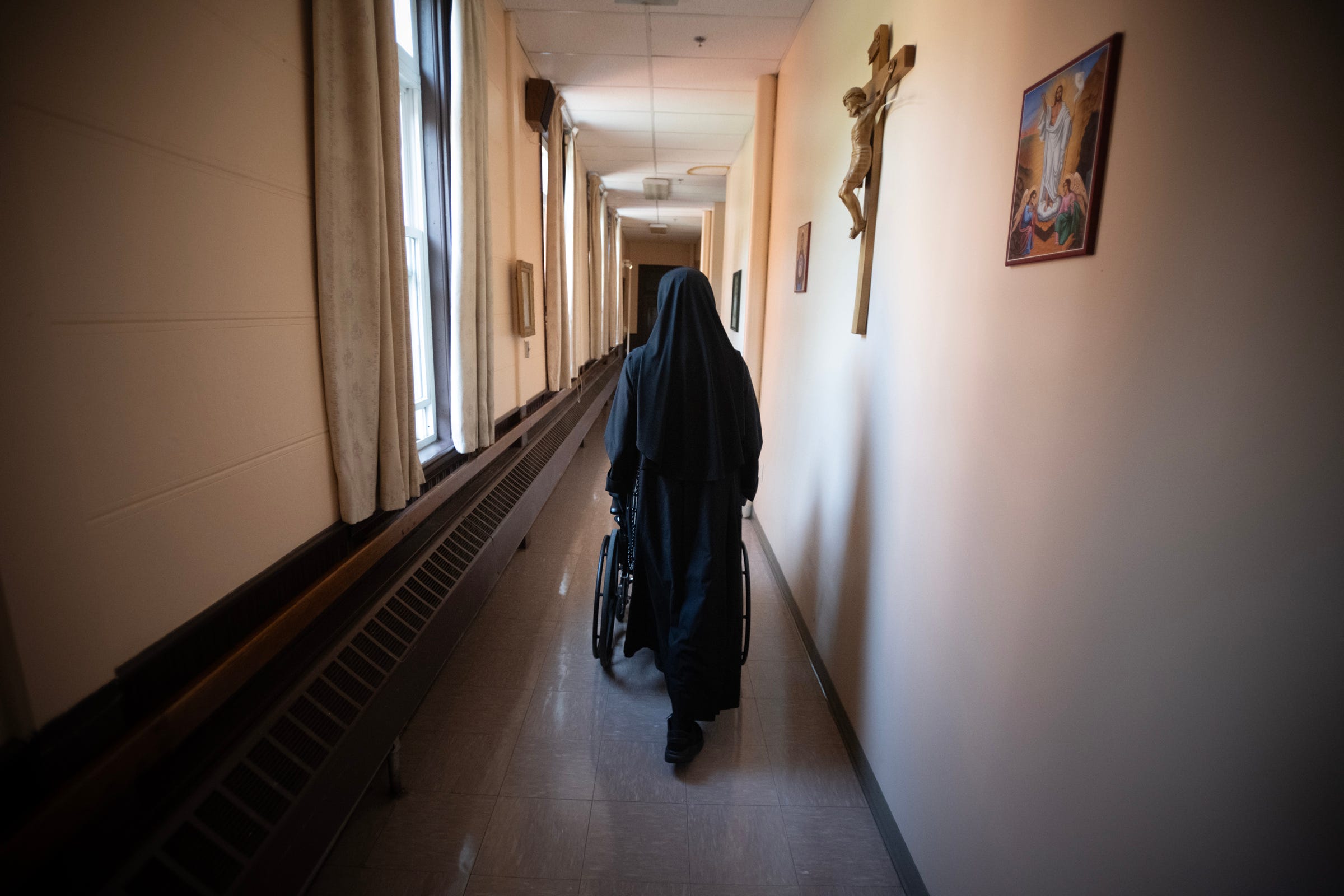
A Sister pushes an elderly member of the community down a long corridor beneath crucifixes and holy images. The hallway becomes a procession in miniature: one Sister serving, one Sister being carried, both moving through a house built on Love.
Read more of the three-part series:
Part III: What Endures — coming next.
Thanks for reading! This is a truly independent, reader-supported periodical. Your support is crucial. If you are able, please consider a paid subscription or making a ‘Patron of the Arts’ donation of any amount. By doing so, you are not just supporting this effort; you’re a vital part of this mission.
You have my heartfelt thanks for your generosity and support, and please keep me in your prayers, and know of mine for each of you. God Bless, Jeff
I can't tell you how much I appreciate your work sharing glimpses and reflecting through light and word the hidden lives of this faithful community.
It is easy to imagine convents such as this no longer exist but as your articlea and photos show, they are "not museums but very much alive" - yes alive in the fullest sense, alive in Christ, animated by the Holy Spirit. Your work is very much a true apostolate and bears the mark of someone who himself believes and loves God in his bride the Church.
May God greatly bless your work! I have put you in my prayers and will be grateful for any prayers you might offer for me also to be a more faithful follower of our Lord and that I grow daily in the knowledge and love of God.
Another gem — both the religious community and your story, Jeff. George Bernanos wrote, “Grace is everywhere.” St. Therese said, “Everything is Grace.” This offers confirmation.